Find Experienced DWI Lawyers Near You and Beat Your Charge
How to Find the Right DWI Lawyers Near You in Clearwater
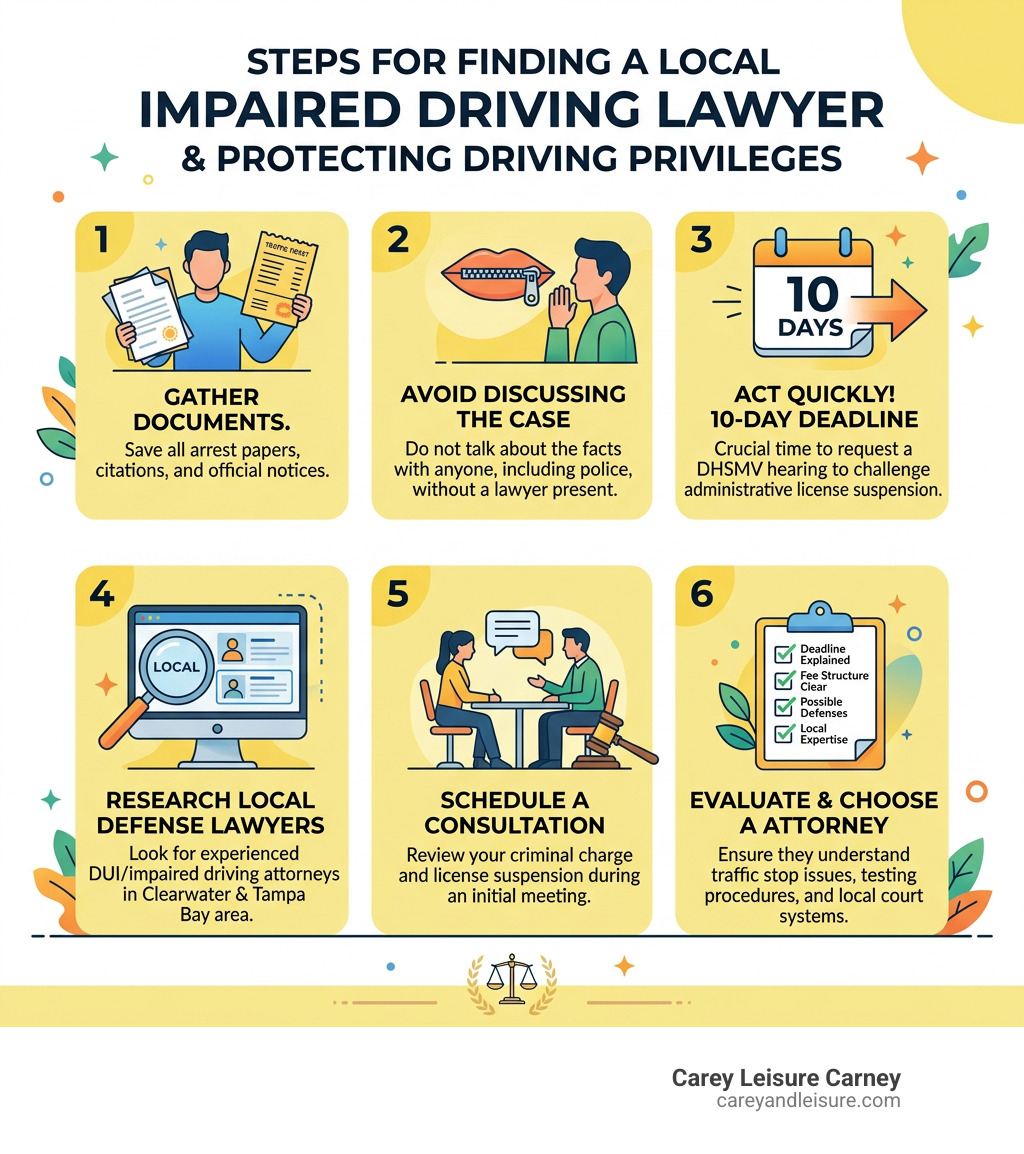
If you are searching for dwi lawyers near me after an arrest in Clearwater or the Tampa Bay area, act quickly. Save every paper you received, avoid discussing the facts with police without a lawyer, and contact a local impaired-driving defense attorney who can review both your criminal charge and license suspension.
In Florida, the charge is usually called a DUI, not a DWI. The first 10 days can be especially important because you may need to request a Florida Department of Highway Safety and Motor Vehicles hearing to challenge an administrative license suspension. A strong local lawyer should explain the deadline, fee structure, possible defenses, and whether issues with the traffic stop, field tests, or chemical testing may affect your case.
I am Thomas W. Carey, a founding partner at Carey Leisure Carney and a board-certified civil trial lawyer with decades of experience in Florida DUI-related matters and injury cases involving impaired driving. This guide will help you evaluate dwi lawyers near me with clear questions and practical next steps.
Essential dwi lawyers near me terms:
5 Immediate Steps to Take After an Impaired Driving Arrest
An arrest for driving under the influence turns your life upside down in seconds. Flashing blue lights, cold handcuffs, and a night in a holding cell leave most drivers rattled. While panic is natural, your immediate choices significantly influence the outcome of your case.
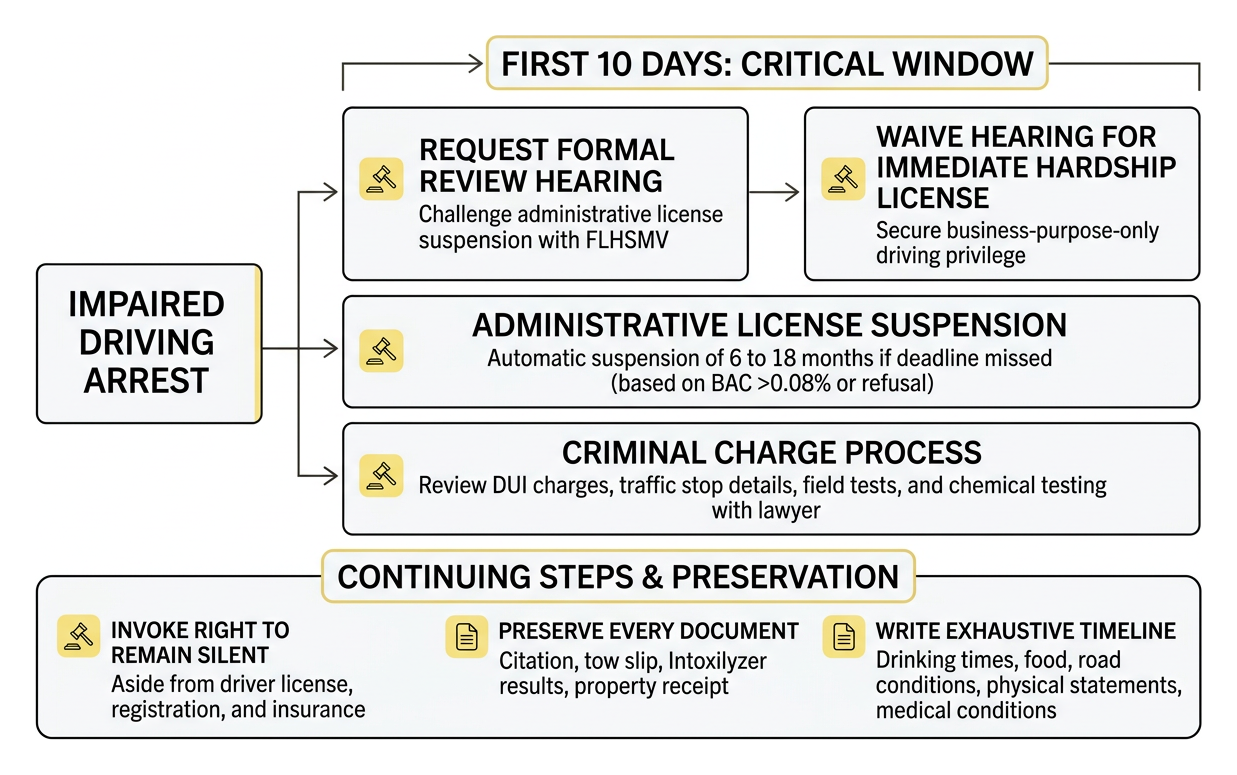
To protect your rights and your freedom, take these five immediate steps:
- Invoke Your Right to Remain Silent: Aside from handing over your driver’s license, registration, and insurance card, you are not obligated to answer incriminating questions. Politely tell law enforcement that you choose to remain silent and want to speak with an attorney before answering questions about where you were, what you had to drink, or when you last slept.
- Protect Your Driving Privileges Within 10 Days: Following an arrest, your physical driver’s license is confiscated. The citation ticket serves as a temporary 10-day driving permit. You have exactly 10 calendar days from the arrest date to request a Formal Review Hearing with the Florida Department of Highway Safety and Motor Vehicles (FLHSMV) to challenge your suspension, or to waive the hearing to secure an immediate business-purpose-only hardship license. Missing this deadline triggers an automatic suspension of 6 to 18 months depending on whether you blew above 0.08% or refused the test.
- Preserve Every Document and Timeline Detail: Keep every piece of paperwork given to you by the arresting agency, including the citation, tow slip, property receipt, and Intoxilyzer results. Write down an exhaustive timeline of the entire evening: what time you started and stopped drinking, what you ate, the exact road conditions, weather, physical statements made by the officer, and any medical conditions or physical limitations you have.
- Understand the Implied Consent Law: Under Florida’s implied consent statutes, operating a motor vehicle means you agree to submit to an approved chemical test of your breath or urine if lawfully arrested. Refusing a chemical test leads to an administrative suspension of one year for a first refusal and 18 months (plus a misdemeanor charge) for a second refusal. However, roadside field sobriety tests (like walking a line or balancing on one foot) are voluntary.
- Retain Dedicated Legal Counsel: Navigating dual criminal and administrative tracks requires immediate professional intervention. Reviewing statutory definitions and understanding impaired driving laws helps clarify why separate proceedings take place at the same time.
| Aspect | Administrative Proceeding (FLHSMV) | Criminal Proceeding (County Court) |
|---|---|---|
| Forum | Bureau of Administrative Reviews | Pinellas, Pasco, or Hillsborough County Court |
| Primary Issue | Driver’s license suspension & driving privileges | Guilt, innocence, probation, fines, and jail |
| Standard of Proof | Preponderance of the evidence | Beyond a reasonable doubt |
| Key Deadline | 10 days from arrest date | First appearance / arraignment (usually 30 days) |
| Potential Sanctions | Hardship license, 6–18 month suspension | Fines ($500–$1,000+), community service, jail |
7 Key Factors to Evaluate When Searching for DWI Lawyers Near Me
Not all legal representation offers the same depth of trial readiness and attention to detail. When evaluating local advocates across Clearwater, St. Petersburg, Largo, New Port Richey, Spring Hill, Trinity, and Wesley Chapel, focus on these essential criteria:
- Board Certification: The Florida Bar awards Board Certification to fewer than 2% of attorneys in the state. Certification demonstrates rigorous peer review, extensive courtroom testing, and verified trial competence.
- Local Court and Jurisdiction Familiarity: Local procedural habits matter. An attorney who regularly practices before the judges and prosecutors in Pinellas or Pasco County understands local docket tendencies, diversion policies, and evidentiary standards far better than someone traveling from across the state.
- Direct Attorney Access: Many large advertising firms hand your file off to a paralegal, case manager, or junior associate fresh out of law school. Ensure your initial consultation and strategy sessions happen directly with the experienced lawyer handling your defense.
- Transparent Fee Structures: Professional firms provide clear written retainers explaining what pre-trial representation costs versus the expense of taking a case through a full jury trial.
- Active Pre-Trial Mitigation Strategies: Strong defense begins long before trial. Look for a team that immediately arranges voluntary alcohol evaluations, community service hours, or vehicle interlock installations to position you favorably for charge reductions.
- Chemical and Technical Testing Literacy: An attorney must understand the science behind infrared spectrometry in breathalyzers, gas chromatography in blood testing, and the National Highway Traffic Safety Administration (NHTSA) testing validation guidelines.
- Verified Client and Peer Reviews: Research reputable legal ratings and client feedback. Partnering with top-rated defense attorneys ensures your case receives the thorough analysis necessary to challenge strict state evidence.
How to Screen DWI Lawyers Near Me for Trial Experience
When sitting down for an initial case assessment, ask targeted questions regarding courtroom experience:
- “How many jury trials have you personally brought to verdict in this county?”
- “What specific evidentiary motions have you successfully argued to suppress chemical test results?”
- “Can you walk me through your strategy for cross-examining the arresting officer on standard field sobriety testing guidelines?”
A seasoned trial attorney does not shy away from cross-examination. They scrutinize whether the officer had reasonable suspicion to initiate the traffic stop, whether field tests adhered to standardized NHTSA protocols, and whether the observation period prior to a breath test was properly maintained.
Red Flags When Consulting DWI Lawyers Near Me

Be wary of high-volume operations known in the industry as “plea mills.” These firms take on hundreds of files, assign them to junior staff, and push clients toward quick guilty pleas regardless of evidentiary flaws.
Watch out for these warning signs:
- Guaranteed Outcomes: No ethical attorney can promise that charges will be dropped or that you will win your administrative hearing.
- Refusal to Provide Written Retainers: Vague billing terms or surprise fees for simple pre-trial motions indicate poor client service.
- No Direct Access: If you cannot speak directly with the attorney handling your court appearances, your case is not receiving the personal attention it warrants.
How Defense Attorneys Fight to Dismiss or Reduce Impaired Driving Charges
Beating or reducing an impaired driving charge requires picking apart the prosecution’s evidence piece by piece. A successful defense rarely relies on one dramatic courtroom surprise; instead, it involves methodically uncovering constitutional, procedural, and scientific errors.
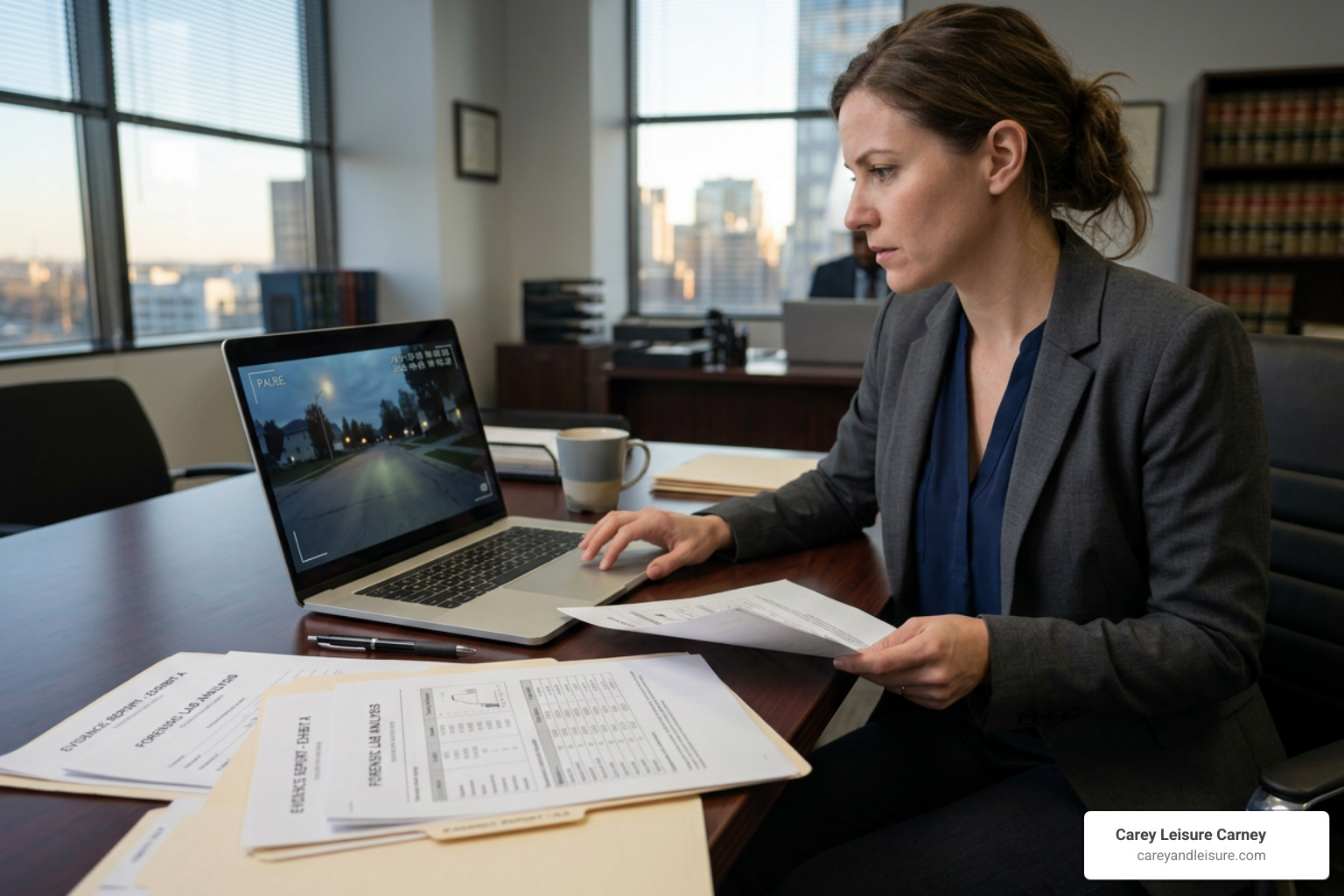
- Challenging the Initial Traffic Stop (Fourth Amendment): Law enforcement officers cannot pull you over on a hunch. They must possess reasonable, articulable suspicion that a traffic infraction or criminal act occurred. If an officer stopped you for weaving within your lane without crossing marked lines, or pulled you over based on an unverified anonymous tip, your lawyer can file a Motion to Suppress. If the judge rules the stop unlawful, all downstream evidence—including breath tests, statements, and field sobriety observations—is excluded from trial.
- Attacking Field Sobriety Test Administration: Roadside physical evaluations (the Horizontal Gaze Nystagmus, Walk-and-Turn, and One-Leg Stand) are designed for pristine, controlled conditions. When administered on uneven asphalt, in heavy traffic, under glaring strobe lights, or on individuals with prior knee, back, or inner-ear conditions, the results are scientifically suspect. Defense lawyers use body-worn camera footage to expose deviations from standardized training manuals.
- Challenging Intoxilyzer 8000 Accuracy: The Florida Department of Law Enforcement mandates strict maintenance, inspection, and calibration schedules for the Intoxilyzer 8000. If the machine was overdue for monthly agency inspection, exhibited software glitches, or the operator failed to conduct a continuous 20-minute observation period to rule out mouth alcohol from acid reflux or dental work, the chemical reading can be challenged.
- Negotiating Pre-Trial Diversion or Charge Reductions: When evidentiary suppression is not viable, proactive mitigation may allow first-time offenders to enter diversion programs (such as DROP or PTD in local jurisdictions) or negotiate a reduction from DUI to reckless driving (“wet reckless”). Reviewing Florida alcohol laws and driver rights helps clarify the baseline requirements that govern these opportunities.
Frequently Asked Questions About Local DWI and DUI Defense
What is the 10-day rule for administrative license suspensions in Florida?
Following an arrest where your blood alcohol level tested at 0.08% or higher, or where you refused a chemical test, the arresting officer confiscates your physical license. Your paper citation acts as a valid driving permit for 10 calendar days.
Within this strict 10-day window, you must make an administrative election through the FLHSMV:
- Option 1: Request a Formal Review Hearing: You contest the validity of the license suspension. If your lawyer shows that the officer lacked probable cause or that test refusal warnings were deficient, your driving privileges can be reinstated. If you do not prevail, you face a hard suspension (no driving whatsoever for 30 to 90 days) before becoming eligible for a hardship permit.
- Option 2: Eligibility Waiver for Immediate Hardship (Business Purpose Only): First-time offenders with no prior suspensions may waive the formal hearing within 10 days to receive an immediate Business Purpose Only license, allowing essential driving for work, school, church, and medical needs without a hard suspension period.
Can a first-time impaired driving charge be reduced or dismissed?
Yes. While Florida law prohibits prosecutors from withholding adjudication on a DUI, charges can be dismissed or amended to a lesser offense like reckless driving. Dismissals generally occur when constitutional violations (such as an unlawful stop or arrest without probable cause) lead to evidence suppression.
Reductions to reckless driving frequently occur when:
- The blood alcohol level was close to the legal threshold of 0.08%.
- There was no accident, property damage, or bodily injury.
- The driver showed exemplary roadside cooperation and had a clean prior record.
- The defense uncovers significant technical or procedural errors in the state’s chemical testing log.
How much does hiring a private defense attorney typically cost?
The financial investment for an experienced private defense attorney in the Tampa Bay and Clearwater areas varies based on case complexity, whether a collision occurred, and whether the matter proceeds to trial.
- Basic First-Offense Pre-Trial Retainer: Representation typically ranges from $2,500 to $6,000 for pre-trial investigations, motion practice, administrative review hearings, and plea negotiations.
- Trial Representation and Complex Litigation: If your case involves an alleged felony, repeat offenses, serious bodily injury, or requires expert witnesses (such as independent toxicologists or accident reconstructionists), fees generally range from $7,500 to $15,000 or more.
Most reputable firms offer transparent flat-fee agreements broken down by pre-trial and trial stages, ensuring you understand your financial obligations without unexpected hourly billing surprises.
Conclusion
Facing an impaired driving allegation threatens your reputation, career, and daily freedom. Navigating the simultaneous demands of county criminal court and administrative licensing bodies requires experienced, steady advocacy. At Carey Leisure Carney, our board-certified trial attorneys bring over 100 combined years of legal insight to every file we handle across Clearwater, Largo, St. Petersburg, New Port Richey, Spring Hill, Trinity, and Wesley Chapel.
Understanding both sides of Florida courtroom practice—from defense rights to civil liability in injury matters—gives our clients direct access to seasoned trial lawyers who know how to challenge state evidence. If you want to understand how state statutes apply to everyday situations, explore our comprehensive guide to florida alcohol laws and protect your future today.