

When Should You Call a Hospital Lawsuit Lawyer Near You?
If you’re searching for hospital lawsuit lawyers near me, start with a local attorney who handles medical malpractice. Ask whether they have experience investigating both staff mistakes and hospital safety failures. Bring your medical records, bills, and a short timeline of what happened. Call promptly: filing deadlines can limit your options.
Poor bedside manners alone usually do not make a malpractice case. The key questions are whether the hospital or its staff failed to meet the standard of care and whether that failure caused harm.
I’m Thomas W. Carey, founding partner of Clearwater-based Carey Leisure Carney and a board-certified civil trial lawyer with experience overseeing medical malpractice cases. For people seeking hospital lawsuit lawyers near me in the Clearwater area, this guide explains what to look for and what to do next.
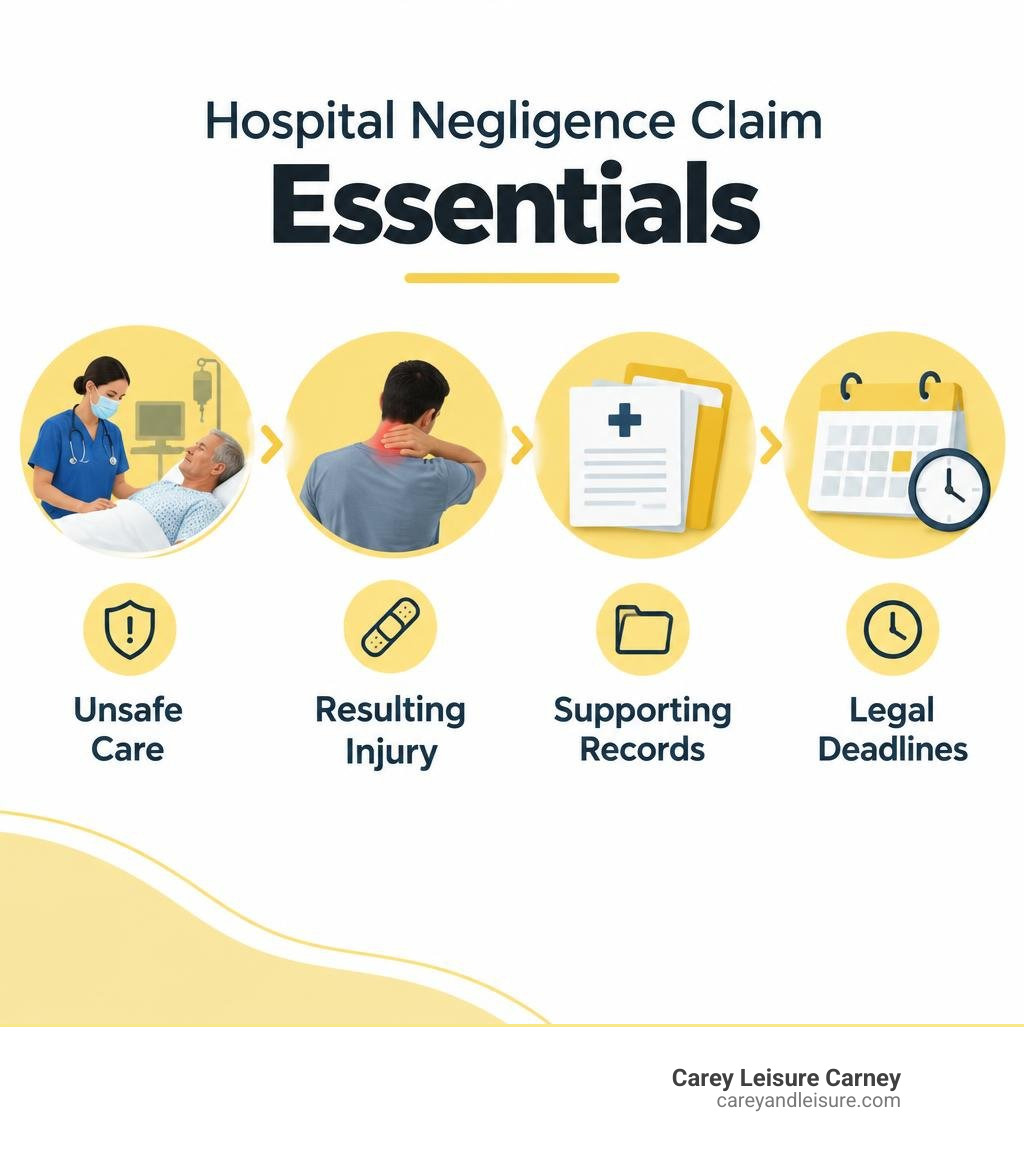
Key terms for hospital lawsuit lawyers near me:
Understanding Hospital Liability: Vicarious vs. Direct Corporate Negligence
When medical treatment goes wrong inside a hospital, determining who is legally responsible is rarely simple. A healthcare facility is not just a building where doctors practice; it is a complex corporate entity with distinct legal obligations. In Florida, hospital liability generally falls into two distinct categories: vicarious liability and direct corporate negligence.

Vicarious liability means the hospital is held legally responsible for the wrongful acts or omissions of its employees performed within the scope of their employment. Under the legal doctrine of respondeat superior (Latin for “let the master answer”), if an employed registered nurse delivers the wrong medication dose or an in-house lab technician misreads vital test results, the hospital entity answers for the resulting injuries.
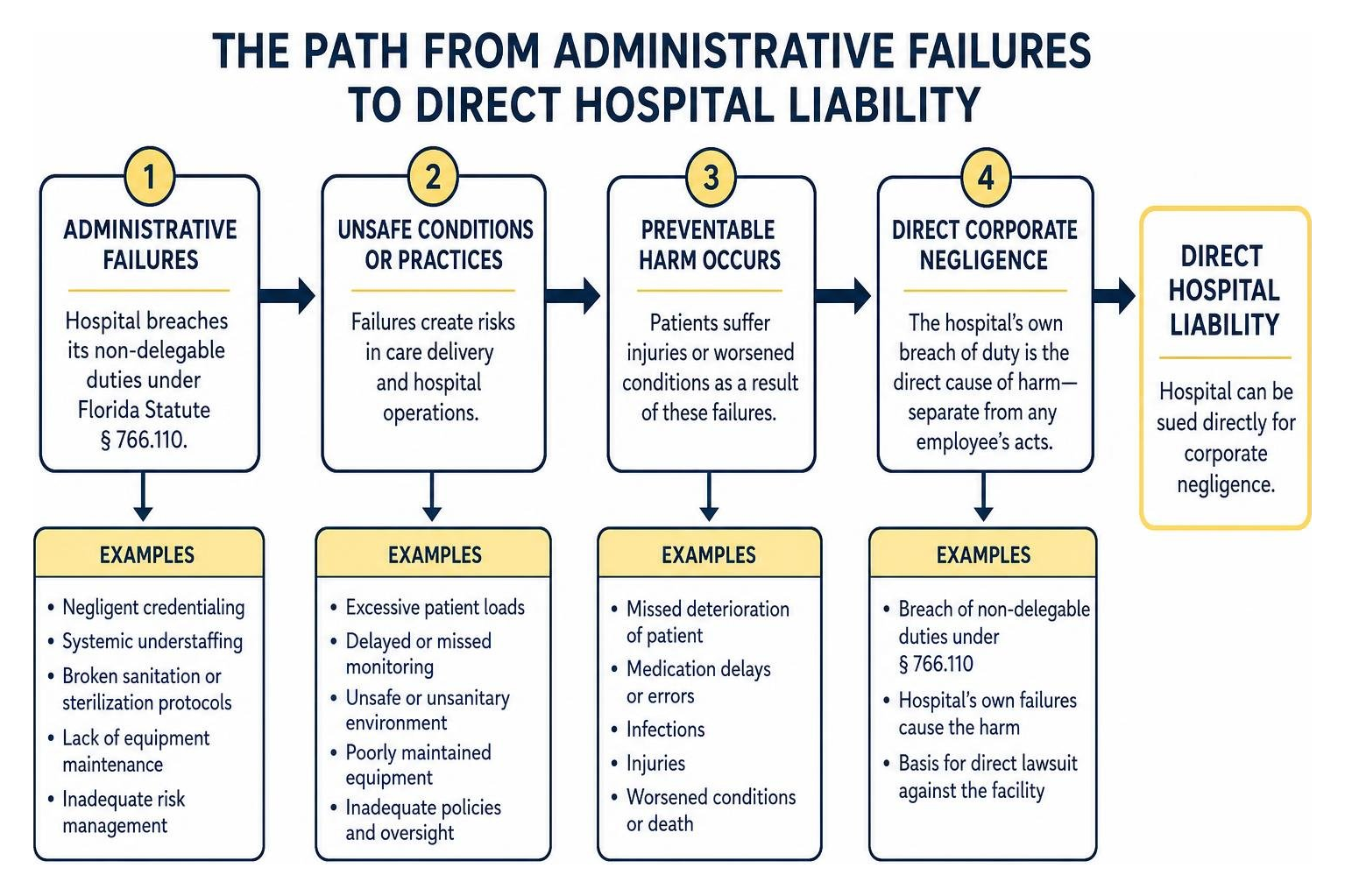
Direct corporate liability, on the other hand, involves the facility’s own administrative failures. Under Florida Statute § 766.110, healthcare facilities have a direct duty to maintain comprehensive risk management programs, establish adequate sanitation protocols, ensure safe staffing levels, and oversee staff competency. When an administration cuts corners on safety to maximize profits, it can be sued directly for corporate negligence.
| Liability Category | Legal Basis | Common Examples | Primary Responsible Entity |
|---|---|---|---|
| Vicarious Liability | Respondeat Superior (Employer-Employee Relationship) | Medication dosage errors by employed nurses; nursing staff failure to monitor vital signs; errors by hospital-employed technicians. | Hospital entity answering for employee actions. |
| Direct Corporate Negligence | Breach of Non-Delegable Institutional Duties (Florida Statute § 766.110) | Negligent credentialing; chronic understaffing; broken sanitation or sterilization protocols; lack of equipment maintenance. | Hospital board, administration, and executive leadership. |
When Can You Sue a Facility for Doctor, Nurse, or Staff Negligence?
A central question in any facility-related claim is whether the negligent provider was an employee or an independent contractor. While nurses, physical therapists, radiology technicians, and administrative staff are almost always direct hospital employees, many attending physicians and surgical specialists operate as independent contractors with staff privileges.
If an independent contractor commits an error, can the hospital avoid liability? Not necessarily. Hospitals frequently face liability through “apparent agency.” If a facility presents a physician to the public as its representative—especially in emergency rooms where patients cannot choose their doctors—and does not clearly inform the patient otherwise, the facility may still be held vicariously responsible.
Holding a facility liable requires proving that the provider violated the recognized legal standard of care in medical malpractice. This requires demonstrating that the provider failed to exercise the level of skill, care, and treatment recognized as acceptable by reasonably prudent, similar healthcare providers.
Negligent Credentialing and Systemic Hospital Administration Failures
Hospitals have a non-delegable duty to vet every physician granted clinical privileges. When a facility grants privileges to a surgeon with a documented history of surgical errors, substance abuse, or disciplinary actions without adequate vetting, it commits negligent credentialing.
Hospitals also commit corporate negligence through administrative shortfalls, such as:
- Systemic Understaffing: Forcing nurses to manage excessive patient loads, leading directly to missed deterioration signs and medication delays.
- Failures in Peer Review and Oversight: Ignoring recurring safety complaints regarding particular clinical departments.
- Defective Policies and Equipment: Failing to service life-support systems or maintaining substandard electronic health record systems that cause critical communication breakdowns.
Common Examples of Medical Errors That Trigger Hospital Lawsuits
Medical errors in hospitals represent a leading cause of severe injury and preventable death nationwide. Understanding how clinical failures occur helps patients and families identify when standard care was compromised.

Emergency Room Errors, Misdiagnosis, and Triage Failures
Emergency departments across Pinellas, Pasco, and Hernando counties handle intense patient volumes. However, high stress does not excuse deviations from basic medical standards. Severe injuries frequently stem from:
- Triage Failures: Inexperienced or rushed triage nurses misclassifying critical patients, forcing individuals suffering from active myocardial infarctions or strokes into lengthy waiting room delays.
- Diagnostic Failures: Overlooking classic symptoms, misinterpreting diagnostic imaging, or failing to order basic blood panels.
- Premature Discharge: Sending unstable patients home without adequate stabilization or diagnostic workups.
If you or a loved one suffered harm due to triage breakdowns or diagnostic delays, reviewing your rights with an experienced advocate handling emergency room negligence claims is a critical first step.
Surgical Mistakes, Medication Mix-Ups, and Hospital-Acquired Infections
Inpatient hospital stays expose patients to complex interventions where simple procedural oversights can result in catastrophic injuries:
- Surgical Complications: Performing wrong-site surgery, mismanaging anesthesia delivery, or leaving foreign objects like sponges and clamps inside a body cavity.
- Medication Mix-Ups: Administering incorrect medications, miscalculating intravenous flow rates, or failing to cross-reference known drug allergies.
- Hospital-Acquired Infections (HAIs): Contracting methicillin-resistant Staphylococcus aureus (MRSA) or developing severe sepsis due to unsterilized surgical instruments, poor central-line hygiene, or contaminated surgical suites.
When administrative or clinical carelessness causes injury, documenting medical negligence evidence—including clinical charts, discharge summaries, and prescriptions—is essential for building a clear claim.
Determining Damages and Legal Deadlines for Hospital Claims
Filing a medical negligence claim against a hospital is designed to make the injured patient whole by providing financial recovery for both economic and non-economic losses.
What Damages Can You Seek in a Hospital Malpractice Lawsuit?
Victims of hospital malpractice can seek several forms of recovery:
- Economic Damages: Past and future medical bills, corrective surgical procedures, physical rehabilitation, home health assistance, lost income, and diminished earning capacity. For catastrophic injuries, creating comprehensive life care plans helps project lifetime medical and daily living expenses.
- Non-Economic Damages: Fair compensation for pain and suffering, physical impairment, disfigurement, mental anguish, and loss of enjoyment of life.
- Punitive Damages: Awarded in rare cases involving intentional misconduct or gross negligence demonstrating a conscious indifference to patient safety.
- Wrongful Death Damages: Available to surviving family members when hospital errors result in fatal outcomes.
Understanding Deadlines and Presuit Requirements in Florida
Medical malpractice claims involve strict procedural rules. Under Florida law, the statute of limitations is generally two years from the date the incident occurred or two years from when the injury was discovered (or reasonably should have been discovered). However, Florida enforces an absolute four-year statute of repose, barring claims brought more than four years after the incident regardless of discovery, except in specific cases involving fraud or concealment.
Before filing a lawsuit, Florida requires plaintiffs to complete a mandatory presuit screening process. You must serve a formal Notice of Intent to Initiate Litigation accompanied by a verified written medical expert opinion. Working with counsel experienced in Florida medical malpractice lawsuit deadlines and qualifying medical expert witnesses ensures your presuit notice meets all statutory requirements before deadlines expire.
How to Find and Work with Hospital Lawsuit Lawyers Near Me
Hospital litigation is complex and heavily contested. Hospitals and their malpractice insurers retain experienced defense teams to dispute liability at every phase.
Key Benefits of Hiring Hospital Lawsuit Lawyers Near Me
When searching for legal representation, choosing a local firm with courtroom experience provides clear advantages:
- Familiarity with Local Courts: Local attorneys know the judges, courtroom procedures, and legal landscape in Pinellas, Pasco, and Hernando county courts.
- Direct Accessibility: Working with a nearby firm means you meet directly with your legal team, review discovery materials in person, and receive regular updates.
- Knowledge of Regional Medical Facilities: Local trial lawyers understand the operational structures, staffing tendencies, and recordkeeping methods of area hospitals.
Understanding how to choose an experienced malpractice attorney ensures you partner with a law firm that possesses the trial experience and financial resources required to take complex hospital cases through verdict.
Steps to Take Before Meeting Hospital Lawsuit Lawyers Near Me
To make your initial consultation as productive as possible, gather the following documentation:
- Complete Medical Records: Request full copies of your inpatient hospital charts, physician orders, nursing notes, and discharge paperwork from all facilities involved.
- Itemized Billing Statements: Collect all hospital billing files and insurance Explanation of Benefits (EOB) statements.
- A Clear Symptom and Event Journal: Write a chronological timeline detailing when treatments occurred, what staff members told you, and how your symptoms progressed.
- Second Medical Opinions: Keep records of any consultations with independent physicians who evaluated or corrected the complications.
- Physical and Photographic Evidence: Preserve prescription bottles, defective medical devices, and photographs of visible injuries, surgical incisions, or infections.
Frequently Asked Questions About Hospital Malpractice
How do I know if I have a valid medical malpractice claim against a hospital?
A poor medical outcome or discourteous bedside manner does not automatically establish malpractice. A valid claim requires proving four essential legal elements:
- Duty of Care: The hospital and its medical staff owed you an established standard of professional care.
- Breach of the Standard of Care: The healthcare providers failed to deliver care consistent with recognized medical standards.
- Causation: The specific breach directly caused your injuries or worsened your medical condition.
- Demonstrable Damages: You suffered measurable physical, financial, or emotional harm as a direct result.
Can I sue a hospital if I signed a surgical or treatment consent form?
Yes. An informed consent form confirms that you were informed of the recognized, unavoidable risks of a procedure. It does not grant the hospital or its medical staff permission to commit negligent errors, deviate from standard safety protocols, or perform procedures carelessly.
How long does a hospital medical malpractice lawsuit typically take to resolve?
Because of Florida’s mandatory presuit investigation period, complex medical record discovery, and expert witness depositions, medical negligence lawsuits typically take between two and three years to reach a resolution through negotiated settlement or jury trial.
Conclusion
When hospital negligence causes severe injury, holding the responsible corporate entities and medical providers accountable is vital for your physical and financial recovery. At Carey Leisure Carney, our board-certified trial attorneys—representing the top 2% of Florida lawyers—bring over 100 years of combined legal experience to medical malpractice litigation. We provide direct attorney access and dedicated representation for injured patients throughout Clearwater, Largo, St. Petersburg, New Port Richey, Trinity, Spring Hill, and Wesley Chapel.
If you or a loved one suffered harm due to hospital negligence, explore your legal options with our team for Florida hospital malpractice legal representation and protect your rights today.