
Don’t Get Taken for a Ride: How to Pick the Best Rideshare Accident Lawyer
Why Rideshare Accidents Require More Than Just Any Car Accident Lawyer
How to choose a lawyer experienced with rideshare accident cases starts with understanding that these crashes are legally complex. Here’s the quick answer:
- Look for specific rideshare case experience – Ask how many Uber/Lyft cases they’ve handled
- Verify trial experience and success rate – Board-certified trial lawyers bring proven courtroom skills
- Check their resources – They need access to accident reconstruction experts and medical specialists
- Understand the fee structure – Most work on contingency (you pay nothing unless you win)
- Assess communication style – You should feel comfortable and get direct attorney access
- Review client testimonials – Past client experiences reveal how the firm treats people
Rideshare accidents are fundamentally different from typical car crashes. When you’re in an Uber or Lyft accident, you’re not just dealing with two drivers and two insurance companies. You’re navigating a maze of multiple insurance policies, independent contractor rules, and companies with legal teams dedicated to limiting their liability. About one-third of all rideshare drivers in the United States report being involved in at least one accident while working, and these cases involve determining whether the app was on, whether a passenger was in the vehicle, and which of several insurance policies applies – from the driver’s personal coverage to the rideshare company’s $1 million policy.
The stakes are high. Rideshare accident claims tend to cost around $14,000 for injuries compared to $9,000 for personal vehicle accidents, and insurance companies know this. They defend these claims more aggressively than standard auto accidents, often trying to shift blame or exploit gaps in coverage.
I’m Thomas W. Carey, a board-certified civil trial lawyer who has guided roughly 40,000 injury matters across Florida since 1988, including complex cases involving multiple liable parties and intricate insurance coverage disputes that mirror the challenges in how to choose a lawyer experienced with rideshare accident cases. My experience includes securing multi-million-dollar results in cases where insurance companies initially denied responsibility, and I understand the specialized knowledge required to hold rideshare companies accountable.
Glossary for how to choose a lawyer experienced with rideshare accident cases:
Why Rideshare Accidents Are a Different Beast
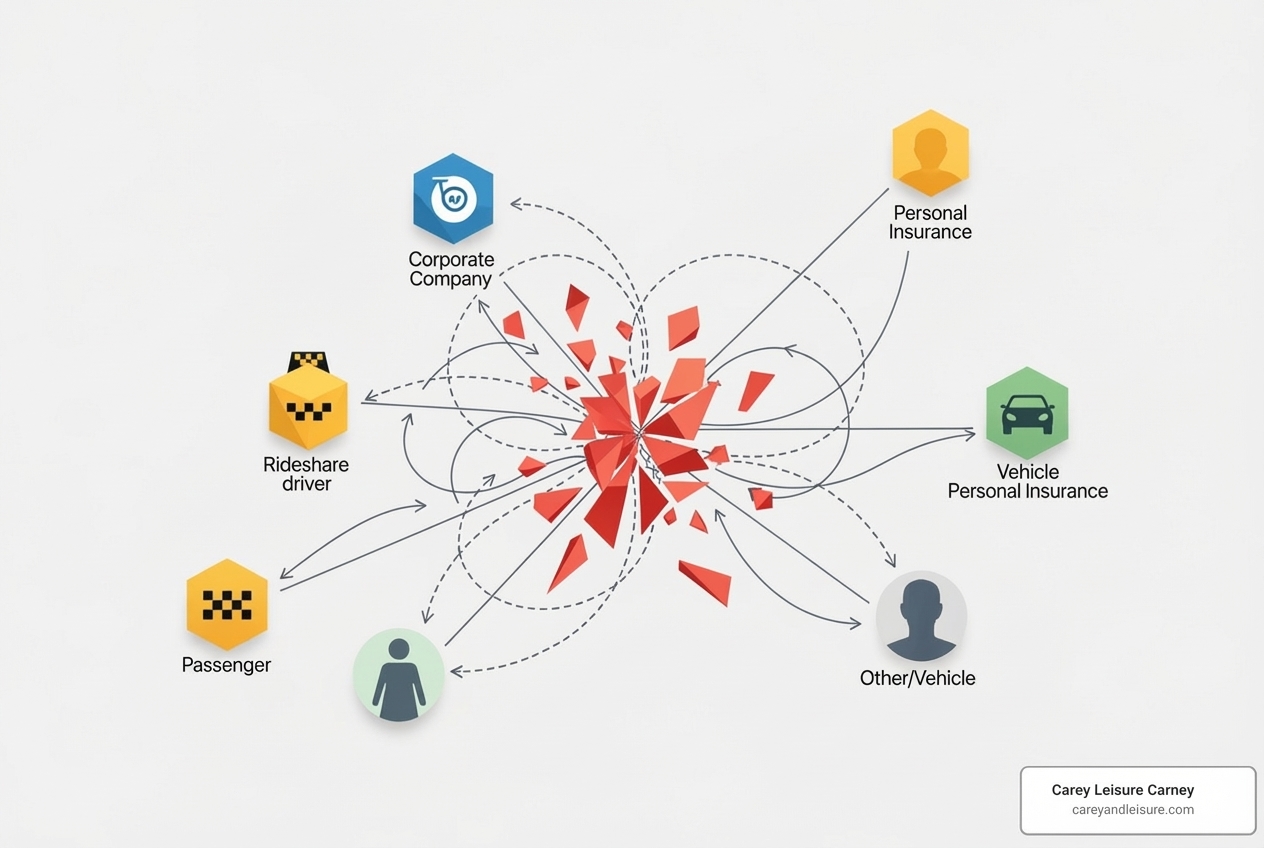
Imagine a typical car accident: two drivers, maybe one passenger, and usually two insurance companies. Now, picture a rideshare accident. Suddenly, you’ve got the rideshare driver, potentially their personal insurance, the rideshare company (Uber or Lyft), their commercial insurance, possibly another at-fault driver, and their insurance. It’s a party, but not the fun kind. This complex web is precisely what makes these cases so different from typical car accidents.
Unlike taxis, Uber and Lyft vehicles are not considered commercial vehicles in the same way. Their drivers are often classified as independent contractors, not employees. This distinction is crucial because it affects liability and insurance coverage. Florida has specific regulations for ridesharing services, such as HB221, signed into law in 2017. This bill requires rideshare drivers to be insured while logged into the app, whether they have a passenger or not. Understanding these nuances is essential for anyone involved in such an incident, as detailed in our guide on what to do if your Uber gets into an accident in Florida.
Proving liability in a rideshare accident can be a legal tightrope walk. Is the rideshare driver at fault? Was it another driver? Or does the rideshare company bear some responsibility due to negligent hiring, inadequate background checks, or failing to supervise its drivers? These are not questions you want to tackle alone.
The Complicated Web of Insurance Coverage
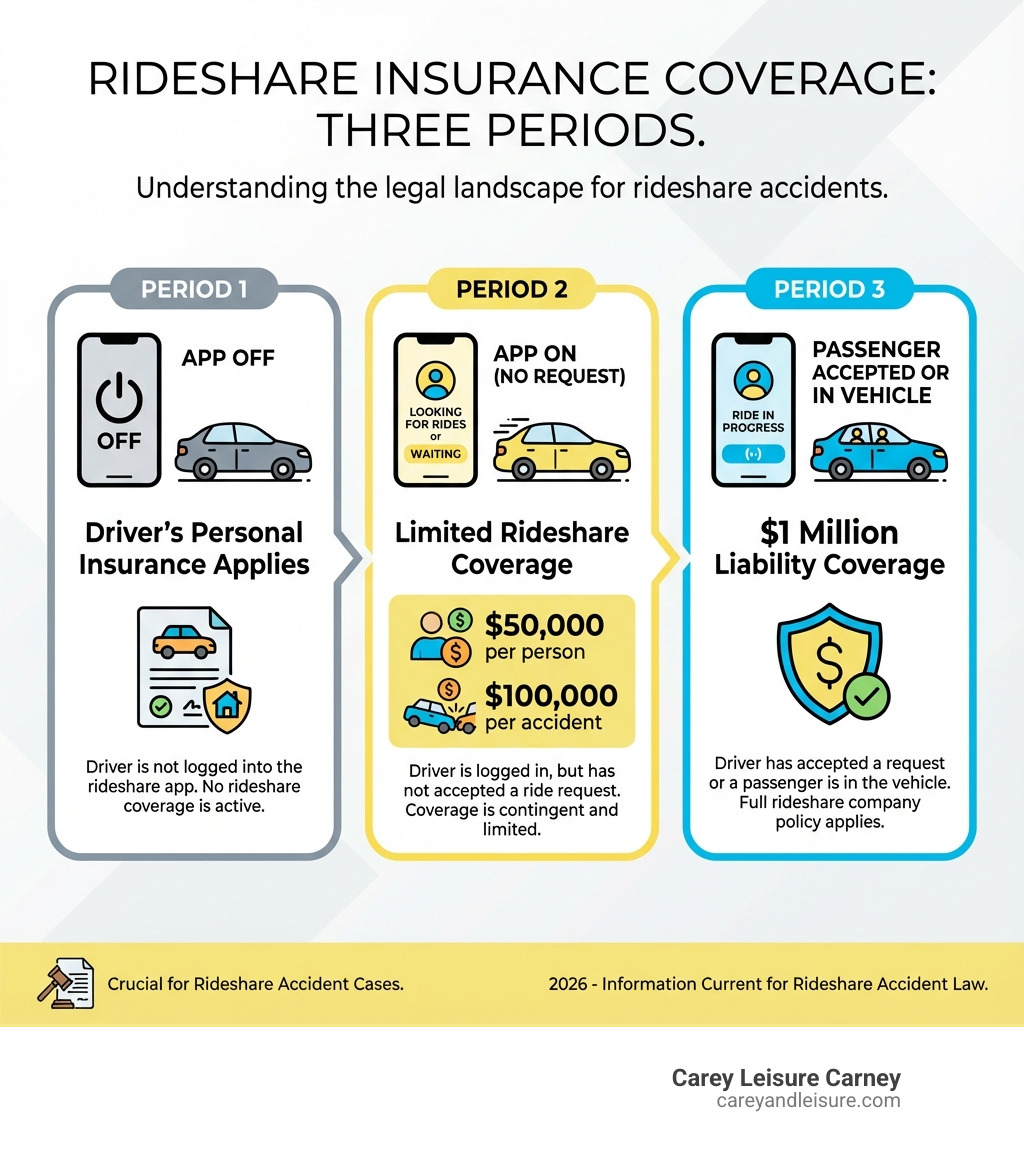
This is where things get really interesting – and complicated. Rideshare insurance operates in different “periods” based on the driver’s activity:
- Period 1: App Off – If the rideshare driver’s app is off and they’re using their vehicle for personal reasons, their personal auto insurance policy applies, just like any other car accident. The rideshare company’s insurance generally doesn’t come into play here.
- Period 2: App On, Waiting for a Request – When the driver is logged into the app and waiting for a ride request, but hasn’t accepted one yet, the rideshare company’s insurance typically provides a lower level of coverage. In Florida, this often includes third-party liability coverage of at least $50,000 for death and bodily injury per person, $100,000 per incident, and $25,000 for property damage. However, the driver’s personal insurance might still be primary, and the rideshare company’s policy acts as secondary.
- Period 3: En Route to Passenger or During a Trip – This is the period with the highest coverage. Once a driver accepts a ride request and is en route to pick up a passenger, or is actively transporting a passenger, the rideshare company’s robust commercial policy usually kicks in. This often provides up to $1 million in third-party liability coverage for death, bodily injury, and property damage. This coverage can also include uninsured/underinsured motorist coverage (UIM) for the driver and passengers.
It sounds straightforward, but insurance companies are notorious for trying to deny claims or offer lowball settlements. They will scrutinize every detail to find reasons not to pay the full amount you deserve. They might argue the driver was in a different “period” of coverage, or that your injuries aren’t as severe as you claim. That’s why having an experienced advocate on your side is critical.
Who Can Be Held Liable?
In a rideshare accident, pinning down liability isn’t always simple. Several parties could potentially be held responsible:
- The Rideshare Driver: If the rideshare driver’s negligence caused the accident (e.g., distracted driving, speeding), they can be held liable. Their personal insurance may apply, or the rideshare company’s policy, depending on the “period” of the ride.
- The Rideshare Company (Uber or Lyft): While rideshare companies often claim their drivers are independent contractors to limit liability, there are circumstances where they can be held responsible. This might include cases of negligent hiring (e.g., failing to conduct thorough background checks), inadequate safety protocols, or if their technology contributed to the accident.
- Another At-Fault Driver: If the rideshare vehicle was hit by another driver whose negligence caused the collision, that third-party driver and their insurance would be primarily liable.
- Vehicle Manufacturer: Less common, but if a vehicle defect contributed to the accident, the manufacturer could potentially be held liable.
- Government Entities: If poor road design, maintenance, or faulty traffic signals contributed to the crash, a government entity might bear some responsibility.
As you can see, navigating these potential liabilities requires a deep understanding of personal injury law and the specific regulations governing rideshare companies. For a more comprehensive overview of these complexities, refer to our Rideshare Accident Lawyer: The Complete Guide.
The Non-Negotiable Qualities of a Top Rideshare Accident Lawyer
Choosing the right lawyer is perhaps the most critical decision you’ll make after a rideshare accident. It’s not just about finding any lawyer; it’s about finding one with the specialized knowledge and dedication to handle these unique cases. Here are the qualities we believe are non-negotiable:

- Specialization: Look for attorneys who specifically list rideshare accidents as a core area of their practice. This isn’t a general car accident; it’s a rideshare accident, and the difference matters.
- Experience: They should have a proven track record of handling similar cases successfully.
- Success Rate: While past results don’t guarantee future outcomes, a strong history of favorable verdicts and settlements is a good indicator.
- Resources: A top firm should have the financial and professional resources to build a strong case, including access to experts.
- Communication: You need a lawyer who communicates clearly, promptly, and compassionately. You should always have direct access to your attorney.
- Client-Centered Approach: Your well-being should be their priority. This includes understanding your injuries, your struggles, and your goals.
These qualities are fundamental because, as we’ve discussed, rideshare cases are inherently more complex. We firmly believe in the importance of specialized legal representation, as outlined in our article why you need a personal injury lawyer.
Specific Experience and a Verifiable Track Record
When you’re trying to figure out how to choose a lawyer experienced with rideshare accident cases, don’t settle for vague answers. You need to look for concrete evidence of their expertise. This includes:
- Proven Results: Ask for examples of successful verdicts and settlements in rideshare accident cases. This demonstrates their ability to steer the unique challenges of these claims.
- Rideshare Case History: How many Uber or Lyft cases have they handled? What percentage of their practice is dedicated to this specific area? A firm that handles a high volume of these cases will be more familiar with the evolving legal landscape and insurance company tactics.
- Trial Experience: While many cases settle, the willingness and ability to take a case to trial can significantly strengthen your negotiating position. Insurance companies are less likely to offer fair settlements if they know your lawyer won’t hesitate to fight in court. Our Board-Certified attorneys, for instance, have proven courtroom skills, which is a significant advantage.
- Negotiation Skills: A good lawyer understands how to effectively negotiate with aggressive insurance adjusters and corporate legal teams.
- Familiarity with TNC Tactics: Rideshare companies and their insurers often employ specific strategies to minimize payouts. An experienced lawyer will anticipate these tactics and counter them effectively.
Your lawyer’s track record and success rate in rideshare cases are incredibly important. They reflect not just their legal acumen, but also their understanding of this niche area of law. For more insights on finding the right legal representation, you might find Nolo’s guide on finding a personal injury lawyer helpful.
Robust Resources and a Strong Reputation
A lawyer is only as good as the resources at their disposal. For a rideshare accident, building a strong case often requires:
- Access to Experts: This includes accident reconstructionists who can analyze crash data and determine fault, medical experts who can thoroughly document your injuries and future needs, and vocational experts who can assess lost earning capacity.
- Financial Resources for Litigation: Rideshare cases can be expensive to litigate, involving expert witness fees, court filing costs, and extensive findy. A well-resourced firm can absorb these costs, ensuring your case isn’t compromised by financial limitations.
- Positive Client Reviews and Testimonials: What do past clients say about their experience? Look for themes of professionalism, responsiveness, empathy, and successful outcomes. Online reviews on platforms like Google can offer valuable insights.
- Peer Recognition: Awards, certifications (like Board Certification in Florida, which only about 2% of attorneys achieve), and referrals from other lawyers are strong indicators of a lawyer’s standing in the legal community.
A thorough investigation is paramount in rideshare accident cases. This involves obtaining police reports, interviewing witnesses, reviewing photos and videos, examining vehicle damage, and potentially working with accident reconstruction experts. This meticulous approach is critical for building a strong claim, as highlighted in our guide on how attorneys use investigations for your personal injury claim.
Your Guide on How to Choose a Lawyer Experienced with Rideshare Accident Cases
Now that you understand why you need a specialized lawyer, let’s walk through the how. This involves careful research, thoughtful preparation, and asking the right questions during initial consultations. Think of it like interviewing someone for a very important job – because it is!
When starting on this search, you’re looking for a partner to guide you through a challenging time. The Federal Trade Commission offers general advice on hiring a lawyer that can serve as a good starting point.
Preparing for and What to Ask During Your Free Consultation
Most personal injury lawyers, including those specializing in rideshare accidents, offer free initial consultations. This is your chance to assess their fit for your case. Before you go, gather all relevant documents: police reports, medical records, photos from the scene, and any correspondence with insurance companies.
Here are essential questions to ask a potential rideshare accident lawyer during your consultation:
- “How long have you been practicing personal injury law, and specifically, how many rideshare accident cases (Uber/Lyft) have you handled in Florida?” This gauges their specific experience.
- “What is your success rate in these types of cases, and can you provide examples of similar cases you’ve resolved?” Look for concrete examples, not just general statements.
- “What is your communication style, and how often can I expect updates on my case? Will I have direct access to you, or will I primarily deal with support staff?” Clear communication and direct attorney access are crucial.
- “Who will be primarily working on my case – you, another attorney, or a paralegal?” Understand the team structure.
- “What are the potential challenges you foresee with my specific case, and what is your strategy for overcoming them?” This shows their analytical skills and foresight.
- “What is your general strategy for handling rideshare accident claims, from investigation to negotiation or trial?”
- “What resources do you have access to, such as accident reconstructionists or medical experts?”
- “Can you explain the different insurance policies that might apply to my case (driver’s personal, rideshare company’s commercial, UIM)?”
- “What is the typical timeline for a case like mine?”
Don’t hesitate to ask follow-up questions until you fully understand their answers. We encourage you to schedule a consultation with us to discuss your specific situation.
How to choose a lawyer experienced with rideshare accident cases: Understanding the Fees
One of the most common concerns for accident victims is the cost of legal representation. Thankfully, most rideshare accident lawyers operate on a contingency fee basis. This means:
- No Upfront Costs: You pay nothing out-of-pocket to hire us.
- Payment Only Upon Success: We only get paid if we win your case, either through a settlement or a court award.
- Percentage of Settlement: Our fee is a pre-agreed percentage of the compensation we secure for you. This aligns our interests – we only get paid if you do well!
This fee structure is designed to ensure that victims of negligence, regardless of their financial situation, can pursue justice. As Cornell Law School explains, a contingency fee means you pay nothing unless you win or settle your case. In Florida, as in most states, there are limits on what constitutes a “reasonable” percentage for attorney’s fees in personal injury cases.
It’s important to distinguish between attorney fees and case costs. Case costs are expenses incurred while litigating your case, such as filing fees, expert witness fees, and costs for obtaining medical records. These are typically deducted from the settlement or award before the attorney’s contingency fee is calculated. Always clarify this distinction and ensure you receive a clear, written fee agreement outlining all terms and potential costs. For a deeper dive into this topic, check out our article on how much does it cost to hire a personal injury attorney?.
Navigating the Aftermath: From Crash to Compensation
The moments immediately following a rideshare accident can be chaotic and frightening. But what you do (or don’t do) can significantly impact your health and your potential legal claim. Knowing the right steps to take, from the accident scene to understanding your compensation, is vital. Our guide on what to do after a car accident that’s not your fault offers general advice, but rideshare accidents have specific considerations.
Immediate Steps to Take After a Rideshare Accident
Your safety and health are always the top priority. Here’s what you should do:
- Call 911: Report the accident to the police immediately, even if it seems minor. Request an ambulance if anyone is injured. The police report will be crucial evidence.
- Seek Medical Attention: Even if you feel fine, get checked out by a medical professional as soon as possible. Some injuries, like whiplash or concussions, may not manifest symptoms for hours or even days. Delaying treatment can harm your health and your claim. Our article, you’ve been in an accident, what’s next? Part 2: Medical Attention, emphasizes this critical step.
- Document the Scene: If you are able, take photos and videos of everything: vehicle damage, the accident scene from multiple angles, road conditions, traffic signs, and any visible injuries.
- Gather Information:
- Rideshare Driver: Get their name, phone number, and insurance information. Take a screenshot of their driver profile in the app, including their name, photo, and vehicle details.
- Other Drivers: Collect names, contact information, and insurance details from any other drivers involved.
- Witnesses: Get names and phone numbers from anyone who saw the accident. Their testimony can be invaluable.
- Report in the App: Use the rideshare app’s features to report the incident to Uber or Lyft.
- Do Not Give a Recorded Statement: Do not provide a recorded statement to any insurance company (your own, the rideshare driver’s, or the rideshare company’s) without first consulting with your attorney. They are not looking out for your best interests.
How to choose a lawyer experienced with rideshare accident cases: The Importance of a Thorough Investigation
A comprehensive investigation is the backbone of any successful rideshare accident claim. This is where an experienced lawyer truly shines, carefully gathering and analyzing evidence to build your case. This process goes far beyond just reviewing a police report:
- Police Reports: A crucial starting point, providing initial details and officer observations.
- Cell Phone Records: To determine if the rideshare driver was distracted at the time of the accident.
- Vehicle Black Box Data: Modern vehicles often record data that can reveal speed, braking, and other critical information leading up to a crash.
- Witness Interviews: Obtaining detailed statements from eyewitnesses while memories are fresh.
- Accident Reconstruction: In complex cases, experts can recreate the accident scene to determine fault and contributing factors.
- Preserving Digital Evidence from the App: Information within the rideshare app itself, such as trip logs and driver status, is vital. This data can be time-sensitive, so acting quickly is essential.
This thorough investigative process is part of the litigation process and ensures that no stone is left unturned in establishing liability and the full extent of your damages.
What Compensation Can You Claim?
If you’ve been injured in a rideshare accident, you may be entitled to various types of compensation, often referred to as “damages.” The goal is to make you “whole” again, as much as possible, by covering all your losses. These can include:
- Medical Expenses: This covers all past, present, and future medical costs related to your injuries, including emergency care, hospital stays, doctor visits, surgeries, medications, physical therapy, and rehabilitation.
- Lost Wages: Compensation for income you’ve lost due to being unable to work after the accident.
- Loss of Earning Capacity: If your injuries prevent you from returning to your previous job or earning the same income in the future, you can claim for this long-term financial loss.
- Pain and Suffering: This non-economic damage compensates you for the physical pain, emotional distress, mental anguish, and diminished quality of life caused by your injuries.
- Property Damage: Costs to repair or replace your vehicle and any other personal property damaged in the accident.
- Wrongful Death: In tragic cases where an accident results in a fatality, family members may be able to claim compensation for funeral expenses, loss of financial support, and emotional suffering.
The value of your personal injury case depends on many factors, including the severity of your injuries, the impact on your life, and the clarity of liability. To understand more about how these damages are assessed, you can explore our article on what is my personal injury case worth?.
Frequently Asked Questions about Rideshare Accident Claims
How long do I have to file a rideshare accident lawsuit in Florida?
In Florida, the statute of limitations for most personal injury claims, including those arising from rideshare accidents, is generally four (4) years from the date of the accident. However, there are exceptions, and some claims, like those for wrongful death, may have a shorter two (2) year statute of limitations. It’s crucial to act quickly, as evidence can disappear, and memories fade. Consulting an attorney as soon as possible ensures your rights are protected and all deadlines are met.
Can I sue the rideshare company (like Uber or Lyft) directly?
Yes, it’s possible to sue the rideshare company directly, but it’s often complex. Rideshare companies typically classify their drivers as independent contractors, which they use as a shield against direct liability for their drivers’ actions. However, there are situations where the company itself can be held liable, such as:
- Negligent Hiring: If the company failed to perform adequate background checks or hired a driver with a history of dangerous driving.
- Failure to Supervise: If the company knew or should have known about a driver’s unsafe behavior and failed to act.
- When Company Insurance Applies: As discussed, if the driver was logged into the app and either waiting for a passenger or actively on a trip, the rideshare company’s commercial insurance policy comes into play, providing substantial coverage.
An experienced rideshare accident lawyer can help determine if the company bears any direct responsibility in your case.
What if the at-fault driver was another vehicle, not my rideshare driver?
If another driver caused the rideshare accident, that driver and their personal auto insurance would typically be the primary source of compensation. Your rideshare accident lawyer would pursue a claim against them.
However, if the at-fault driver is uninsured or underinsured (meaning they don’t have enough insurance to cover your damages), your rideshare driver’s uninsured/underinsured motorist (UIM) coverage or even the rideshare company’s UIM coverage could potentially provide compensation. This is another area where the multi-layered insurance policies of rideshare companies become incredibly important and an experienced attorney can steer these complexities to find all available avenues for recovery.
Get the Expertise You Deserve for Your Rideshare Accident Claim
We’ve covered a lot of ground on how to choose a lawyer experienced with rideshare accident cases. The key takeaway is clear: these are not ordinary car accidents. They involve a unique blend of complex insurance policies, specific state regulations (like Florida’s HB221), and multiple potentially liable parties. Navigating this intricate legal landscape demands specialized knowledge and experience.
Don’t let the rideshare companies or their insurance adjusters take you for a ride. Trying to handle these complex claims alone can lead to significantly less compensation than you deserve, or even a denied claim.
At Carey Leisure Carney, we pride ourselves on having Board-Certified attorneys – a distinction held by only about 2% of Florida lawyers – with over 100 years of combined experience. We offer direct attorney access and personalized service, ensuring you’re never just a case number. We represent clients across Florida, including Clearwater, Largo, New Port Richey, Spring Hill, St Petersburg, Trinity, and Wesley Chapel.
Take the first step toward justice and ensure your rights are protected. Contact our experienced rideshare accident attorneys today for a free consultation. Let us put our expertise to work for you.