
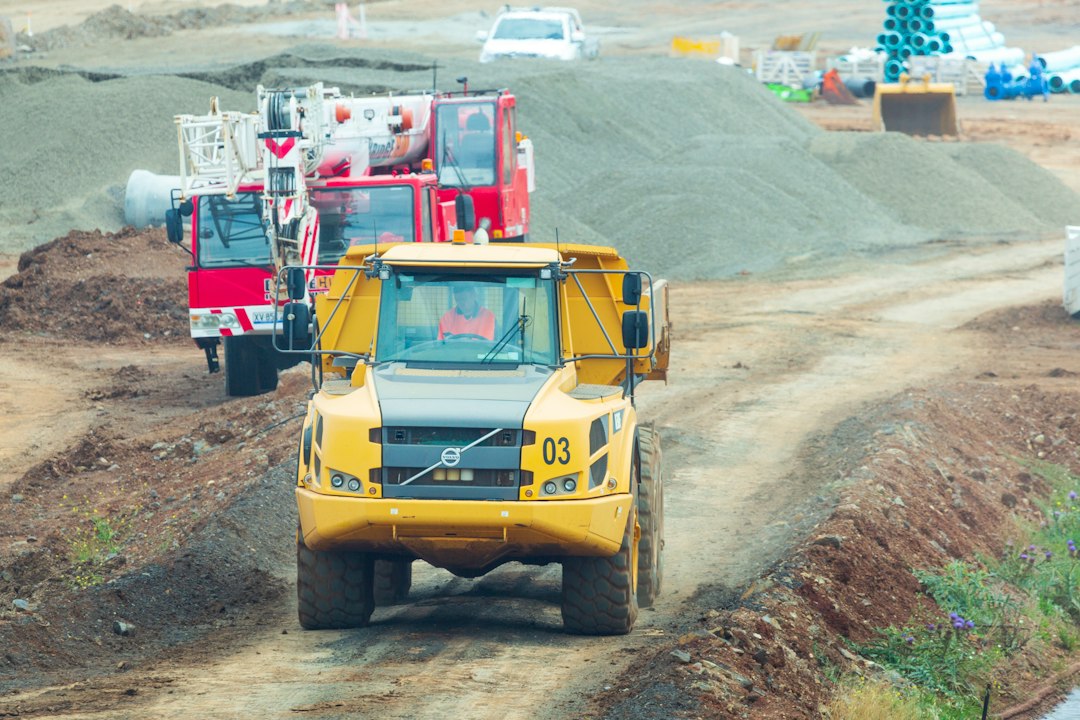
What to Do When Hit by a Construction Truck
What to Do After a Construction Truck Hits You
After a collision with a dump truck, cement mixer, work truck, or other construction vehicle, get medical help, call 911, document what you can, and avoid giving a recorded statement to an insurer before you understand your rights. A construction truck accident attorney can move quickly to preserve truck data, driver records, video, and construction-site evidence that may disappear.
Construction-truck crashes can involve more than one responsible party. The driver, trucking company, contractor, subcontractor, maintenance provider, or the party responsible for traffic control may each play a role. That makes a fast investigation important, especially when the crash happened near a work zone.
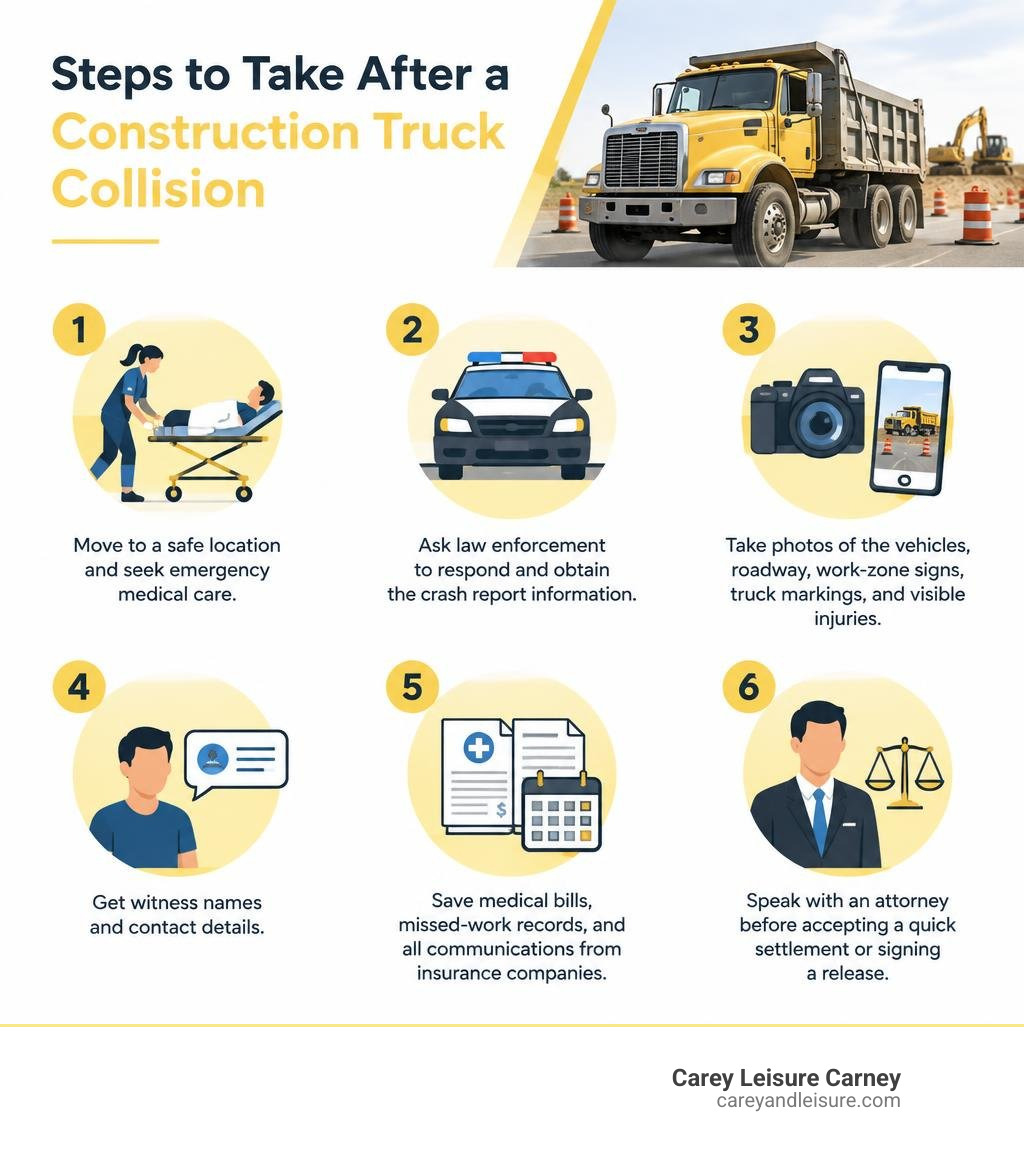
If you are able, take these steps:
- Move to a safe location and seek emergency medical care.
- Ask law enforcement to respond and obtain the crash report information.
- Take photos of the vehicles, roadway, work-zone signs, truck markings, and visible injuries.
- Get witness names and contact details.
- Save medical bills, missed-work records, and all communications from insurance companies.
- Speak with an attorney before accepting a quick settlement or signing a release.
I am Thomas W. Carey, founding partner of Carey Leisure Carney and a board-certified civil trial lawyer who has handled and overseen injury matters across Florida since 1988. As a construction truck accident attorney resource for injured people and grieving families, I understand that careful evidence work and clear guidance can make a difficult claim more manageable.
Construction truck accident attorney terms made easy:
Immediate Steps to Take After Being Hit by a Construction Truck
When an enormous dump truck, concrete mixer, or flatbed hauling building materials collides with your car, the shock can be overwhelming. Construction vehicles can weigh anywhere from 30,000 to over 80,000 pounds, turning an ordinary morning commute into a life-altering ordeal in a fraction of a second. Knowing the exact sequence of actions to take helps protect both your health and your future legal rights.
Your immediate priority is always personal safety and health. If your vehicle is movable and you are in active traffic, pull to the shoulder or a safe spot away from construction machinery. Turn on your hazard lights. If you cannot move, remain seated with your seatbelt buckled until emergency responders arrive.
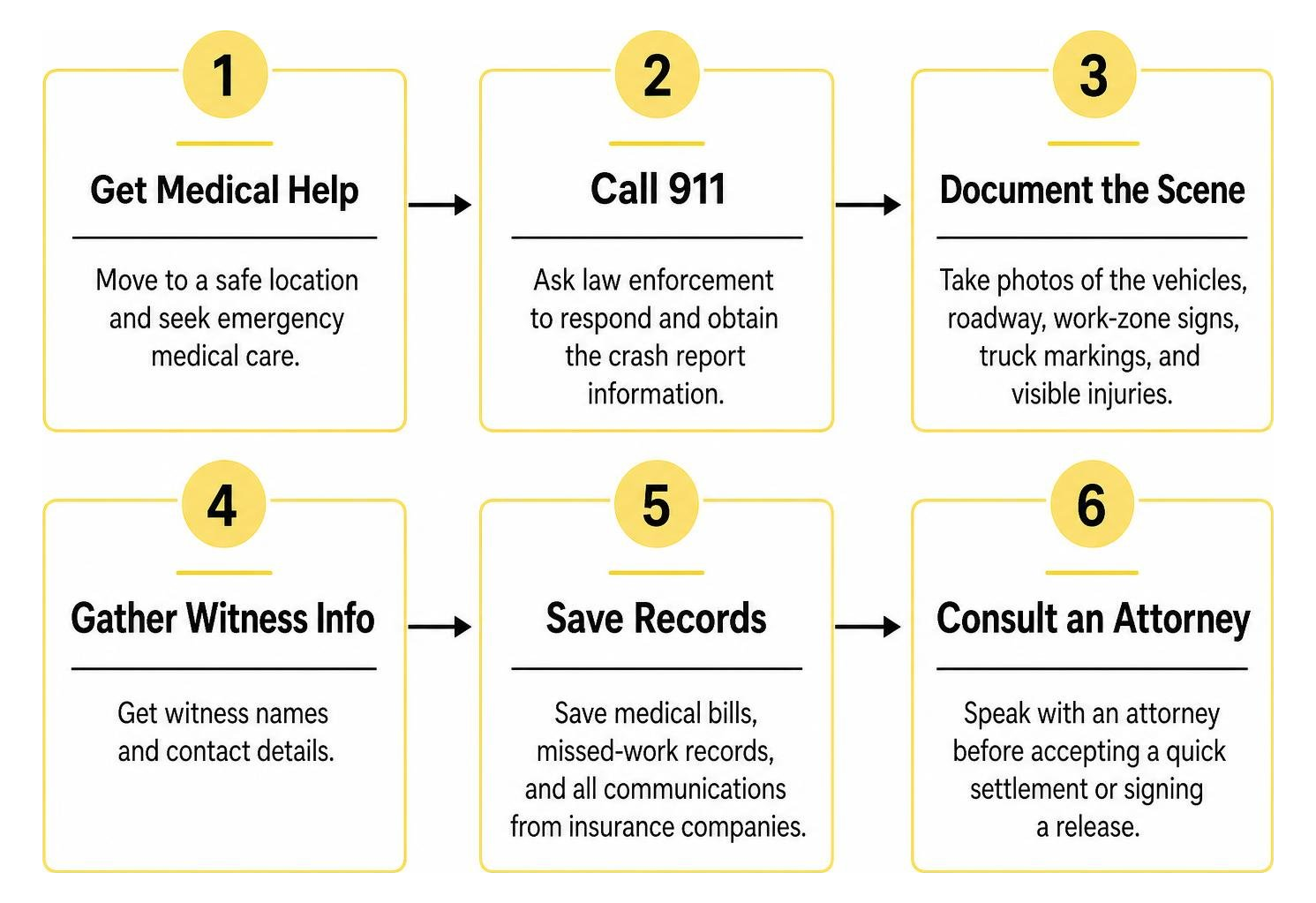
Here is a checklist of critical steps to follow at the scene:
- Call 911 Immediately: Request both police dispatch and emergency medical services (EMS). Even if you believe your injuries are minor, the adrenaline surge after a wreck can mask severe soft-tissue trauma, concussions, or internal bleeding. Under Florida law, prompt medical documentation is vital.
- Cooperate with Law Enforcement: When officers arrive, give a clear, factual account of what happened. Do not guess, speculate, or apologize. Ensure the investigating officer files a formal crash report, and note the officer’s name, badge number, and report number before leaving.
- Document the Scene and Injuries: If you can safely do so, use your smartphone to take detailed photographs and videos. Capture vehicle damage from multiple angles, skid marks, temporary traffic signs, lane closures, orange barrels, work-zone cones, debris, weather conditions, and any visible physical injuries. Be sure to photograph the commercial lettering, USDOT numbers, and license plates on the construction vehicle.
- Collect Witness Information: Bystanders, other motorists, and independent witnesses offer unbiased accounts. Collect their full names, phone numbers, email addresses, and brief notes on what they saw.
- Gather Commercial Vehicle Details: Identify the driver’s name, their commercial driver’s license (CDL) number, the name of their employer, the general contractor managing the project, and the commercial insurer.
- Avoid Discussing Fault: Limit your communication with the truck driver and site crew to exchanging basic contact and insurance details. Never discuss liability or sign waivers provided by site managers.
- Review Commercial Incident Procedures: Understanding standard steps following a commercial vehicle collision will keep you from falling into common early administrative traps.
Once you leave the scene, continue your medical treatment without gaps. Follow your doctors’ orders, keep copies of diagnostic scans and discharge instructions, and preserve every receipt related to out-of-pocket costs and missed work.
Determining Liability in Construction Site Vehicle Collisions
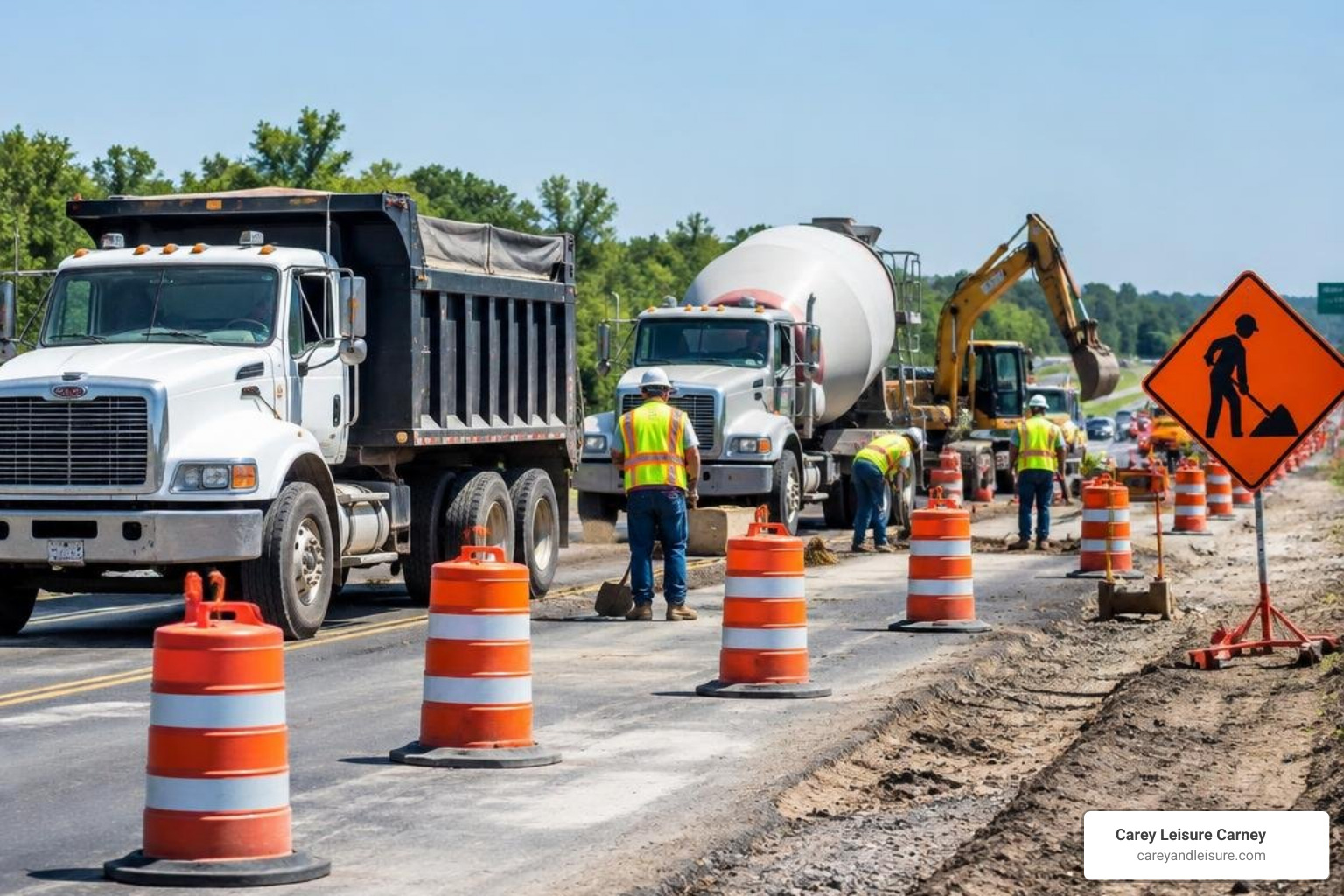
Unlike standard two-car crashes, collisions involving construction vehicles rarely point to a single at-fault individual. These wrecks typically take place in complex work environments governed by layers of corporate agreements, equipment leases, and municipal safety standards.
Establishing liability requires an investigation into everyone involved in operating, loading, directing, and maintaining that vehicle:
- The Commercial Driver: The driver may have acted negligently through speeding, aggressive lane changes, driving while fatigued, texting, or failing to check blind spots before merging into live traffic lanes.
- The Motor Carrier / Trucking Company: Under the doctrine of vicarious liability (respondeat superior), an employer is generally held responsible for the negligent acts of its employees performed within the scope of employment. Employers may also be directly liable for negligent hiring, improper training, or demanding delivery schedules that violate federal hours-of-service rules.
- The General Contractor & Prime Contractors: The general contractor oversees daily operations on the job site. If they failed to set up a safe perimeter, allowed heavy trucks to enter fast-moving traffic without spotters, or neglected roadway safety, they share financial responsibility.
- Subcontractors: Specialized trade contractors often operate their own fleets. When their actions or equipment cause harm, their specific commercial policies must be pursued.
- Equipment Manufacturers & Maintenance Providers: If mechanical failure—such as brake failure, blown retread tires, or steering loss—caused the crash, the third-party maintenance shop or parts manufacturer may be held strictly liable.
Florida operates under a modified comparative fault statute. Under this rule, an injured person can recover damages as long as their share of responsibility is not greater than 50%. If you are found partially at fault, your final recovery is reduced proportionately. Pinpointing every negligent corporate entity is essential to ensure that your financial recovery remains whole when untangling complex trucking liability.
Why You Need a Construction Truck Accident Attorney to Uncover Multiple At-Fault Parties
Unraveling the web of construction site liability requires extensive technical and legal resources. General contractors routinely attempt to insulate themselves by shifting blame to independent sub-haulers, while trucking insurers argue that poor site conditions created an unavoidable hazard.
Work zones are governed by strict safety regulations, including the federal and state Manual on Uniform Traffic Control Devices (MUTCD). These rules dictate warning sign placement, taper lengths for lane shifts, flagger qualifications, and construction entrance buffers. When contractors cut corners on traffic control plans to save time or money, they endanger every driver on the road.
| Responsible Party | Typical Legal Basis for Liability | Key Evidence Needed |
|---|---|---|
| Commercial Motor Carrier | Vicarious liability, negligent driver supervision, Hours of Service (HOS) violations, improper vehicle maintenance | Electronic Logging Devices (ELD), Engine Control Module (ECM) data, Driver Qualification Files, maintenance logs |
| General Contractor | Negligent job site traffic control, failure to implement compliant Temporary Traffic Control (TTC) plans, unsafe site ingress/egress | Daily site safety logs, prime contract specifications, MUTCD compliance reviews, subcontractor agreements |
| Subcontractor / Sub-Hauler | Operator negligence, overloading haul trucks, unsecured aggregate or debris spillage | Weigh-station tickets, dispatch records, load manifests, commercial auto policies |
| Government Entity / DOT | Defective roadway design, failure to correct known hazard conditions, unapproved maintenance-of-traffic plans | Public records requests, state agency contracts, road construction permits, traffic engineer notes |
By conducting a thorough multi-party investigation, our team can identify all available insurance policies—from general liability and commercial auto coverage to umbrella and excess layers—so that you are not left with uncompensated losses.
Critical Evidence to Secure Before It Disappears
The outcome of a construction truck accident claim depends heavily on preserving physical and digital evidence created before, during, and right after the impact. Unlike passenger cars, commercial vehicles carry sophisticated data recorders. However, this critical proof has a very short shelf life.
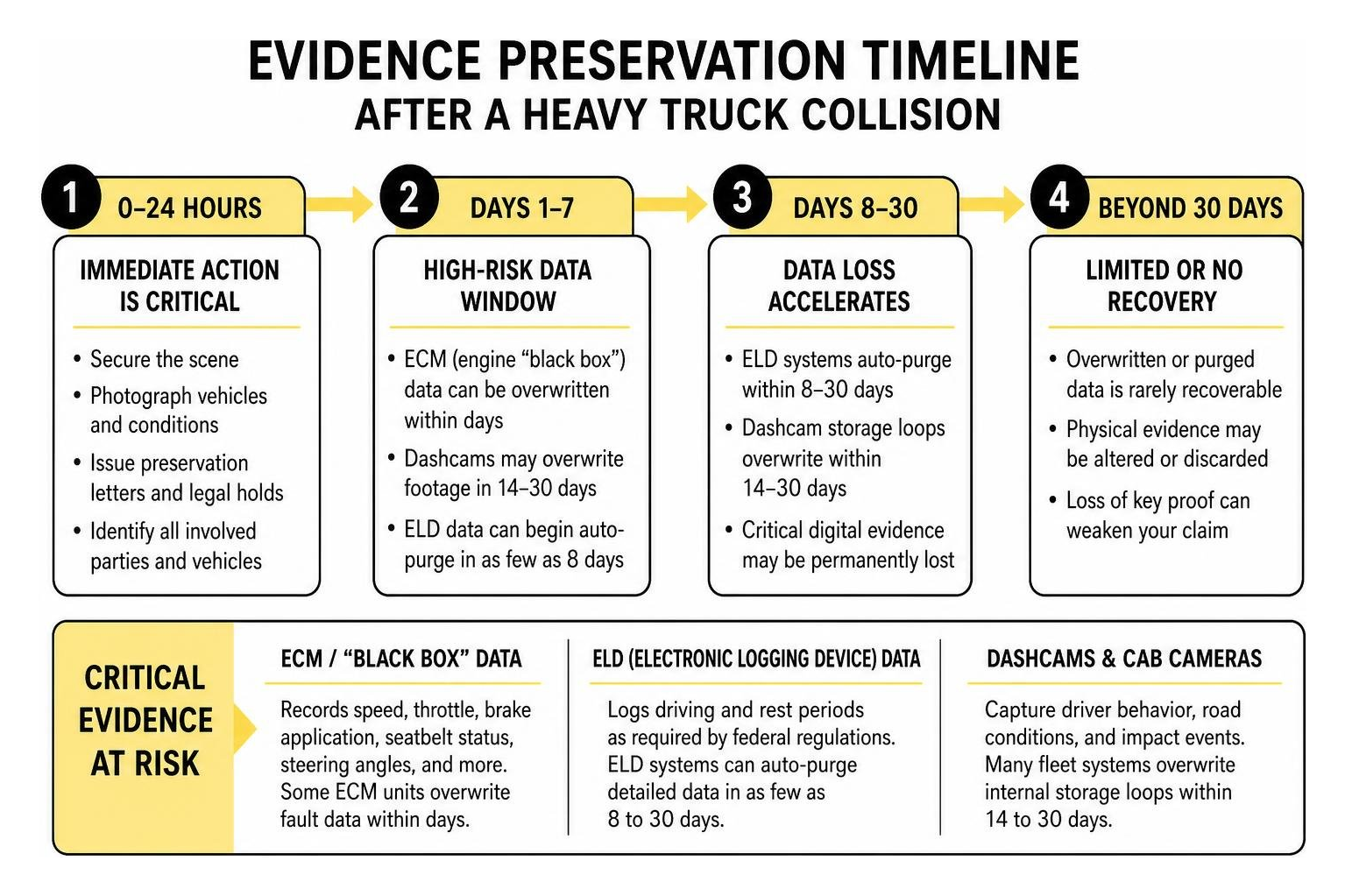
Commercial trucks and construction fleets generate numerous electronic records that insurers can lawfully overwrite or destroy if formal legal action is not taken promptly:
- Engine Control Module (ECM / “Black Box”): Records crucial vehicle telemetry during a collision, including vehicle speed, throttle position, brake application, seatbelt status, and steering angles. Some ECM units overwrite fault data within days or upon subsequent engine ignition cycles.
- Electronic Logging Devices (ELD): Federal Motor Carrier Safety Regulations require interstate motor carriers to log driving hours electronically. Under standard industry protocols, ELD systems can auto-purge detailed driving and resting data after as few as 8 to 30 days.
- Dashcams and Forward-Facing Cameras: Cab cameras provide video of driver distraction, eye movement, forward lane conditions, and impact sequences. Many commercial fleet systems overwrite internal storage loops within 14 to 30 days.
- Driver Qualification Files (DQF): These files contain the driver’s initial employment application, background checks, CDL medical examiner certificates, prior moving violation records, and mandatory post-accident drug and alcohol test results.
- Job Site Safety Logs and Inspection Reports: Daily project diaries show whether required flaggers were on duty, if warning signs were placed according to state DOT permits, and if debris was cleared from travel lanes.
To prevent the loss or intentional spoliation of this vital information, your legal team must immediately draft and serve formal spoliation letters on the motor carrier, job site contractors, and their insurance providers. Once these legal notices are served, destroying or discarding evidence carries severe court sanctions.
Securing this technical material early gives accident reconstruction specialists the raw data they need to build an airtight case. Presenting credible, scientifically validated reconstructions often relies on expert witness testimony to clearly illustrate contractor negligence before a jury. For further insights into complex regional personal injury litigation, see the Lee County Bar Association legal publication.
Why Hiring a Construction Truck Accident Attorney Protects Your Claim
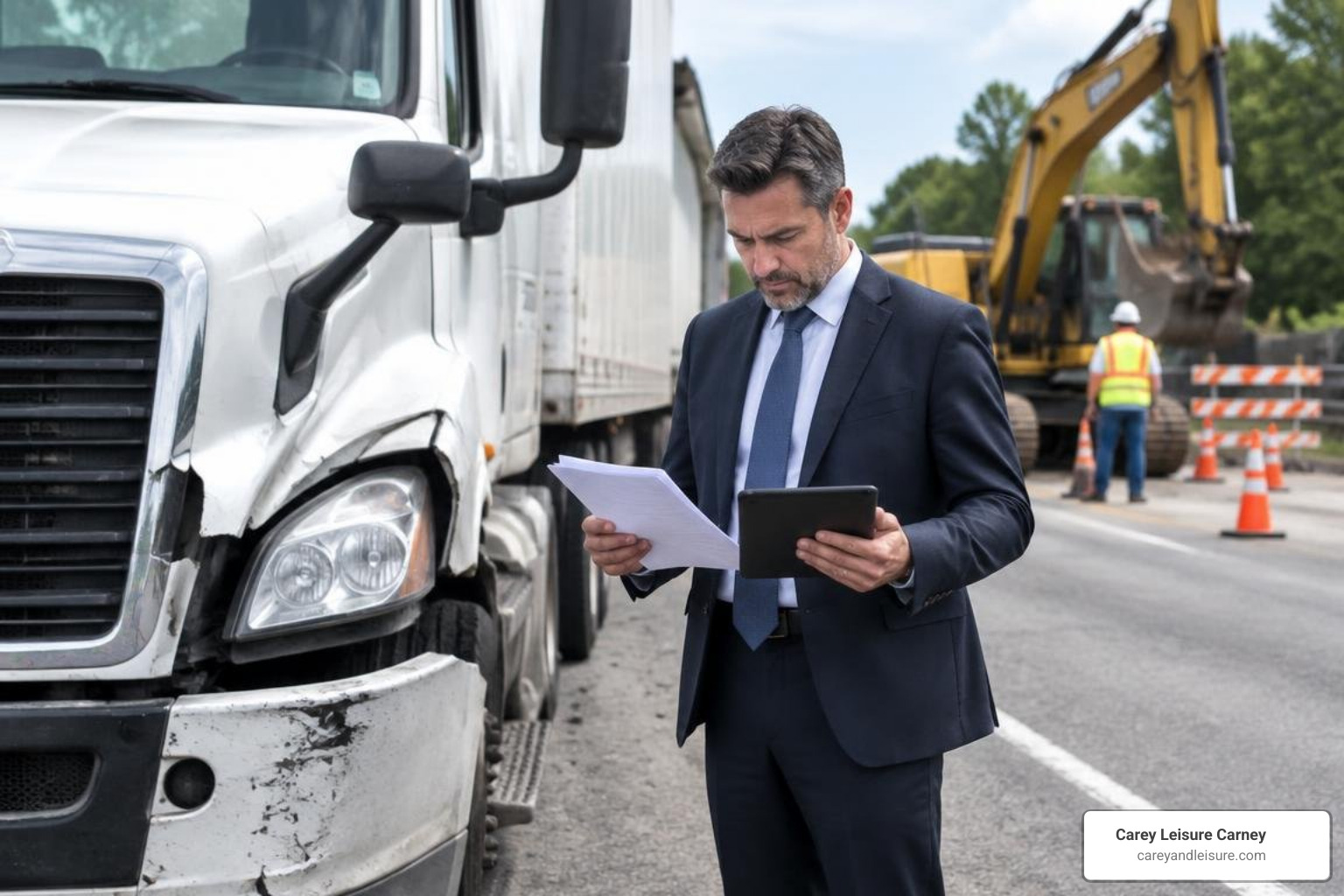
When a heavy construction vehicle causes serious injury, the trucking company’s insurer often deploys an emergency response team—including defense attorneys, field adjusters, and private investigators—to the scene within hours. Their single objective is minimizing the financial exposure of the carrier and contractors.
Insurance adjusters use several well-worn strategies against unrepresented victims:
- The “Friendly Check-In” Call: An adjuster contacts you shortly after the crash under the guise of helping with medical appointments. Their real aim is to obtain a recorded statement where a harmless phrase—like answering “I’m doing okay”—is later used to argue your injuries are insignificant.
- The Lowball “Quick Check” Offer: Insurers know that medical bills accumulate quickly. They will offer a rapid, low-dollar settlement check conditioned on you signing a full liability release. Once signed, you permanently surrender your right to seek additional funds, even if you require future spinal surgery or long-term therapy.
- Blame-Shifting Tactics: In multi-vehicle or work-zone wrecks, defense adjusters capitalize on confusion to blame the injured motorist, weather conditions, or phantom third-party drivers to avoid paying commercial limits.
Having dedicated representation balances the scales. At Carey Leisure Carney, our board-certified civil trial attorneys—a distinction earned by fewer than 2% of Florida lawyers—bring over 100 years of combined legal experience to your side. We calculate the true, lifelong value of your damages, including past and future medical treatment, lost earning capacity, pain and suffering, physical impairment, and emotional trauma. Securing specialized commercial vehicle representation ensures your interests are shielded from corporate defense teams at every step.
When to Contact a Construction Truck Accident Attorney After a Crash
You should consult a dedicated lawyer as soon as your emergency medical needs are addressed. Time is one of the most critical elements in commercial vehicle litigation.
Florida sets a strict statute of limitations for personal injury lawsuits. If an action is not filed within the statutory window, you lose your right to recover compensation in court forever. Furthermore, if the collision involved a municipal construction truck, county road maintenance vehicle, or state agency, sovereign immunity laws impose accelerated notice-of-claim deadlines and special procedural requirements that must be met before filing a lawsuit. Reaching out right away ensures that all investigative leads are followed, digital black-box data is locked down, and statutory deadlines are met.
Frequently Asked Questions About Construction Truck Accidents
Who is liable if a dump truck or cement mixer hits my car in Florida?
Liability depends on the facts of the crash and employment relationships. Potentially liable parties include:
- The truck driver for negligent or reckless operation.
- The trucking company or direct employer under vicarious liability principles.
- The general contractor for unsafe work-zone traffic controls or negligent sub-hauler oversight.
- The company that loaded the truck, if shifting aggregate or falling debris caused the collision.
- Third-party maintenance mechanics if mechanical defects contributed to the wreck.
How long do I have to file a claim after a construction truck accident?
Under Florida law, the statute of limitations for general personal injury claims is strictly enforced. If a loved one suffered fatal injuries, wrongful death actions have an even shorter statutory filing deadline from the date of passing. Furthermore, if a city, county, or state government entity is involved (such as a county road crew vehicle), formal statutory notice must be served much earlier under Florida’s sovereign immunity rules. It is best to have an attorney review your case immediately to prevent missing these non-negotiable legal cutoffs.
How much does it cost to hire an attorney for a construction vehicle crash?
At Carey Leisure Carney, we represent clients on a contingency fee basis. This means:
- You pay zero upfront retainers or hourly fees.
- Our firm advances all upfront case costs, including hiring accident reconstruction engineers, gathering black-box data, taking depositions, and retaining medical experts.
- We only collect attorney fees and recover case expenses if we successfully secure a financial settlement or jury verdict on your behalf. If we do not win your case, you owe us nothing in attorney fees.
You can read more about standard contingency fee structures to understand how this client-first model works.
Conclusion
A collision with a heavy construction vehicle can alter your life in seconds, leaving you with severe injuries, mounting hospital debt, and aggressive insurance adjusters trying to minimize your payout. You do not have to confront multi-million-dollar construction firms, corporate motor carriers, and their insurance teams alone.
At Carey Leisure Carney, our board-certified trial lawyers combine over a century of collective courtroom experience with direct attorney access and compassionate service. Serving clients throughout Clearwater, Largo, New Port Richey, Spring Hill, St. Petersburg, Trinity, and Wesley Chapel, Florida, we focus on identifying every liable party, preserving critical evidence, and fighting for every dollar you deserve.
If you or a family member was injured in a collision with a commercial work vehicle, reach out to an experienced Truck Accident Attorney at Carey Leisure Carney today for a free, confidential case review.