

Hauling Justice: A Comprehensive Guide to Trucking Accident Legal Help
Truck Accident Legal Help: Protecting Your Rights After a Crash
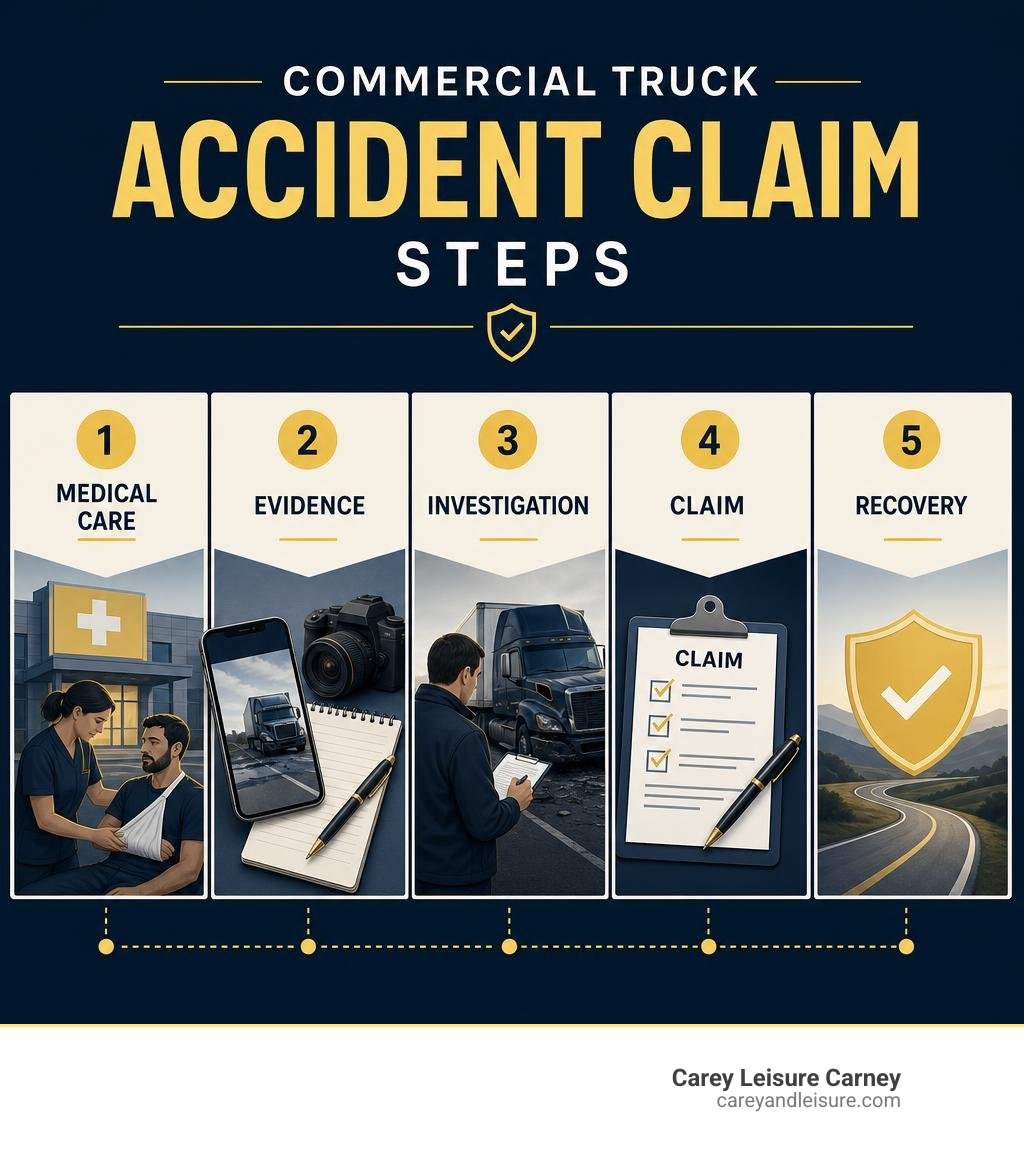
After a commercial truck crash, get medical care, call law enforcement, save photos and contact details, and avoid giving a recorded statement or signing an insurer’s paperwork before you understand your rights. Truck accident legal help can also move quickly to preserve driver logs, truck data, maintenance records, and video before they disappear.
Truck claims often involve severe injuries, large insurance policies, federal safety rules, and more than one responsible party. The driver, trucking company, cargo loader, maintenance provider, or another business may share fault.
A lawyer can investigate the crash, identify every source of compensation, and pursue damages for medical bills, lost income, future care, pain and suffering, and, when a loved one is lost, wrongful-death losses.
I am Thomas W. Carey, a board-certified civil trial lawyer who has guided or overseen roughly 40,000 injury matters and has spent decades representing people harmed by negligence. This guide explains what Truck accident legal help can look like and the practical steps that may protect your claim.
Truck accident legal help glossary:
Why You Need Professional Truck Accident Legal Help After a Big Rig Crash
When an 80,000-pound commercial vehicle collides with a standard passenger vehicle, the physics alone create devastating outcomes. Navigating the legal aftermath is entirely different from resolving a typical fender bender. Commercial transportation is governed by complex federal safety regulations and multi-tiered insurance policies designed to shield corporate motor carriers. Understanding the distinction between truck accidents and car crashes is crucial: commercial operators have corporate defense teams and insurance adjusters on the scene almost immediately, working to limit corporate liability before you have even left the emergency room.
When to Seek Truck Accident Legal Help for Severe Injuries
Due to the extreme size disparity between tractor-trailers and passenger cars, collisions frequently cause catastrophic injury. Survivors often endure traumatic brain injuries, spinal cord damage, crushed limbs, internal organ trauma, and severe burns. When dealing with life-altering harm, reading when big rigs collide a guide to truck accident injuries highlights why immediate advocacy is vital. The resulting medical expenses, ongoing physical rehabilitation, lost wages, and profound physical pain and suffering require thorough documentation to ensure your long-term needs are fully funded.
Navigating Multi-Party Liability and Corporate Trucking Defense
Unlike basic automobile collisions where fault generally lies between two drivers, commercial collisions feature layers of accountability. Trucking companies, freight brokers, third-party cargo loading crews, maintenance vendors, and equipment manufacturers can all share responsibility. Holding these entities accountable requires suing trucking companies after an accident through focused legal actions that demonstrate employer negligence, improper training, or negligent hiring practices.
Common Causes and Investigating Commercial Truck Collisions
Investigating large commercial vehicle collisions reveals that human error and corporate shortcuts cause most wrecks. Nationally, driver-related factors contribute to roughly one-third of fatal heavy truck collisions (representing 34.7% of fatal semi-truck wrecks across federal transportation analyses). Specific driver actions frequently identified include:
- Speeding Violations: Documented in 8.3% of fatal crashes where stopping distance was drastically compromised.
- Distraction and Inattention: Contributing to 6.4% of deadly incidents.
- Failure to Yield Right of Way: Responsible for 4.3% of major crashes.
- Driver Impairment: Documented in 4.1% of fatal collisions involving drugs, alcohol, or prescription misuse.
- Lane Departure: Accounting for 3.4% of crashes when drivers drifted across lanes.
- Careless Driving: Contributing to 2.7% of catastrophic collisions.
Addressing driver exhaustion is equally vital; exploring fatigue behind the wheel details how tight delivery schedules push drivers past safe operating limits.
Critical Evidence Gathering: From Black Boxes to Driver Logs
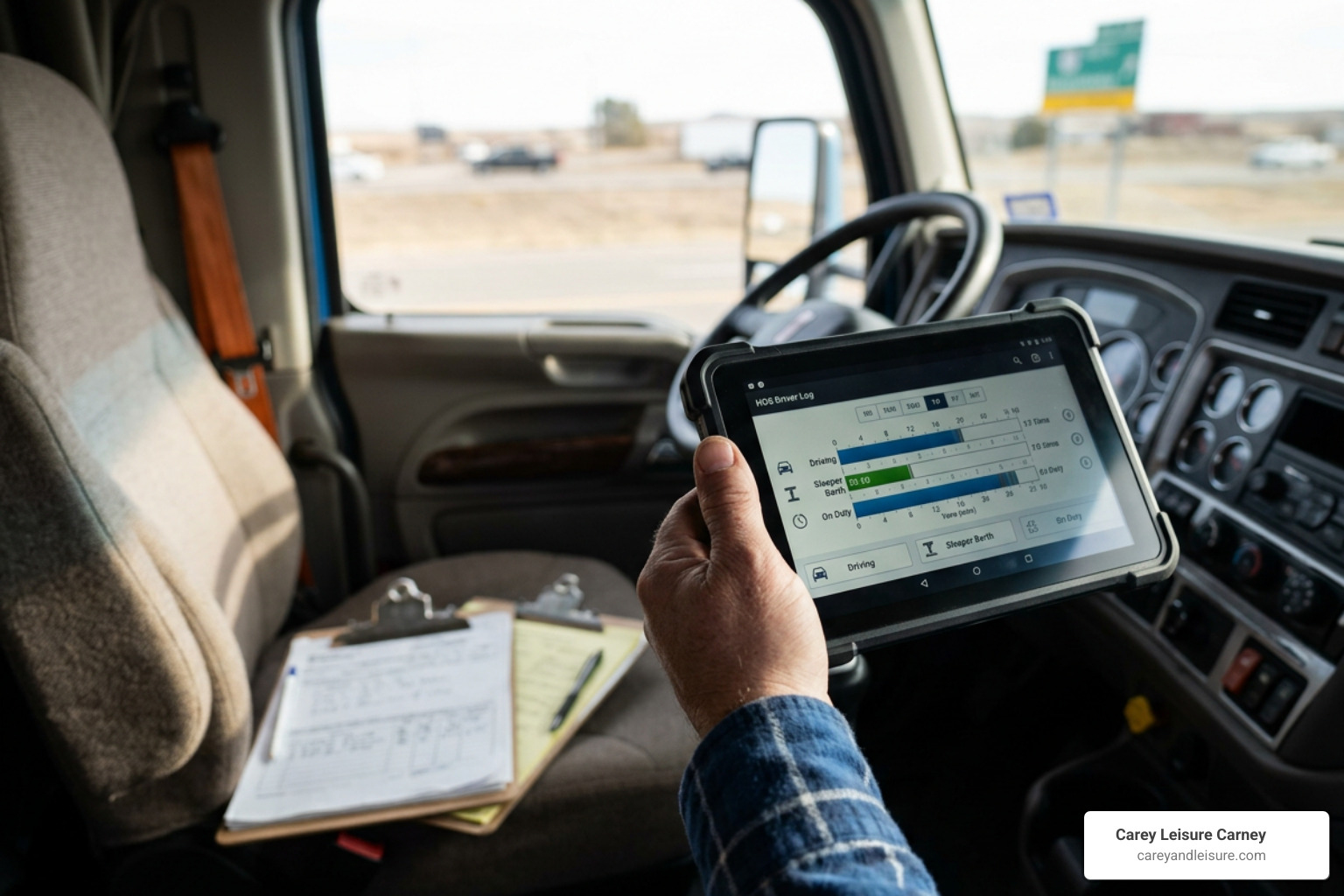
The evidence in a commercial truck crash is sophisticated, digital, and time-sensitive. Commercial vehicles contain Electronic Control Modules (ECMs)—commonly known as black boxes—along with Electronic Logging Devices (ELDs) that track operational metrics second by second.
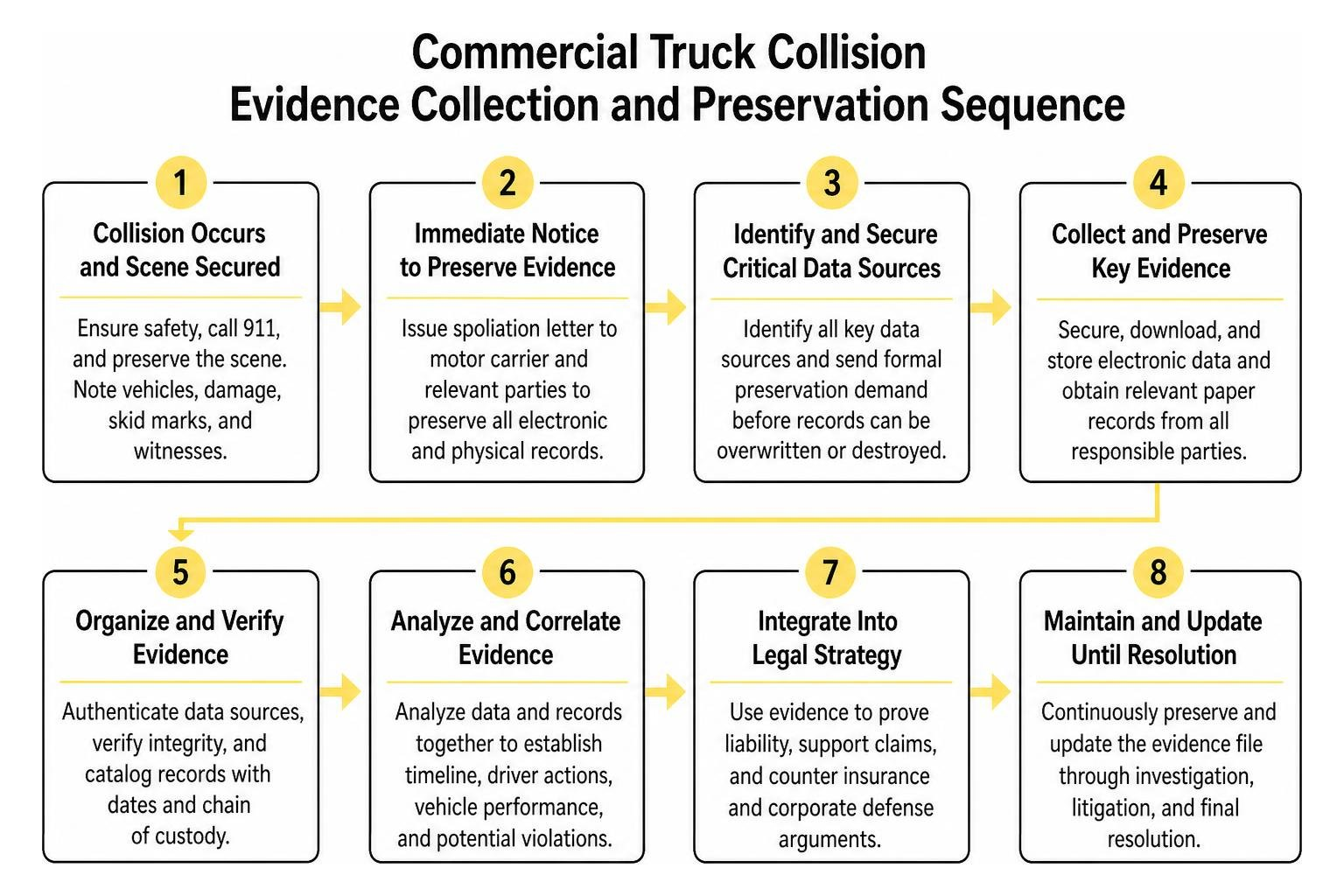
To prevent motor carriers from destroying or overwriting records, we issue formal spoliation letters to preserve:
- Electronic Control Module (ECM) data: Recording vehicle speed, throttle position, braking status, and seatbelt usage before impact.
- Hours of Service (HOS) logs: Tracking compliance with mandatory driving limits and rest breaks.
- Driver qualification files (DQF): Revealing medical certifications, background checks, training histories, and prior infractions.
- Fleet inspection and maintenance logs: Documenting brake repairs, tire wear, and safety violations.
- Onboard video and dashcam footage: Providing direct visual records of road conditions and driver actions.
- Cargo manifests and weight tickets: Showing whether the trailer was overloaded or unbalanced.
How Truck Accident Legal Help Uncovers Crucial Crash Evidence
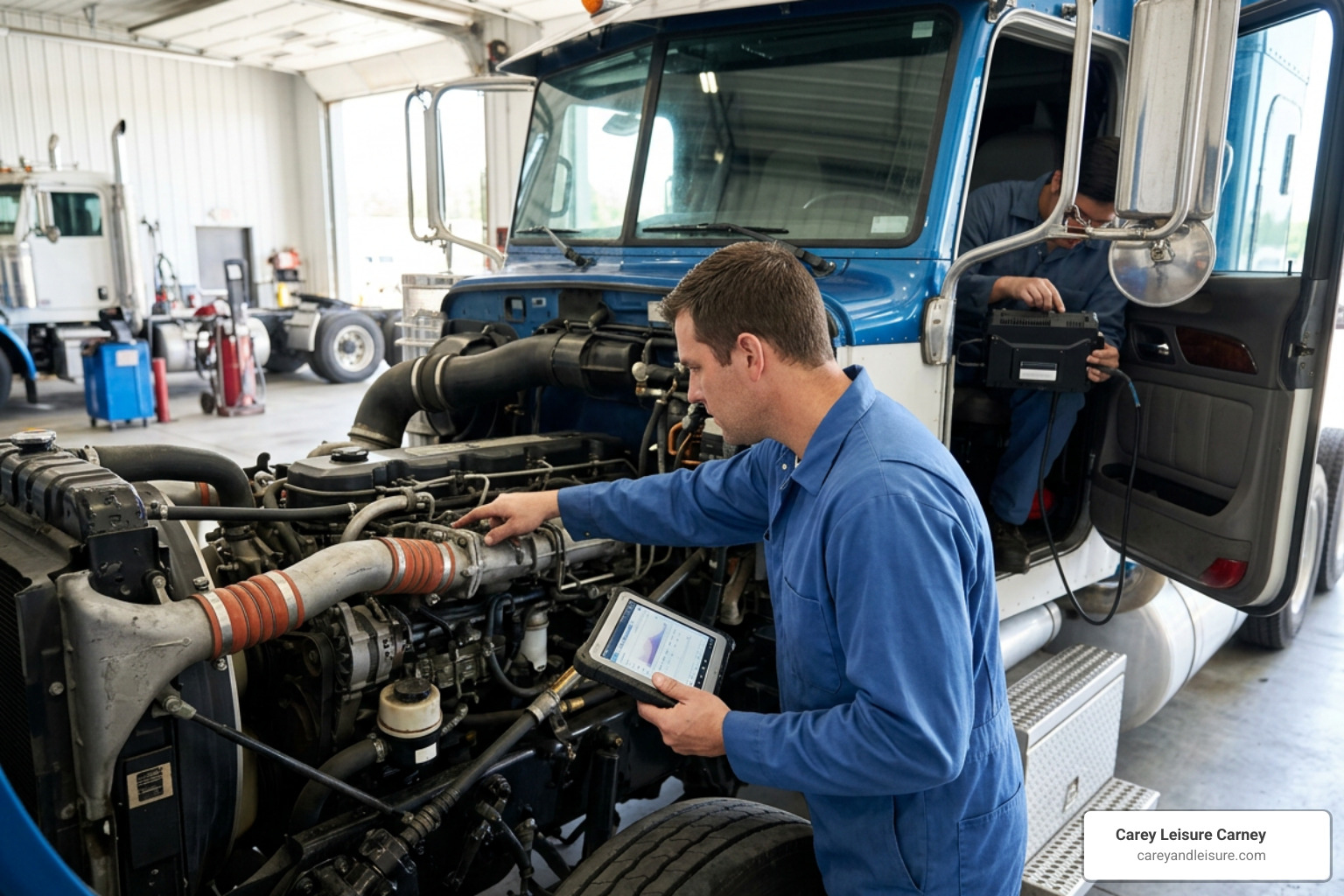
Uncovering systemic safety failures demands comprehensive forensic analysis and accident reconstruction. Engaging qualified expert witnesses enables our team to reconstruct the collision site, evaluate skid marks, inspect mechanical systems, and determine whether brake or steering component failures contributed to the crash.
Commercial Vehicle Claims: Deadlines, Liability, and Case Types
Commercial truck accident litigation differs significantly from typical passenger vehicle claims across several procedural and substantive categories:
| Claim Feature | Standard Passenger Car Claim | Commercial Motor Vehicle Claim |
|---|---|---|
| Liable Parties | Individual driver; vehicle owner | Driver, motor carrier, cargo loader, broker, maintenance vendor |
| Regulatory Standards | State traffic rules and vehicle codes | State traffic laws plus Federal Motor Carrier Safety Regulations (FMCSR) |
| Primary Evidence | Police report, scene photos, eyewitnesses | ECM/black box data, ELD logs, driver qualification files, maintenance records |
| Policy Coverage | Typically $10,000 to $100,000 auto policies | Federal minimums of $750,000 to $5,000,000+ commercial policies |
| Defense Representation | Standard auto insurance defense adjusters | Immediate rapid-response corporate legal teams and risk managers |
Legal strategy also shifts based on the specific type of commercial vehicle involved in the crash. Securing justice in complex maneuvers requires knowing how to find the best jackknife truck accident attorney to address trailer articulation failures. Similarly, when handling wide loads or structural haulers, when big loads mean big problems finding the right oversize load attorney becomes critical to holding freight escorts and routing coordinators liable.
Understanding Claim Deadlines and Modified Comparative Fault
Strict statutory deadlines govern when an injured party can file a civil action. Failing to file a lawsuit before the applicable statute of limitations expires permanently bars your ability to recover compensation.
Additionally, liability rules govern how shared fault affects your financial recovery. Under modified comparative fault rules, your compensation is reduced by your percentage of responsibility. If an injured victim is determined to be more than 50% at fault for the crash, they are barred from recovering any damages from the other parties. This makes prompt evidence gathering essential to prevent corporate defense teams from shifting blame onto you.
Calculating Total Damages in Heavy Vehicle Settlements
Pursuing a comprehensive commercial vehicle accident settlement involves calculating both current and future losses. We evaluate:
- Economic Damages: Emergency medical care, surgery expenses, prescription costs, ongoing physical therapy, durable medical equipment, home accessibility modifications, lost wages, and diminished earning capacity.
- Non-Economic Damages: Physical pain and suffering, emotional distress, loss of enjoyment of life, physical impairment, and permanent disfigurement.
- Wrongful Death Damages: Funeral and burial expenses, lost financial support, and the loss of companionship and guidance when a family member is killed.
Frequently Asked Questions About Commercial Truck Accident Claims
What immediate steps should I take after a commercial vehicle crash?
Focus first on physical safety and health:
- Call 911: Ensure police and emergency medical personnel are dispatched.
- Seek Immediate Medical Evaluation: Even if your injuries seem mild, internal bleeding and head trauma can take hours or days to show obvious symptoms.
- Document the Scene: Photograph vehicle positions, skid marks, road conditions, and commercial carrier markings (USDOT and MC numbers).
- Collect Information: Obtain the truck driver’s name, CDL number, employer information, insurance carrier details, and eyewitness contacts.
- Protect Your Rights: Decline to give recorded statements to the trucking company’s insurance adjusters until you have consulted a lawyer.
Can I still recover compensation if I was partially at fault for the accident?
Yes. Under comparative fault doctrines, you can recover damages as long as your assigned responsibility does not exceed the statutory threshold (50%). Your overall financial recovery will simply be reduced in direct proportion to your share of fault.
How do contingency fee arrangements work for semi-truck litigation?
Most commercial crash litigation is handled on a contingency fee basis. For details on how these agreements operate, reviewing how much does a truck accident lawyer cost explains how legal representation works with zero upfront expenses. We advance all litigation costs—such as accident reconstructionists and medical experts—and our fee is collected only as an agreed-upon percentage of the final recovery. If there is no financial recovery, you owe no attorney fees.
Conclusion
A commercial trucking collision can upend your health, family stability, and financial future in an instant. Standing up against powerful motor carriers and their corporate insurers requires proven trial advocacy and deep knowledge of commercial vehicle safety laws.
At Carey Leisure Carney, our Board-Certified trial attorneys—a distinction earned by fewer than 2% of Florida lawyers—bring more than 100 years of combined legal experience to every case we handle. We provide our clients with direct attorney access and customized legal representation across Clearwater, Largo, New Port Richey, Spring Hill, St. Petersburg, Trinity, and Wesley Chapel. If you or a loved one has suffered injuries in a commercial vehicle wreck, contact our experienced truck accident attorneys today for a free consultation to protect your rights and pursue the full compensation you deserve.