
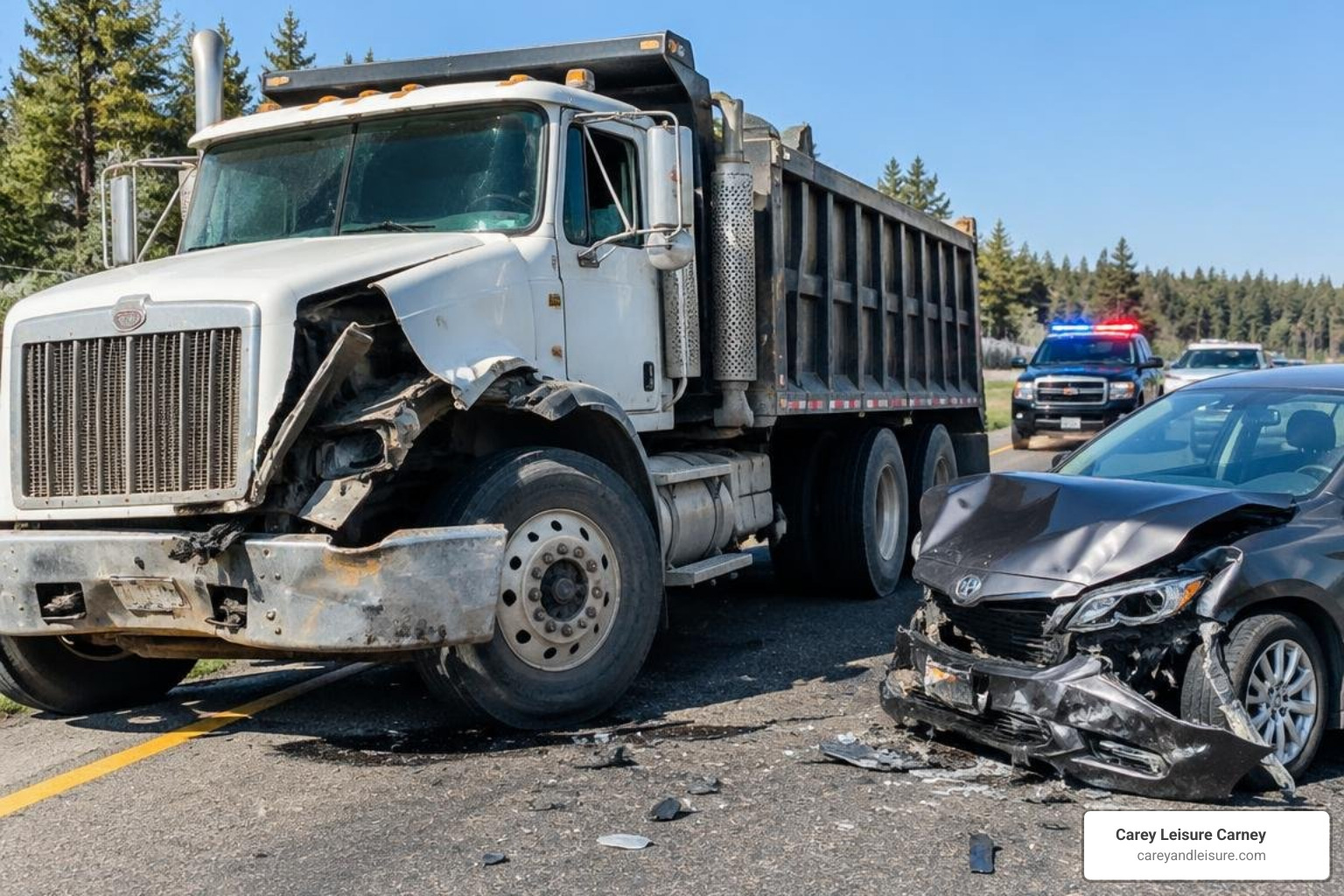
Why Call a Dump Truck Lawyer Before Speaking With Insurers?
Get medical care, call law enforcement, and speak with a dump truck lawyer before giving an insurer a recorded statement or accepting a settlement. A lawyer can help preserve footage, truck records, and witness accounts while investigating whether the driver, trucking company, or another party caused the crash.
Dump trucks are heavy, have large blind spots, and may carry loads that shift or spill. After a collision in the Clearwater area, those details can matter as much as what happened at the moment of impact. You do not have to sort them out while you are recovering.
I’m Thomas W. Carey, founding partner of Carey Leisure Carney and a board-certified civil trial lawyer with decades of experience handling motor-vehicle injury claims. As a dump truck lawyer, I focus on helping injured people understand their options and protect their right to seek compensation.
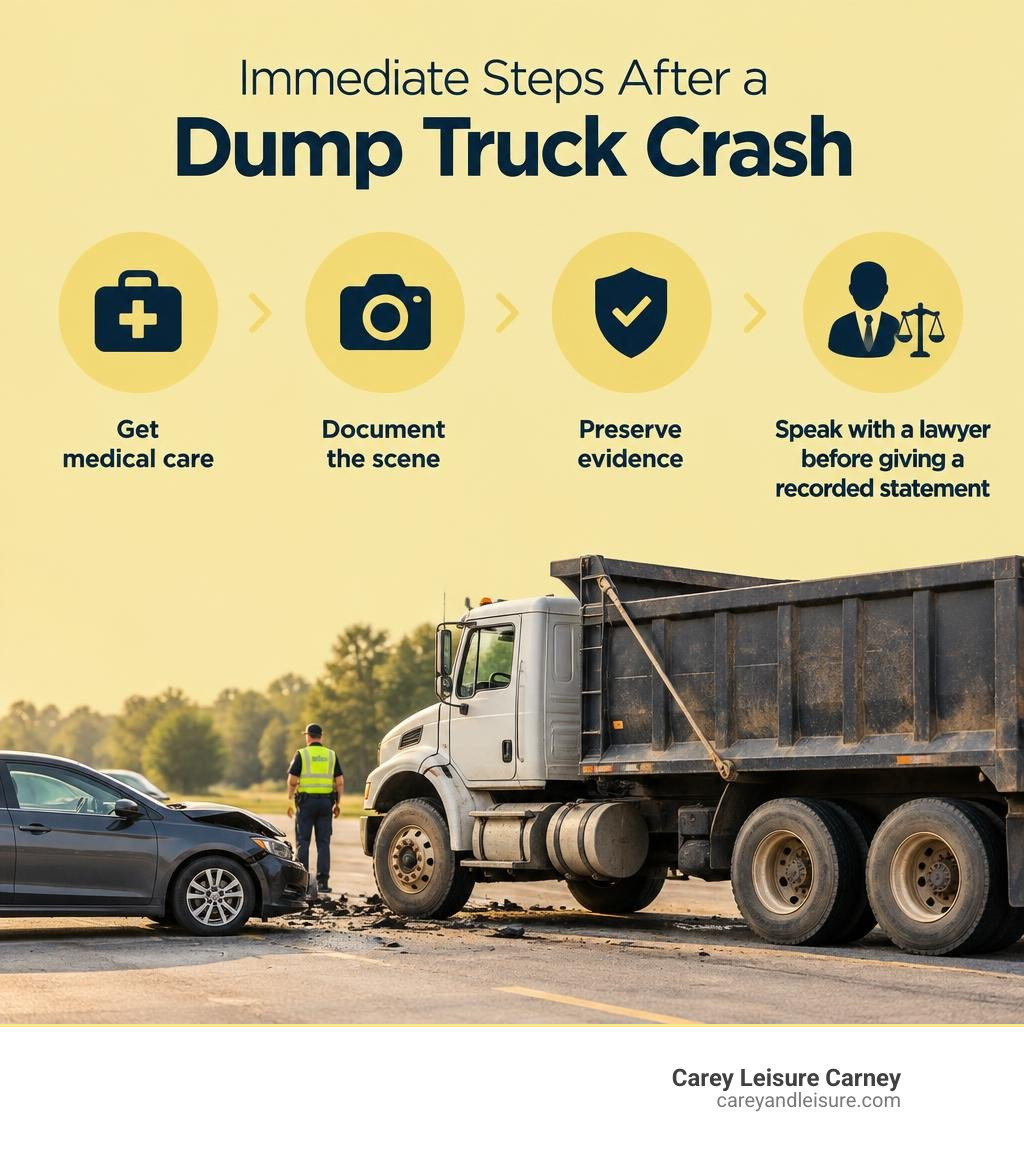
Simple guide to dump truck lawyer terms:
Understanding Dump Truck Accident Risks and Causes
Dump trucks are among the most dangerous commercial motor vehicles sharing the road with standard passenger cars. A fully loaded dump truck can weigh up to 50 tons—roughly 100,000 pounds—which dwarfs an average passenger car weighing around 3,000 to 4,000 pounds. This enormous difference in gross vehicle weight means that when a crash happens, the occupants of smaller vehicles absorb almost all the physical force.
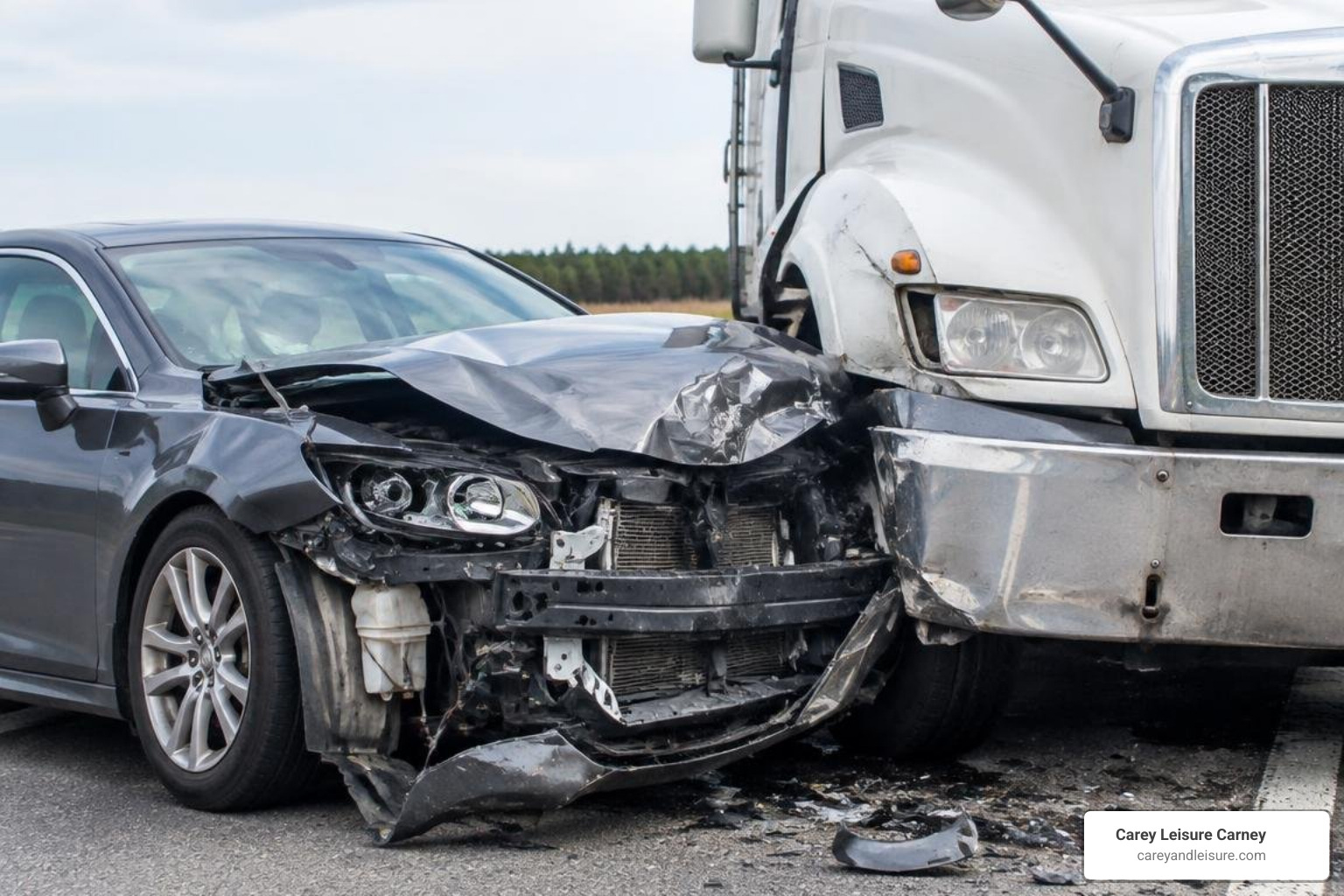
Several distinct risk factors make dump trucks uniquely hazardous:
- Massive Blind Spots (“No-Zones”): Dump trucks possess wide blind spots directly in front of the hood, on both sides (especially the right side), and across the entire rear. If a driver fails to check mirrors thoroughly, adjacent passenger vehicles can easily disappear from view.
- Mechanical and Braking Failures: Stopping a 50-ton vehicle requires immense friction and perfectly calibrated air brake systems. Deferred maintenance, worn brake pads, or overheated drums drastically increase stopping distances, frequently resulting in devastating rear-end crashes.
- Driver Fatigue and Time Pressure: Dump truck drivers frequently work long, demanding shifts on tight construction delivery timelines. Some drivers are even paid based on load weight or trip counts, creating dangerous financial incentives to speed, skip rest breaks, or cut corners on safety checks. Understanding how fatigue behind the wheel leads to severe collisions is essential when building a claim.
- Unsecured and Shifting Loads: Carrying tons of gravel, dirt, asphalt, or demolition debris creates serious stability issues. Improperly distributed weight elevates the truck’s center of gravity, making it prone to rollovers during sudden turns or lane changes. Furthermore, loose materials falling from un-tarped beds can smash windshields and trigger catastrophic multi-vehicle pileups. For more on this hazard, review how unsecured cargo and shifting loads generate complex legal liability.
- Construction Zone Maneuvering: Operating in crowded construction corridors requires constant merging into fast-moving traffic. In our work handling construction vehicle collisions, we often find that inadequate traffic control and rushed job sites directly cause catastrophic wrecks.
State and federal regulators actively enforce strict standards to prevent these hazards. Commercial vehicle safety officers conduct roadside safety inspections to take unsafe trucks and impaired or exhausted drivers off the road immediately.
Operational Hazards: Dump Trucks vs. Garbage Trucks
While people sometimes confuse dump trucks with waste-hauling trucks, their daily operating environments and mechanical risks differ significantly. Understanding these operational differences helps determine where negligence occurred and which safety regulations were violated.
| Operational Factor | Standard Commercial Dump Truck | Municipal / Commercial Garbage Truck |
|---|---|---|
| Primary Cargo | Heavy aggregates, sand, gravel, demolition debris | Compacted municipal solid waste, commercial trash |
| Typical Operating Zones | Highways, arterial roads, active construction sites | Dense residential neighborhoods, narrow alleyways, commercial corridors |
| Frequent Maneuvers | High-speed transit, elevated bed dumping on uneven ground | Frequent stops, continuous reverse backing, curbside idling |
| Mechanical Hazards | Shifting center of gravity during tipping, flying debris | High-pressure hydraulic packing mechanisms, external lifters |
| Vulnerable Road Users | Motorists on highways, roadside construction personnel | Pedestrians, children, cyclists, neighborhood motorists |
| Fleet Ownership | Private hauling fleets, independent owner-operators, contractors | Municipal city agencies, regional waste management contractors |
Garbage trucks pose extreme danger during backing maneuvers in residential areas, where extensive rear blind spots can conceal pedestrians or small vehicles. By contrast, heavy dump trucks generate catastrophic highway impacts due to immense kinetic energy and open-bed cargo spillage.
Establishing Liability in Dump Truck Collisions
Commercial dump truck collisions rarely involve just a straightforward dispute between two drivers. In most incidents, multiple corporate entities share legal responsibility. Thoroughly identifying every liable party is critical to ensuring all applicable commercial insurance policies are tapped for compensation.

Potential liable parties include:
- The Dump Truck Driver: When a driver speeds, drives while distracted, follows too closely, or operates under the influence of substances or fatigue, their individual negligence creates direct liability.
- The Trucking or Hauling Company: Under the doctrine of vicarious liability (respondeat superior), employers are responsible for the negligent acts of their employees performed within the scope of employment. Employers are also independently liable for negligent hiring, failing to run background checks, skipping drug screens, or encouraging drivers to violate hours-of-service limits. Uncovering the legal maze of trucking company liability is a cornerstone of our investigative process.
- Third-Party Maintenance Providers: Trucking carriers often outsource maintenance to independent mechanics. If faulty brake repairs, tire retread failures, or neglected steering components cause a crash, the repair shop can be held liable.
- Cargo Loading Contractors: If an independent site contractor overloads the truck beyond its legal weight rating or fails to balance the load, they share fault for resulting rollovers or brake failures.
- Truck and Parts Manufacturers: Defective steering gears, failing hydraulic cylinders, or faulty suspension components may form the basis of a strict product liability claim against the manufacturer.
- Government Entities: If the vehicle was a municipal dump or waste truck, or if dangerous road design contributed to the wreck, specific public agency liability rules apply.
Why You Need a Dump Truck Lawyer to Investigate Negligence
Uncovering the root cause of a dump truck collision requires immediate, aggressive technical discovery. Commercial carriers and their insurers protect their bottom lines by burying evidence unless compelled by legal process.
A dedicated legal team investigates:
- Federal Motor Carrier Safety Administration (FMCSA) Compliance: Checking whether the carrier maintained valid operating authority and followed all safety mandates.
- Driver Qualification Files (DQF): Reviewing commercial driver’s license (CDL) records, medical examiner certificates, background investigations, and past moving violations.
- Electronic Logging Devices (ELD) & Telematics: Extracting digital hours-of-service logs to detect illegal driving hours, along with GPS tracking data that reveals vehicle speed and harsh braking events.
- Payload Tickets and Weight Scales: Comparing quarry and job site scale tickets against the truck’s certified gross vehicle weight rating (GVWR) to prove illegal overloading.
Common Defenses Used by Trucking Insurers
Commercial insurers defend dump truck claims aggressively. They deploy specialized adjusters and defense lawyers within hours of a crash to minimize settlement payouts.
Common defense tactics include:
- Comparative Fault: Claiming you were speeding, lingering in the truck’s blind spot, or merged too quickly in front of the truck.
- The Sudden Emergency Defense: Arguing an unforeseen road hazard or sudden medical event excused the driver’s inability to stop.
- The Independent Contractor Shield: Claiming the driver was a freelance operator, attempting to insulate the parent hauling company from vicarious liability.
- Blaming Subcontractors: Pointing fingers at third-party loaders or paving contractors to create confusion and delay settlement talks.
Why Hiring a Dump Truck Lawyer Protects Your Compensation
Due to the extreme size and weight of commercial dump trucks, collisions frequently cause life-altering, catastrophic harm. Injuries often include traumatic brain injuries (TBIs), severe spinal cord trauma resulting in paralysis, multiple compound fractures, internal organ damage, and severe crush injuries.
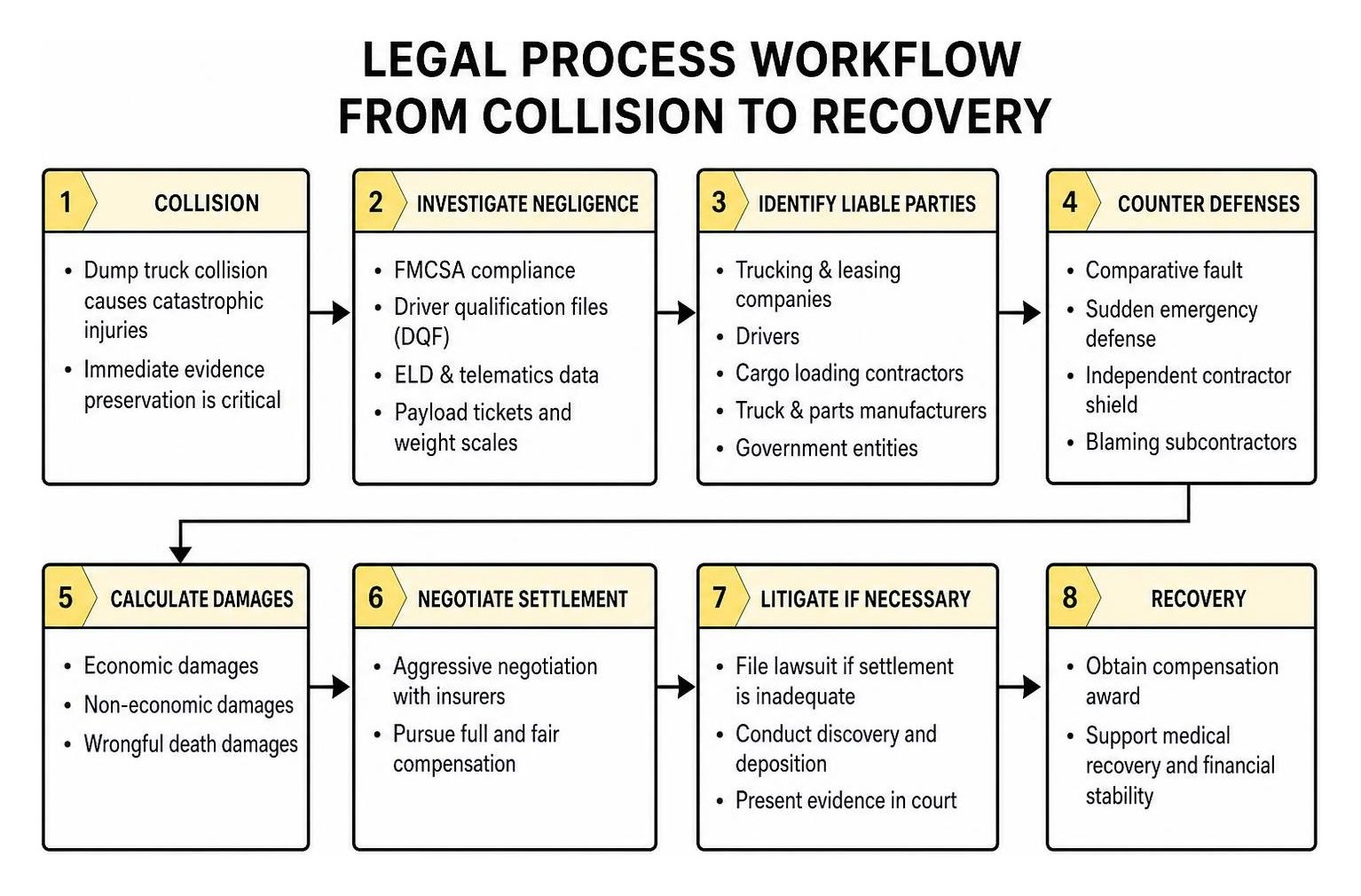
Securing representation from a seasoned firm like Carey Leisure Carney ensures your damages are calculated thoroughly across all available categories:
- Economic Damages: Past and future medical bills, emergency transport, surgeries, physical rehabilitation, durable medical equipment, in-home nursing care, lost wages, and diminished future earning capacity.
- Non-Economic Damages: Physical pain and suffering, emotional distress, mental anguish, loss of enjoyment of life, physical impairment, and permanent disfigurement.
- Wrongful Death Damages: In the most tragic situations, surviving family members can recover funeral expenses, lost financial support, and the loss of companionship and guidance of a loved one.
When dealing with catastrophic losses, partnering with an experienced truck accident injury attorney ensures that future medical needs are fully factored into your claim before any settlement release is signed.
Critical Evidence a Dump Truck Lawyer Will Secure Immediately
Crucial physical and digital evidence can be lost or overwritten within days or weeks of a crash. When you retain legal representation, our first step is drafting and serving comprehensive spoliation of evidence letters to the trucking company, driver, and their insurer.
This legal notice demands the immediate preservation of:
- The vehicle’s Engine Control Module (ECM) or “black box” data (recording speed, throttle position, and brake application before impact).
- In-cab forward-facing and driver-facing dashcam video.
- Fleet maintenance, inspection, and repair work orders.
- Post-crash drug and alcohol screening results.
- Dispatch communications and mobile phone records.
We also coordinate with leading accident reconstruction experts who examine the physical scene, map skid marks with laser scanning, and perform mechanical teardowns of the truck’s braking and steering assemblies.
Steps to Take Immediately After a Dump Truck Collision
The actions you take immediately following a heavy commercial truck crash significantly affect your physical health and your financial recovery.
- Call 911 Immediately: Request emergency medical personnel and law enforcement. A formal police crash report provides vital initial documentation of the scene, driver details, and preliminary fault assessments.
- Seek Comprehensive Medical Care: Let paramedics evaluate you on the scene and go to an emergency room or urgent care center immediately. Adrenaline can mask severe internal bleeding, soft tissue tears, and closed head trauma.
- Document the Scene (If Physically Able): Take clear photos and videos of all vehicle positions, property damage, skid marks, road conditions, traffic signs, and any loose debris or cargo spilled from the dump truck bed. Capture the truck’s USDOT registration number displayed on the cab door.
- Gather Eyewitness Contact Details: Collect names, phone numbers, and email addresses of any bystanders, construction workers, or other motorists who witnessed the collision.
- Decline to Give Recorded Statements to Insurers: The trucking company’s insurance adjuster may call you within 24 to 48 hours acting helpful and concerned. Politely decline to provide recorded statements or sign medical authorizations until you consult your own attorney.
- Contact an Experienced Lawyer: Having a legal team handling communications protects you from insurance traps and allows you to focus entirely on your physical healing. For detailed information on fee structures, learn more about how truck accident lawyer fees work.
Frequently Asked Questions About Dump Truck Accidents
How long do I have to file a claim after a dump truck accident?
Every state enforces a strict statute of limitations that sets the maximum time you have to file a personal injury or wrongful death lawsuit. In Florida, recent statutory changes have established a two-year deadline for most personal injury claims arising from negligence.
Furthermore, if the dump truck was owned or operated by a government agency (such as a county road crew or municipal department), special sovereign immunity statutes require formal written administrative notices to be served within much shorter timeframes before any lawsuit can be filed. Missing these statutory deadlines permanently bars your right to financial recovery.
How much is a commercial dump truck accident settlement worth?
There is no single “average” settlement, as case value depends on several variables:
- The severity and permanence of your physical injuries.
- Total accrued and projected lifetime medical expenses.
- The magnitude of your lost earnings and lost future earning capacity.
- Available commercial liability insurance policy limits.
- The degree of clear liability and egregiousness of the trucking company’s conduct.
Because commercial dump trucks carry substantial commercial liability policies—often ranging from $1,000,000 to upwards of $5,000,000 in tiered umbrella coverage—settlements for catastrophic injuries and wrongful death frequently reach seven figures when handled by experienced trial lawyers. To understand how recovery totals are structured, review our guide to commercial vehicle accident settlements.
What if the dump truck driver was an independent contractor?
Trucking and construction companies frequently classify their drivers as independent 1099 contractors to avoid liability and workers’ compensation obligations. However, this does not shield the hiring company from responsibility.
Under federal safety regulations and common law rules, if the hiring carrier exercised operational control over the driver’s schedule, equipment, route, or loading requirements, they can still be held legally responsible. In addition, freight brokers and general contractors may carry commercial liability policies that apply to your injuries.
Protect Your Recovery with Experienced Legal Representation
When you or a loved one is injured in a commercial vehicle wreck, the trucking company and its insurance carriers immediately mobilize their resources to limit their financial exposure. You deserve an equally dedicated, skilled legal team standing by your side.
At Carey Leisure Carney, our legal team brings over 100 combined years of personal injury experience to your corner. Our firm features Board-Certified civil trial attorneys—a distinction earned by less than 2% of Florida lawyers, recognizing extraordinary trial competence, ethics, and expertise.
We pride ourselves on offering direct attorney access, ensuring you are never passed off to a case manager or left in the dark about your claim. We serve clients throughout Clearwater, Largo, New Port Richey, Spring Hill, St. Petersburg, Trinity, and Wesley Chapel.
If you were injured in a collision involving a heavy truck, reach out to an experienced truck accident lawyer at Carey Leisure Carney. We provide free, confidential case evaluations, and we represent our clients on a contingency fee basis—meaning you owe us nothing unless we successfully recover compensation on your behalf. Contact our office today to protect your rights and start your road to recovery.