Load Shifts and Liability: What a Flatbed Truck Accident Attorney Can Uncover
How a Flatbed Truck Accident Attorney Can Help
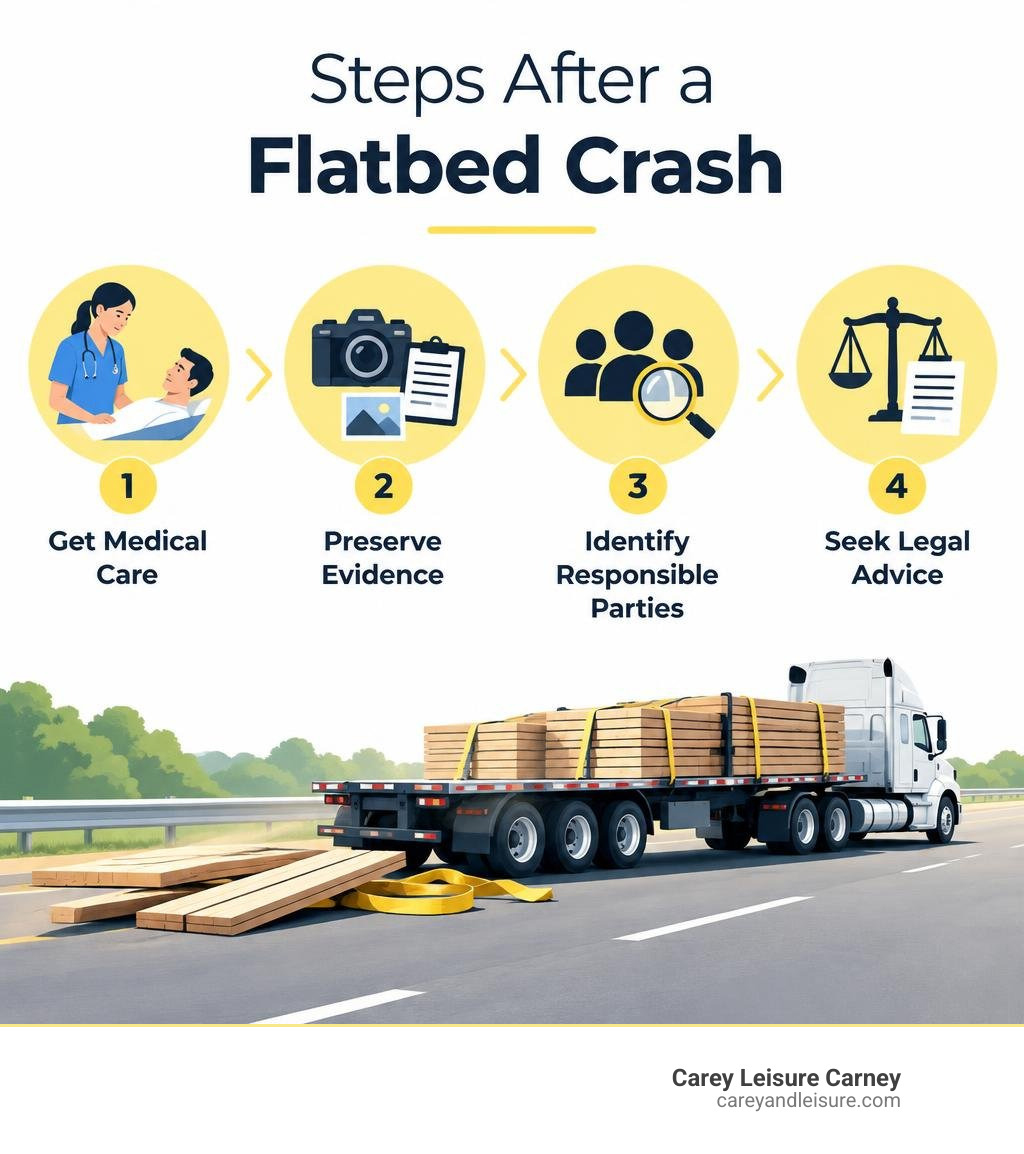
After a flatbed truck crash, a flatbed truck accident attorney can help preserve evidence, find out who loaded and secured the cargo, and identify everyone who may be responsible. Get medical care first. If it is safe, take photos, collect witness contact details, and seek legal advice before cargo and trucking records are lost.
A shifting load can cause a truck to tip or spill cargo into traffic. The cause may not be clear from the crash scene alone, especially when the driver, trucking company, or cargo loader had different roles.
I’m Thomas W. Carey, founding partner of Carey Leisure Carney and a board-certified civil trial lawyer with decades of motor-vehicle injury experience. My work as a flatbed truck accident attorney is grounded in investigating serious crashes and helping injured people pursue compensation.
Know your flatbed truck accident attorney terms:
- Underride truck accident attorney
- Oversize load trucking accident attorney
- Trucking company liability lawyer
Common Causes of Flatbed Commercial Vehicle Crashes
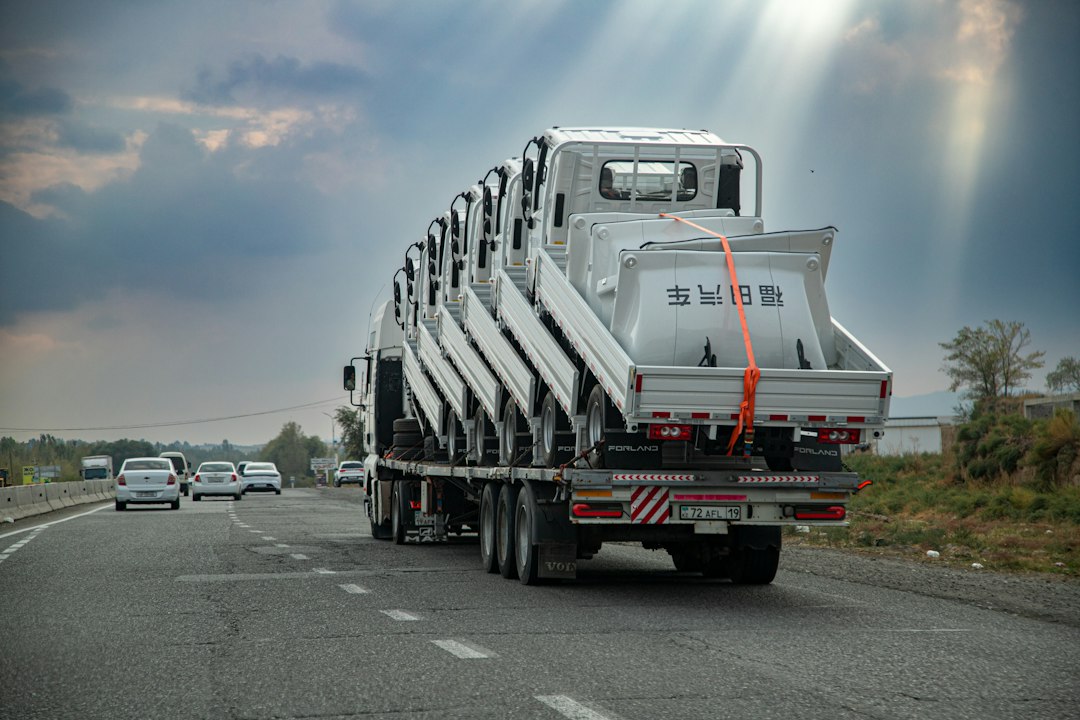
Flatbed commercial trailers present unique road hazards because their freight is not enclosed within steel walls. When heavy machinery, steel coils, lumber, or industrial pipes break free or shift during transit, the resulting momentum can make an 80,000-pound vehicle impossible to steer or brake effectively.
Handling an uncontained load demands precision, strict adherence to safety regulations, and specialized driving skills. The table below outlines how flatbed incidents fundamentally differ from standard dry-van collisions:
| Factor | Enclosed Semi-Truck Crashes | Flatbed Commercial Vehicle Crashes |
|---|---|---|
| Cargo Protection | Enclosed within rigid aluminum or composite trailer walls | Open platform exposed to weather, relying entirely on tie-downs |
| Debris Hazard | Freight is usually contained inside the trailer during impacts | Loose cargo can become high-velocity projectiles across multiple lanes |
| Center of Gravity | Uniformly distributed across a fixed trailer floor | Variable and elevated, increasing the risk of rollovers on turns |
| Securement Rules | Basic interior blocking, bracing, and freight-locking bars | Strict FMCSA cargo securement standards for strap ratings and tie-down counts |
| Loading Responsibility | Often sealed by the shipper without driver inspection access | Shippers and drivers share mandatory physical inspection duties |
When commercial haulers fail to meet safety standards, catastrophic wrecks occur on busy corridors across Clearwater, St Petersburg, Largo, and New Port Richey.
Cargo Load Shifts and Improper Tie-Downs
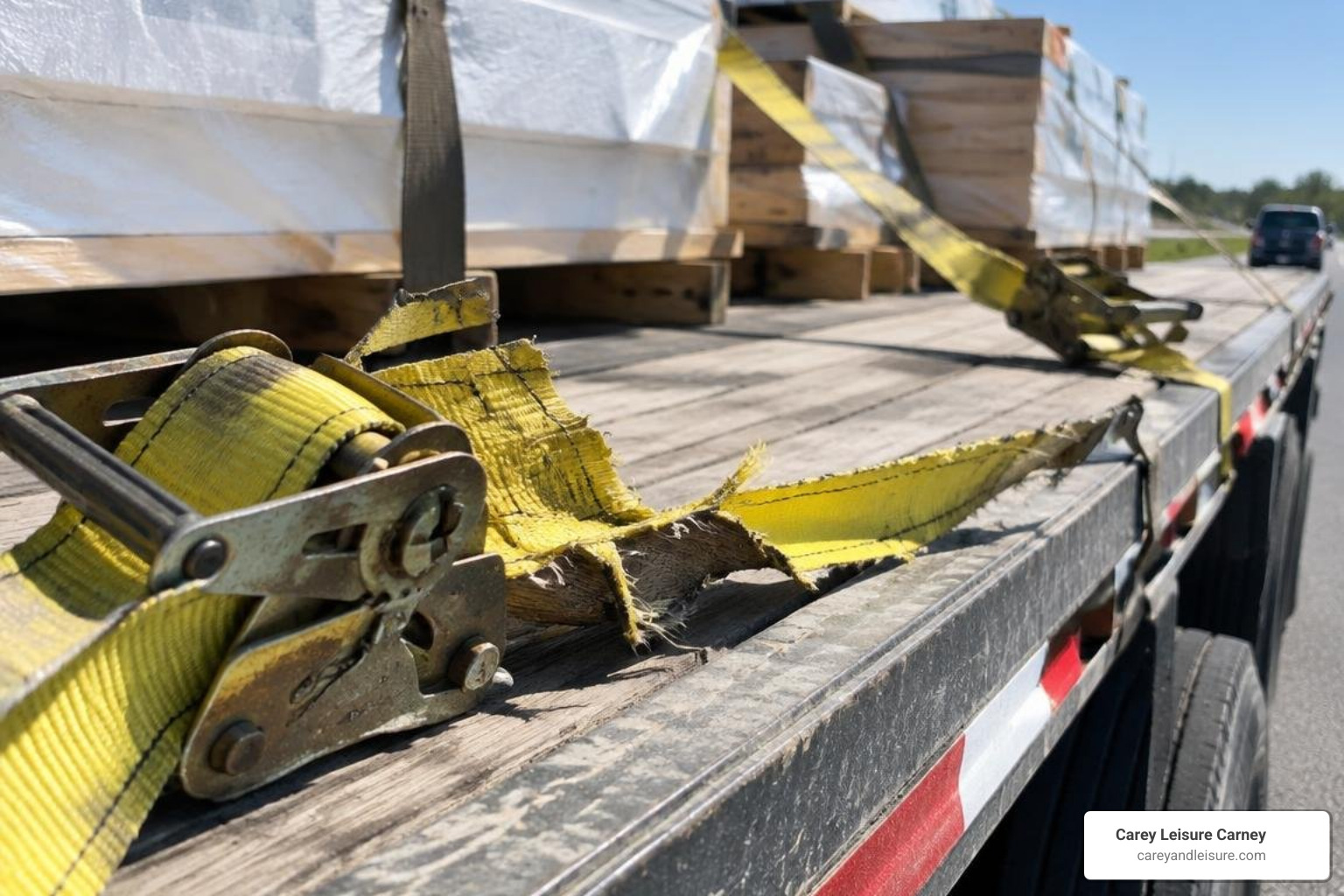
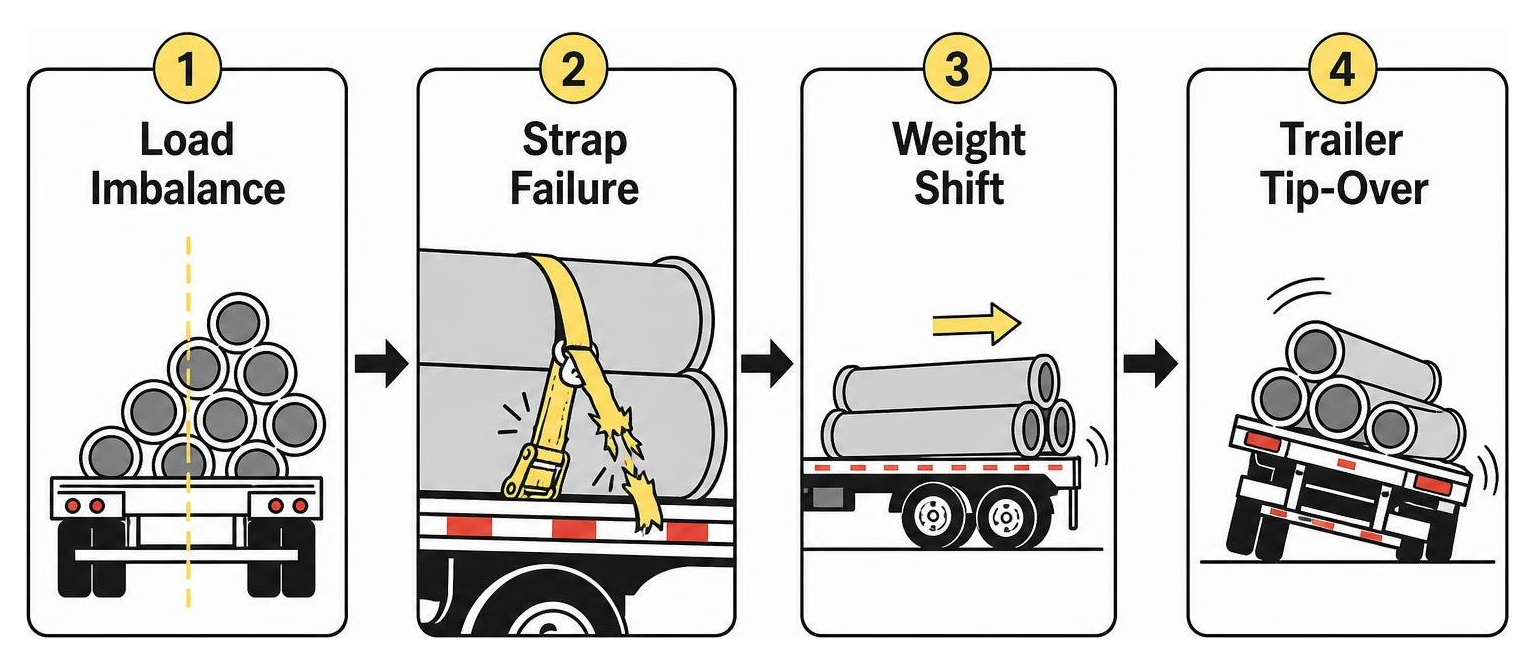
The core risk of flatbed transport is load instability. If cargo moves even a few inches, the center of gravity shifts instantly, dragging the entire truck into a jackknife or rollover. Federal safety standards mandate that tie-down assemblies—such as synthetic webbing straps, steel chains, and winches—must have an aggregate working load limit (WLL) of at least half the weight of the cargo being secured.
Common securement failures include:
- Using frayed, weathered, or undersized tie-down straps.
- Inadequate direct securement against rolling cargo like concrete pipes and steel coils.
- Failing to use edge protectors on sharp cargo edges, causing straps to snap under highway friction.
- Exceeding trailer weight limits or miscalculating the center of gravity.
Equipment Failures and Driver Fatigue
Beyond cargo issues, mechanical negligence and operator exhaustion heavily contribute to large truck collisions. Nationwide traffic safety data indicates that fatal truck crashes increased by 46% between 2010 and 2021, with 15.51 fatal truck crashes per million people in 2021.
Equipment neglect is widespread:
- Brake Failure: Brake issues account for 30% of truck crashes. Flatbed trailers carrying heavy industrial loads place extreme demands on pneumatic braking systems.
- Driver Exhaustion: Commercial driver fatigue is responsible for 13% of truck accidents. Exhausted truckers face diminished reaction times when navigating tight highway lanes or sudden traffic stops in busy areas like Largo and New Port Richey.
- Tire Blowouts: Overloaded flatbeds generate high heat friction, leading to catastrophic tire tread separation.
Determining Liability: Who Is at Fault in a Flatbed Crash?
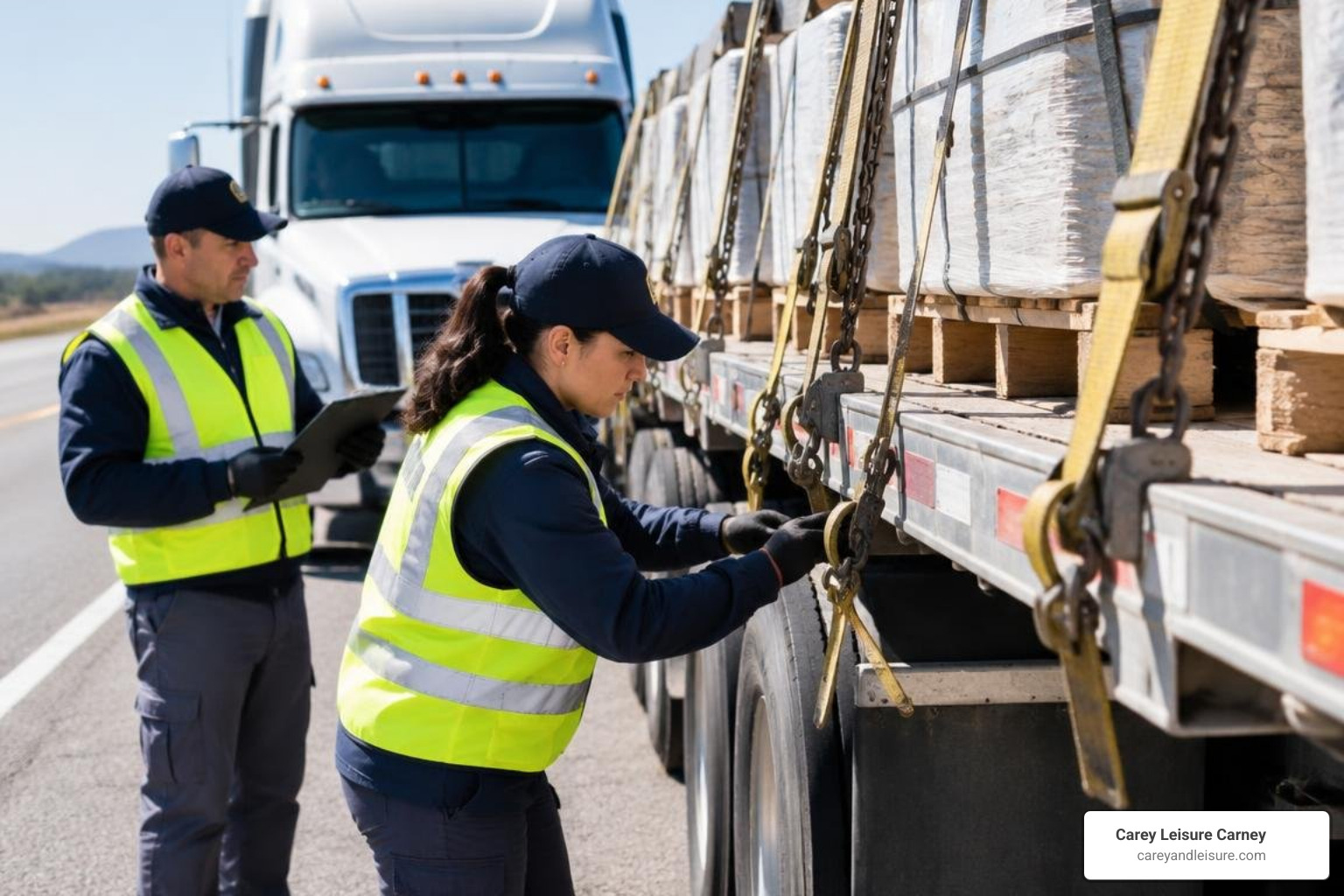
Commercial trucking operations involve multiple corporate entities. A thorough investigation explores every link in the logistics chain to identify all liable parties.
Trucking Company and Cargo Loader Negligence
Determining trucking company liability requires evaluating operational records and third-party vendor contracts. Liable parties often include:
- Motor Carriers: Companies that push drivers past federal Hours of Service (HOS) limits, neglect background checks, or skip mandatory fleet maintenance.
- Third-Party Shippers and Loaders: Independent warehouses and logistics facilities that load cargo improperly or fail to verify tie-down ratings.
- Freight Brokers: Intermediaries who hire cut-rate carriers with documented safety audit failures or lapsed operating authority.
Third-Party Maintenance and Part Manufacturers
When a mechanical defect triggers a wreck, liability may extend beyond the driver and motor carrier:
- Maintenance Contractors: Independent mechanics who perform negligent brake adjustments or certify unsafe trailers.
- Equipment Manufacturers: Companies that manufacture defective tie-down winches, substandard synthetic straps, or faulty brake components.
How a Flatbed Truck Accident Attorney Proves Negligence
Proving liability in complex commercial vehicle wrecks requires rapid action and comprehensive technical investigation.
Preserving Critical Evidence
Motor carriers control key digital and physical records after a collision. An attorney immediately dispatches formal spoliation letters to preserve vital evidence before it is overwritten, altered, or discarded. Crucial evidence includes:
- Electronic Logging Device (ELD) Data: Documents driving hours, speed variations, and rest-break compliance.
- Black Box Event Data Recorders (EDR): Records sudden deceleration, steering inputs, throttle position, and brake application before the crash.
- In-Cab Dashcam Footage: Captures driver behavior, road visibility, and traffic interactions.
- Driver Qualification Files (DQF): Reveals past safety violations, training histories, and medical certifications.
- Bills of Lading and Weight Manifests: Proves whether the load exceeded weight limits or violated balance guidelines.
Working with Accident Reconstruction and Industry Experts
Establishing fault often relies on retaining expert witnesses to analyze the collision mechanics. Forensic engineers calculate kinetic forces, review skid marks, and assess metal fatigue on snapped safety chains. These visual recreations and technical models provide clear evidence of liability for judges, juries, and insurance adjusters.
Compensation and Legal Steps After a Flatbed Collision
Collisions involving heavy commercial vehicles often cause severe truck collision injuries, including spinal trauma, traumatic brain injuries, multiple fractures, and internal organ damage. Securing fair commercial vehicle settlements helps ensure victims have the financial support needed for long-term recovery.
Immediate Steps to Take After an Accident
- Call 911 Immediately: Ensure law enforcement and emergency medical teams are dispatched to the scene.
- Prioritize Medical Evaluation: Seek immediate hospital care, even if adrenaline masks symptoms of serious internal injury.
- Document the Scene: If safe, photograph cargo strap positions, vehicle damage, skid marks, road conditions, and commercial carrier markings.
- Collect Witness Contact Information: Gather names, phone numbers, and statements from nearby motorists.
- Avoid Giving Recorded Insurer Statements: Do not provide recorded statements to trucking company adjusters without legal representation.
- Consult a Board-Certified Trial Attorney: Protect your rights early before evidence is lost.
Damages You Can Recover in a Commercial Truck Lawsuit
Victims of commercial truck crashes can pursue comprehensive financial compensation:
- Economic Damages: Past and future medical expenses, emergency surgery costs, physical therapy, prescription medication, lost income, diminished future earning capacity, and vehicle repair or replacement.
- Non-Economic Damages: Physical pain and suffering, emotional distress, loss of enjoyment of life, permanent scarring, and disability.
- Punitive Damages: In cases involving gross negligence—such as operating under the influence or deliberately falsifying safety logs—courts may award additional damages to penalize the wrongdoer.
Frequently Asked Questions About Hiring a Flatbed Truck Accident Lawyer
Why do I need a specialized attorney for a flatbed crash?
Flatbed collisions involve specialized cargo securement laws and complex corporate relationships. A specialized lawyer understands the nuances of federal motor carrier regulations, handles corporate defense teams, and uncovers obscure evidence, such as third-party loading manifests.
How much does it cost to hire legal counsel for a truck accident claim?
Reputable truck accident attorneys handle injury cases on a contingency fee basis. You pay no upfront retainers or out-of-pocket litigation costs. Legal fees and case expenses are only deducted as an agreed-upon percentage of the final settlement or jury verdict. If there is no recovery, you owe nothing.
How long does it take to settle a flatbed truck accident case?
Case timelines vary depending on injury severity, treatment duration, and the number of liable parties involved. Straightforward claims may settle within several months, while complex cases involving multiple corporate defendants, catastrophic injuries, or formal trial litigation can take a year or longer.
Conclusion
Flatbed truck crashes create devastating consequences for motorists. Holding commercial trucking companies, negligent cargo loaders, and equipment manufacturers accountable requires extensive experience, technical resources, and relentless legal advocacy.
At Carey Leisure Carney, our Board-Certified trial attorneys have over 100 years of combined personal injury experience serving injured victims across Clearwater, St Petersburg, Largo, New Port Richey, Spring Hill, Trinity, and Wesley Chapel. We limit our caseload so you receive direct attorney access and dedicated representation every step of the way.
If you or a loved one has suffered injuries in a commercial wreck, contact an experienced truck accident attorney at our firm today for a free, no-obligation consultation.