
Hire the Right Criminal Defense Attorney to Protect Your Driving Record
How to Choose a Criminal Defense Attorney for a DUI Arrest
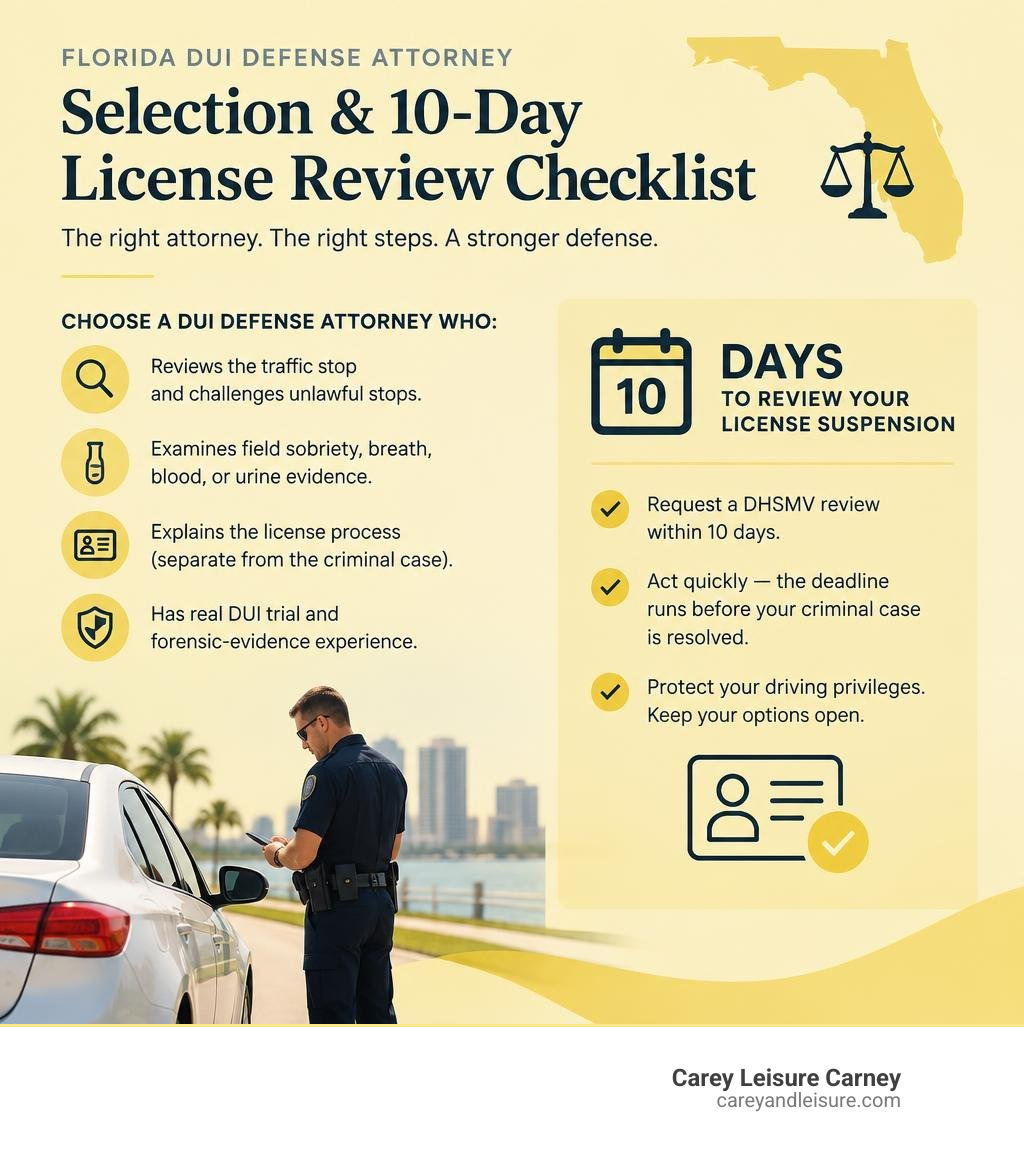
After a DUI arrest in Clearwater or the Tampa Bay area, contact a qualified criminal defense attorney for a DUI as soon as possible. The right attorney can review the traffic stop, preserve video and testing records, challenge unreliable evidence, and help you meet Florida’s short deadline to contest an administrative license suspension.
Look for a lawyer who can clearly explain:
- Whether police had a lawful reason to stop and detain you.
- How field sobriety, breath, blood, or urine evidence will be reviewed.
- What happens to your license separately from the criminal court case.
- Whether the lawyer has meaningful DUI trial and forensic-evidence experience.
A DUI charge can affect driving privileges, work, insurance, and a criminal record. In Florida, a driver generally has 10 days after an arrest to request a Department of Highway Safety and Motor Vehicles review of a license suspension. That clock can run before the criminal case is resolved, so quick, informed action matters.
I am Thomas W. Carey, founding partner of Carey Leisure Carney and a board-certified civil trial lawyer with decades of experience handling injury and DUI-related cases across Florida. While a defense attorney handles the criminal charge, my work representing people harmed by drunk driving has shown me how serious impaired-driving allegations and crashes can be for every person involved. Selecting an experienced drunk driving attorney is critical to protecting your future. Skilled dui defense attorneys can examine every detail of your case, and locating reputable dwi lawyers near me ensures you have strong local advocacy.
Understanding Impaired Driving Charges: DUI, OWI, and OVI
When navigating traffic stops, the alphabet soup of legal acronyms can quickly become confusing. Different jurisdictions use varying terms to describe the offense of operating a vehicle while impaired by alcohol or drugs, but Florida law recognizes Driving Under the Influence (DUI) as the comprehensive legal charge.
Regardless of the acronym used elsewhere, the core principles of impaired driving laws center on whether a motorist is in actual physical control of a motor vehicle while impaired. A criminal defense attorney handling DUI cases can explain how these standards apply to your specific arrest.
| Term | Full Legal Term | Jurisdiction | Core Legal Focus |
|---|---|---|---|
| DUI | Driving Under the Influence | Florida | BAC of 0.08%+ or impairment of normal faculties |
The concept of “actual physical control” is critical under Florida statutes. You do not necessarily have to be driving down the road on Gulf-to-Bay Boulevard to face arrest. If you are sitting in the driver’s seat with the keys in the ignition or within reach—even if you are asleep with the air conditioning running in a parking lot—law enforcement can argue you maintained the immediate capability to operate the motor vehicle.
Florida DUI Legal Standards and Thresholds
Florida maintains clear statutory baselines under Florida Statute § 316.193. A driver is legally under the influence when:
- Unlawful Blood Alcohol Level: The driver has a Blood Alcohol Concentration (BAC) or Breath Alcohol Concentration of 0.08 grams of alcohol per 100 milliliters of blood, or 0.08 grams of alcohol per 210 liters of breath.
- Impairment of Normal Faculties: The driver is under the influence of alcoholic beverages, chemical substances, or controlled substances to the extent that their normal faculties are impaired, regardless of the exact numerical BAC.
Florida enforces a strict zero-tolerance policy for underage motorists. For drivers under the age of 21, a BAC of merely 0.02% or higher triggers an immediate administrative suspension of driving privileges. Commercial driver license (CDL) operators are held to an elevated standard of 0.04% BAC while operating commercial vehicles. Furthermore, drivers who register a BAC of 0.15% or higher, or who have a minor passenger in the vehicle at the time of the stop, face significantly enhanced penalties, higher statutory fines, and mandatory ignition interlock requirements upon conviction.
Why You Need a Criminal Defense Attorney for a DUI After an Arrest

Facing a DUI charge in Florida sets two completely distinct legal engines in motion: an administrative license suspension process governed by the Florida Department of Highway Safety and Motor Vehicles (FLHSMV) and a criminal prosecution in county court. Hiring a criminal defense attorney for DUI matters immediately, since navigating both requires immediate action and sophisticated legal strategy. When exploring top rated DUI defense strategies, the goal is to evaluate constitutional protections, police conduct, and testing accuracy.
A skilled DUI attorney examines every phase of your interaction with law enforcement:
- Did the law enforcement officer possess reasonable suspicion to initiate the traffic stop?
- Was there lawful probable cause to request field sobriety exercises or make a formal arrest?
- Were statutory warnings and implied consent advisements properly read?
- Were breath, blood, or urine samples collected and preserved in strict compliance with administrative codes?
The 10-Day DHSMV Window and Administrative License Suspension
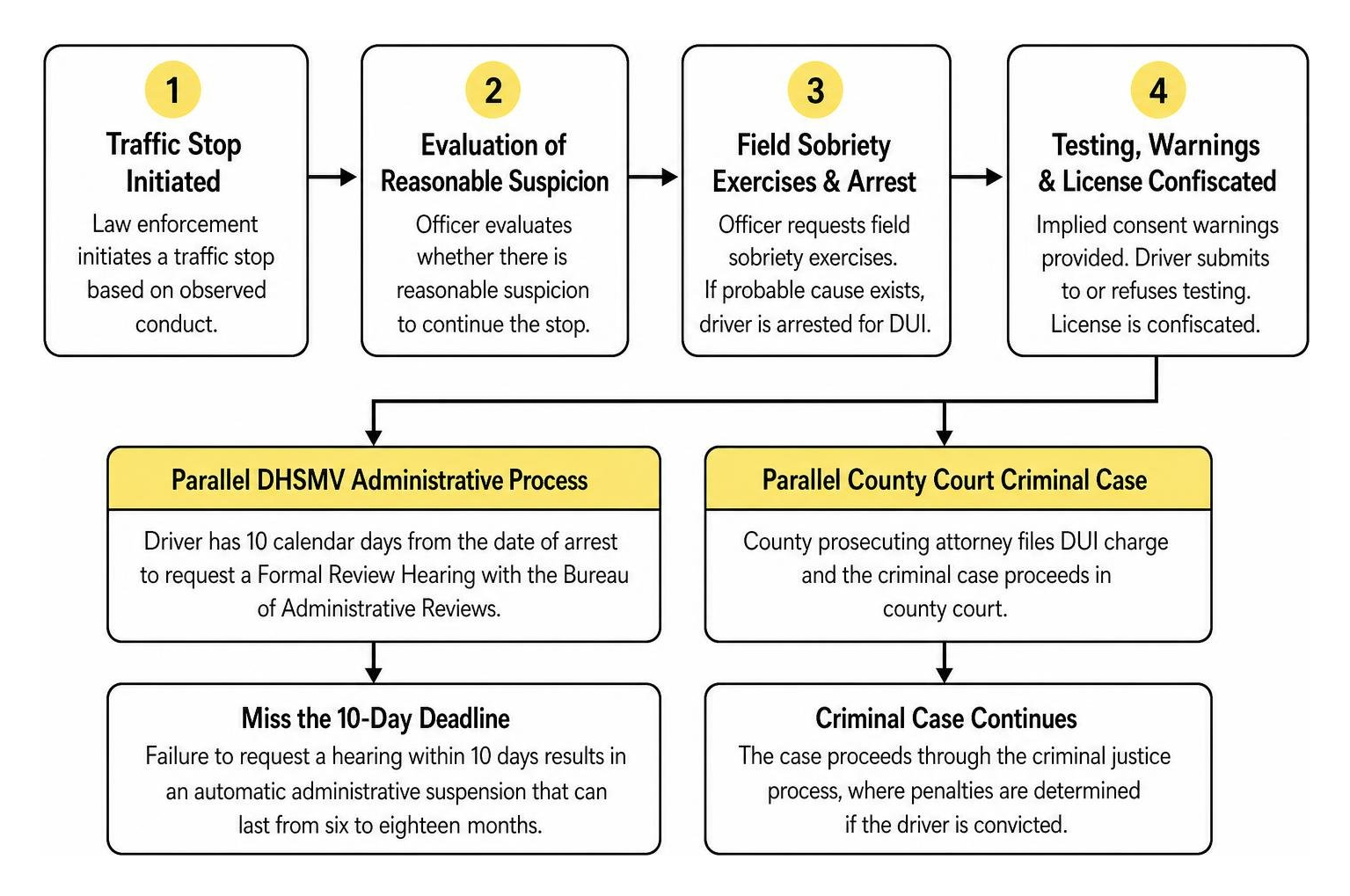
The moment you are arrested for DUI in Florida and either blow a 0.08% BAC or higher, or refuse testing, the officer confiscates your physical driver’s license. Your physical citation serves as a temporary 10-day driving permit.
You have exactly 10 calendar days from the date of arrest to challenge the administrative suspension by requesting a Formal Review Hearing with the Bureau of Administrative Reviews. Failing to request this hearing within the 10-day deadline results in an automatic administrative suspension that can last from six to eighteen months.
An attorney can help navigate this process by either requesting a formal review to challenge the suspension or pursuing an immediate business-purposes-only hardship permit to keep you driving to work, school, and medical appointments.
Aggravating Factors and Heightened Penalties
DUI penalties increase dramatically when aggravating factors are present. Florida law imposes elevated statutory penalties, mandatory minimum sentences, and even felony enhancements under specific conditions:
- High BAC (0.15% or Above): Fines increase to between $1,000 and $2,000 for a first offense, with mandatory installation of an Ignition Interlock Device (IID) for at least six consecutive months.
- Minor in the Vehicle: Operating a vehicle while impaired with a passenger under the age of 18 triggers enhanced fines and potential additional charges for child endangerment.
- Property Damage or Injury: Accidents resulting in property damage are classified as first-degree misdemeanors. When a collision causes serious bodily injury, the offense is elevated to a third-degree felony punishable by up to five years in state prison. The broader drunk driving accident legal consequences of collisions involving serious injury also expose drivers to severe civil liability and punitive damages.
- Prior Convictions: A second DUI within five years carries a mandatory minimum 10-day jail sentence and a five-year license revocation. A third DUI within ten years becomes a third-degree felony with mandatory imprisonment and a ten-year revocation.
Strategic Defense Tactics Used to Beat Drunk Driving Charges
A DUI arrest does not automatically mean a conviction. Skilled defense representation begins by dissecting the state’s case piece by piece. Securing the right counsel involves finding experienced defense representation capable of evaluating local policing tactics across Pinellas, Pasco, and Hillsborough counties.
Critical strategic defense tactics include:
- Challenging the Initial Stop: An officer cannot pull you over based on a hunch. They must articulate specific, reasonable suspicion of a traffic violation or criminal activity. Weaving within a single lane without crossing marked lines or creating a hazard often does not justify an investigatory stop.
- Reviewing Bodycam and Dashcam Footage: Video recordings frequently contradict an officer’s written arrest affidavit. Where an officer reports “slurred speech and extreme unsteadiness,” video evidence may demonstrate polite, clear communication and steady balance.
- Challenging Probable Cause for Arrest: Performing poorly on coordination exercises due to nervousness, fatigue, or medical ailments does not equal probable cause of alcohol impairment.
How a Criminal Defense Attorney Challenges Forensic Evidence in a DUI Case
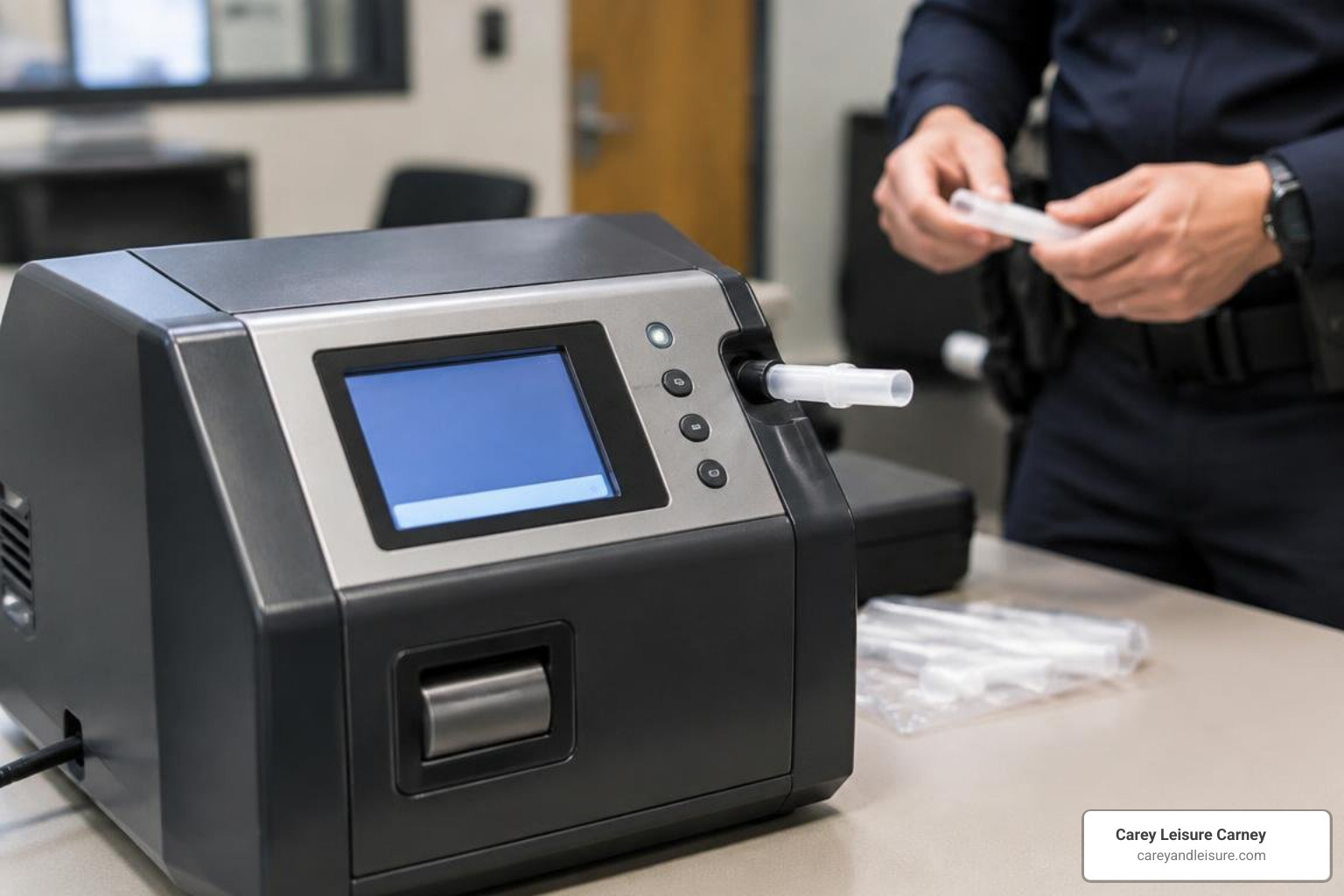
Forensic and chemical testing is central to DUI prosecutions, but these scientific tools are vulnerable to procedural and mechanical errors.
- The Intoxilyzer 8000: Florida exclusively uses the CMI Intoxilyzer 8000 for evidentiary breath testing. To be admissible in court, the state must prove the device was properly calibrated according to Florida Administrative Code 11D-8 guidelines. Defense lawyers routinely subpoena monthly agency inspection logs, annual laboratory maintenance reports, and software diagnostic histories to identify machine drift, calibration errors, or radio frequency interference.
- The 20-Minute Observation Period: Officers must continuously observe an arrestee for at least 20 minutes prior to administering a breath test to ensure the subject does not regurgitate, burp, vomit, or ingest anything that could introduce mouth alcohol into the sample chamber.
- Standardized Field Sobriety Tests (SFSTs): The Horizontal Gaze Nystagmus (HGN), Walk-and-Turn, and One-Leg Stand tests must strictly adhere to National Highway Traffic Safety Administration (NHTSA) protocols. Environmental factors like uneven asphalt, passing traffic, flashing cruiser strobe lights, unsupportive footwear, and physical injuries can invalidate these tests.
- Blood Testing and Gas Chromatography: In felony DUI or medical draw situations, blood samples must follow a strict, unbroken chain of custody. Defense counsel inspects whether the blood vials contained the proper preservatives and anticoagulants, and whether the forensic laboratory utilized validated gas chromatography procedures.
What to Look for in a Criminal Defense Attorney for DUI Defense
When your license, livelihood, and clean criminal record are on the line, selecting the right legal counsel is vital. To make an informed choice, consider these criteria when evaluating defense attorneys:
- Board Certification: Board certification by The Florida Bar is the highest evaluation of competency and experience. Only the top 2% of Florida attorneys earn this designation.
- Forensic Training and Technical Knowledge: A strong defense attorney understands the science behind breath alcohol instrumentation, gas chromatography, pharmacokinetics, and NHTSA field sobriety administration.
- Extensive Trial Record: Prosecutors know which lawyers actively take cases to trial before a jury versus those who routinely accept plea deals. A willingness to litigate creates leverage during negotiations.
- Direct Attorney Access: You should have direct communication with your actual attorney throughout the proceedings, rather than being passed entirely to paralegals or junior associates.
- Familiarity with Local Courtrooms: Practical experience appearing before judges and prosecutors in local municipal and county courts ensures your defense is tailored to local judicial practices.
First-Time Offender Diversion and Charge Reductions
In many Florida jurisdictions, first-time DUI offenders without aggravating circumstances may qualify for specialized diversion initiatives, such as the Pinellas County DROP (DUI Rehabilitation Intervention Program).
Successful completion of these diversion programs typically results in the state reducing the DUI charge down to a lesser charge of Reckless Driving, with the trial court withholding adjudication. This avoids a formal DUI conviction on your record, reduces fine structures, and protects your long-term employment opportunities.
Frequently Asked Questions About DUI Defense
What happens if I blow below the 0.08 legal limit?
Blowing below a 0.08% BAC does not guarantee an immediate dismissal of charges. Under Florida law, prosecutors can still proceed under the theory that alcohol, controlled substances, or prescription medications impaired your normal faculties. However, registering a low BAC significantly weakens the state’s presumption of impairment, opening the door for an attorney to file motions to dismiss or negotiate a reduction to a non-DUI offense.
Can a DUI conviction in Florida ever be expunged or sealed?
No. Under Florida law, a formal DUI conviction cannot be expunged or sealed. Florida statutes explicitly prohibit judges from withholding adjudication on a DUI charge upon a guilty plea or verdict. That means a DUI conviction remains on your permanent criminal and driving record for life. The only way to seal or expunge your record is if your DUI attorney successfully gets the charge dismissed, wins an acquittal at trial, or negotiates a reduction to a charge like reckless driving with a withhold of adjudication.
What are the consequences of refusing a breath test under Trenton’s Law?
Florida enacted “Trenton’s Law” to establish stricter penalties for drivers who refuse chemical testing. Under this law, if a driver has previously had their license suspended for refusing a lawful chemical test, a second or subsequent refusal is a first-degree misdemeanor, carrying criminal penalties of up to one year in jail and a $1,000 fine in addition to an automatic 18-month administrative driver’s license suspension.
Conclusion
A DUI arrest can quickly become overwhelming, but facing charges does not mean you have to face a conviction. Taking decisive, informed action within the first 10 days can preserve your driving privileges, protect your constitutional rights, and ensure every piece of police and chemical evidence is carefully examined.
At Carey Leisure Carney, our board-certified trial attorneys bring over 100 years of combined legal experience to courtroom advocacy. We believe in direct communication, meticulous investigation, and aggressive trial preparation. To better understand the statutory framework governing licensing, chemical testing, and impairment standards across the state, review our comprehensive guide to Florida alcohol regulations. Take immediate steps to protect your license, your freedom, and your future.