

Handy Payouts: Compensation for Carpal Tunnel from a Car Crash
Trauma, Symptoms, and Cause of Carpal Tunnel After a Crash
Many drivers are surprised to learn that a sudden motor vehicle collision can lead to carpal tunnel syndrome (CTS). While office work and repetitive typing are common culprits, blunt trauma from a crash is a frequent cause of peripheral nerve damage. Motor vehicle accidents are the primary cause of traumatic peripheral nerve injuries in the United States, accounting for approximately 46% of all cases.
When a collision occurs, drivers and passengers naturally brace for impact. Instinctively gripping the steering wheel tightly at the moment of force transfers an immense, sudden shock wave directly through the fingers, hands, wrists, and forearms.
Traumatic Compression of the Median Nerve
The carpal tunnel is a narrow passageway in your wrist surrounded by bones and ligaments. Running through this tight space is the median nerve, which provides sensation to your thumb and first three fingers, as well as the flexor tendons that allow your fingers to bend.
In a collision, direct blunt impact against the dashboard, steering wheel, or deployed airbag can crush these delicate structures. The resulting blunt trauma leads to rapid tissue inflammation and soft tissue swelling within the rigid walls of the wrist. Because the carpal tunnel cannot expand, swelling directly compresses the median nerve. Furthermore, severe accidents can cause wrist fractures or joint dislocations that physically narrow the carpal space, pinching the nerve and restricting blood flow. To understand how these soft tissue and skeletal injuries intersect, explore our overview of the various types of car accident injuries.
Identifying Immediate and Delayed Symptoms
Carpal tunnel symptoms do not always register in the immediate aftermath of a crash. Adrenaline, shock, and more visible injuries often mask peripheral nerve damage. Research indicates that only 9% of nerve injuries are diagnosed during an initial emergency department visit, and only 38% are caught by hospital discharge.
As acute swelling settles over the days or weeks following a collision, nerve entrapment becomes increasingly noticeable. Key symptoms to watch for include:
- Numbness and Tingling: A “pins and needles” sensation in the thumb, index finger, middle finger, and half of the ring finger.
- Reduced Grip Strength: Frequent dropping of objects or difficulty turning doorknobs and opening jars.
- Radiating Wrist Pain: A dull, deep ache in the wrist that may shoot up the forearm.
- Nocturnal Symptoms: Waking up at night with burning pain or severe numbness in the hands, often relieved temporarily by shaking out the wrist.
If you begin experiencing these signs after a crash, review this guide on nerve damage after a car accident: symptoms & claim value to understand how delayed nerve pain develops.
Diagnosing and Proving Traumatic Carpal Tunnel Injuries
Securing fair carpal tunnel syndrome after car accident compensation requires concrete, objective medical evidence linking your symptoms directly to the collision. Because insurance adjusters frequently argue that carpal tunnel is an age-related or work-induced pre-existing condition, obtaining specialized diagnostic testing is critical.
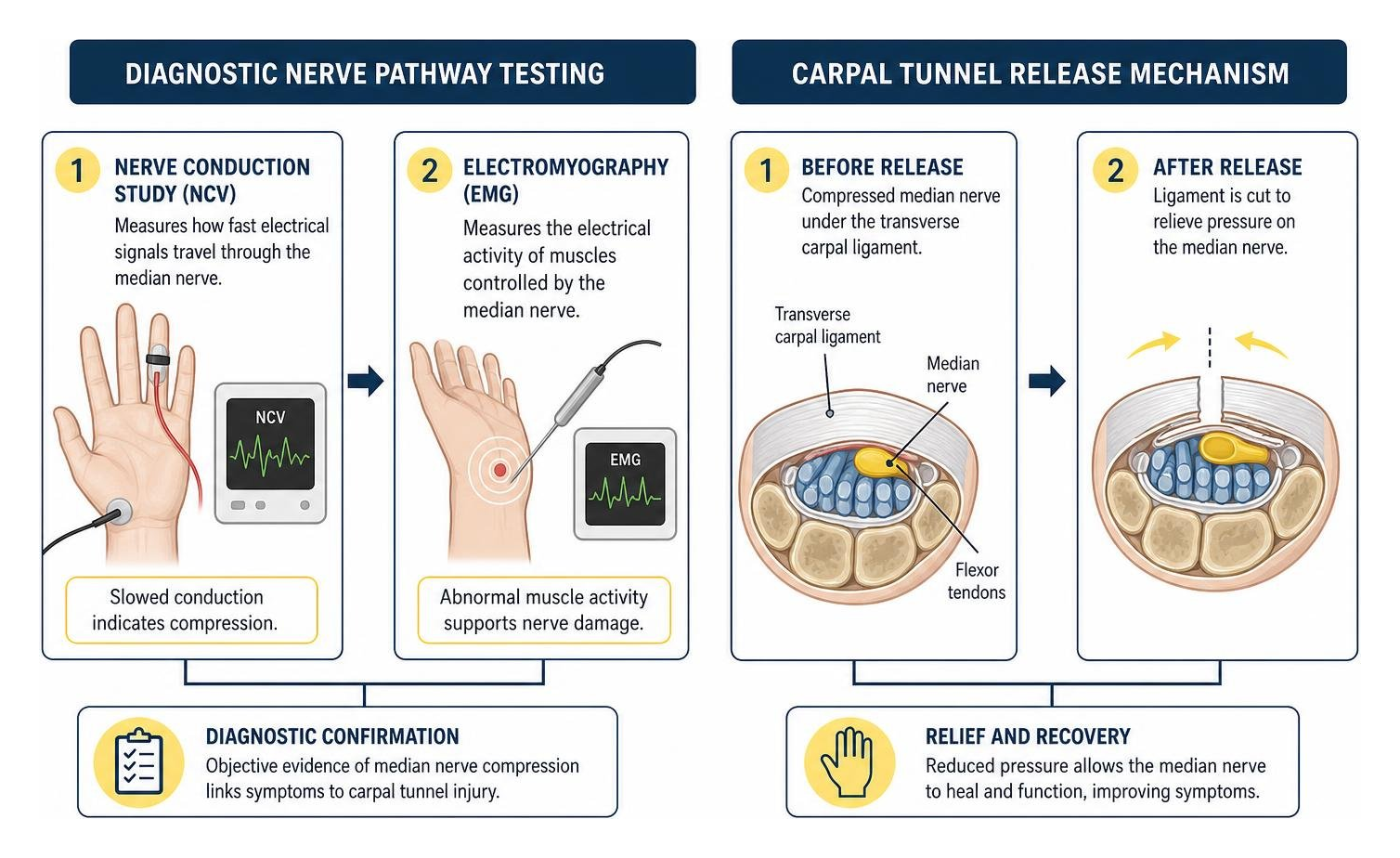
Diagnostic Testing: EMG and Nerve Conduction Studies
Standard X-rays show bone fractures, but they cannot evaluate soft nerve tissue. Similarly, basic MRIs frequently appear completely normal despite significant peripheral nerve compression. To prove nerve damage objectively, your physician or neurologist will typically order specialized electrodiagnostic tests:
- Nerve Conduction Velocity (NCV) Studies: Mild electrical impulses are sent down the arm to measure how fast and how well the median nerve transmits electrical signals through the wrist carpal space. Delayed signals indicate structural entrapment.
- Electromyography (EMG): Tiny needles measure the electrical activity of muscle tissue controlled by the median nerve. Abnormal muscle activity reveals active nerve damage.
- MRI Neurography: High-resolution imaging specifically tuned to visualize peripheral nerves and surrounding soft tissue swelling.
Documenting these objective diagnostic tests forms the bedrock of your personal injury claim. For detailed insight into gathering medical proof, see our guide on documenting evidence in personal injury claims.
Overcoming Pre-Existing Condition Defenses
Insurance adjusters love to claim that your wrist issues are simply the result of getting older or typing at a keyboard. Under Florida law, however, a pre-existing condition does not disqualify you from receiving full compensation.
Under the legal doctrine known as the “eggshell skull rule” (or eggshell plaintiff doctrine), a negligent driver takes their victim as they find them. If you had asymptomatic (pain-free) carpal tunnel prior to the crash, but the violent impact aggravated or activated the condition into a painful, disabling injury, the at-fault driver is legally responsible for the full extent of your heightened suffering and medical care. Establishing this direct link often requires medical expert testimony from a board-certified neurologist or orthopedic surgeon, as highlighted in this analysis on car accident settlement carpal tunnel compensation explained.
Key Factors Influencing Carpal Tunnel Syndrome After Car Accident Compensation
No two claims are identical. The financial value of your carpal tunnel syndrome after car accident compensation depends on several medical and financial variables.
| Settlement Factor | Mild / Non-Surgical Cases | Severe / Surgical Cases |
|---|---|---|
| Primary Treatment | Wrist splints, anti-inflammatories, steroid injections | Open or endoscopic carpal tunnel release surgery |
| Recovery Time | 4 to 8 weeks | 3 to 12 months (or permanent impairment) |
| Therapy Requirements | Short-term physical therapy | Long-term physical and occupational therapy |
| Impact on Earning Capacity | Temporary modification of work tasks | Permanent job re-assignment or loss of career |
| Estimated Value Range | $15,000 – $40,000 | $50,000 – $150,000+ |
Recoverable Economic and Non-Economic Damages
In a Florida personal injury claim, you can seek recovery for both financial losses (economic damages) and physical/emotional impacts (non-economic damages).
Economic Damages:
- Emergency room visits, diagnostic EMG testing, and specialist consultations.
- Physical therapy and specialized occupational therapy (studies show nerve-injured patients are 10.7 times more likely to need physical therapy and 19.2 times more likely to need occupational therapy past 90 days).
- Prescription medications and corticosteroid wrist injections.
- Surgical costs for open or endoscopic carpal tunnel release.
- Past lost wages and future loss of earning capacity if you can no longer perform your job tasks.
Non-Economic Damages:
- Physical pain and suffering (over 50% of traumatic nerve injury victims endure severe neuropathic pain).
- Loss of enjoyment of life (e.g., being unable to hold your child, play sports, or write).
- Mental anguish, sleep disruption, and anxiety caused by chronic physical limitations.
To learn more about calculating non-economic losses, read our guides on pain and suffering after a car accident and evaluating what your personal injury case is worth.
Estimated Settlement Value Ranges
While individual results vary based on policy limits and evidence, settlement brackets generally reflect injury severity:
- Mild to Moderate Entrapment (Non-Surgical): $15,000 to $40,000. These cases involve conservative care like splinting, physical therapy, and medication.
- Severe Entrapment (Requiring Surgery): $50,000 to $125,000+. Cases involving carpal tunnel release surgery, high medical bills, and significant missed work fall into this bracket.
- Permanent Damage or Bilateral Injuries: $100,000 to $250,000+. When both wrists are damaged, or nerve damage causes permanent loss of sensation and muscle atrophy despite surgery, settlement values increase substantially.
For a deeper dive into financial expectations, explore how much compensation you can expect after a car accident.
Legal Steps to Protect and Maximize Your Claim
Taking deliberate action immediately following a motor vehicle collision protects both your physical recovery and your legal rights.
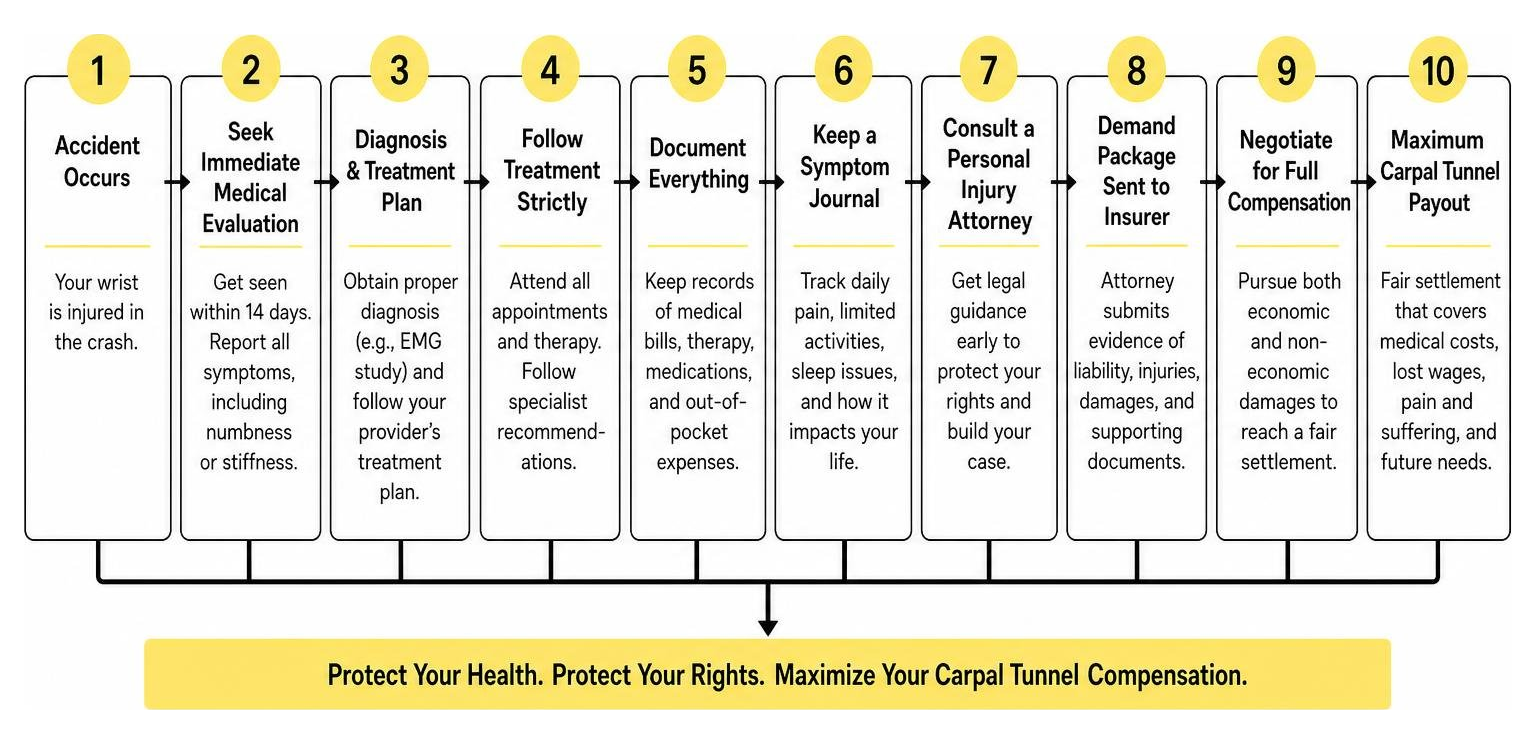
Steps to Protect Your Carpal Tunnel Syndrome After Car Accident Compensation
- Seek Immediate Medical Evaluation: Always see a doctor within 14 days of a Florida vehicle collision to preserve your Personal Injury Protection (PIP) coverage. Mention every physical symptom, including hand numbness or wrist stiffness.
- Follow Treatment Recommendations strictly: Attend all physical therapy sessions and follow specialist orders. Unexplained gaps in medical care give insurance companies an excuse to downplay your injury.
- Keep a Daily Symptom Journal: Record daily pain levels, tasks you cannot perform (like cooking, buttoning shirts, or holding a steering wheel), and how loss of sleep affects your life.
- Do Not Accept Quick Cash Offers: Insurance adjusters frequently present lowball settlement offers shortly after a crash before the true extent of nerve damage is fully known.
- Review Florida Settlement Rules: Consult our comprehensive guides on what to do after a car accident in Florida and how to get the most compensation from a car accident settlement in Florida.
Dealing with Insurance Company Settlement Tactics
Insurance adjusters are trained negotiators whose primary objective is protecting their company’s bottom line. Common tactics used in nerve damage claims include:
- Requesting Recorded Statements: Adjusters will try to get you to say “I feel fine” or minimize hand stiffness early on, using your words against you later when nerve symptoms escalate.
- Blaming Age or Prior Work: Insurers will comb through past medical records to find any mention of prior wrist strain or repetitive job tasks to deny liability.
- Explaining Away Imaging: Claiming that normal X-rays or standard MRIs mean you suffered no structural damage, ignoring the necessity of nerve conduction testing.
To learn how to protect yourself against these defense strategies, read our detailed overview on the role of insurance companies in a car accident.
The Role of Legal Representation in Carpal Tunnel Claims
Navigating a personal injury claim while undergoing medical care can quickly become overwhelming. Retaining experienced legal counsel levels the playing field against large insurance corporations.

How Legal Representation Increases Carpal Tunnel Syndrome After Car Accident Compensation
Working with a dedicated law firm offers clear strategic advantages:
- Board-Certified Specialization: At Carey Leisure Carney, our attorneys are Board-Certified in Civil Trial Law—a distinction earned by only the top 2% of attorneys in Florida. This certification signals to insurance companies that we are fully prepared to take your case to trial if they refuse to offer fair compensation.
- Access to Medical Experts: We collaborate with top neurologists, hand surgeons, and occupational rehabilitation experts who can perform objective diagnostic evaluations and testify directly regarding causation and future medical costs.
- Direct Attorney Contact: Unlike large settlement-mill firms where clients are shuffled off to paralegals, we offer direct access to your attorney throughout the entire legal process.
- No Upfront Fees: We handle personal injury claims on a contingency fee basis. You pay nothing out of pocket unless we successfully win or settle your claim.
Discover why specialized legal advocate support makes a difference by visiting why you need a personal injury lawyer and exploring our guide on general compensation after an accident.
Frequently Asked Questions About Carpal Tunnel Crash Claims
How long do carpal tunnel symptoms take to appear after a car accident?
While some crash victims feel sharp wrist pain or immediate tingling, carpal tunnel symptoms frequently take several days or even weeks to fully manifest. Swelling around the median nerve inside the tight carpal tunnel often builds gradually. It is vital to seek ongoing medical evaluations if hand weakness, numbness, or night pain develops weeks after a collision.
What is the average settlement for carpal tunnel syndrome requiring surgery?
Settlements for cases requiring surgical decompression (carpal tunnel release) generally range from $50,000 to over $125,000. Values depend heavily on whether surgical intervention succeeds or leaves permanent structural impairment, the amount of lost wages, and the extent of future occupational limitations.
Can I recover compensation if I had pre-existing carpal tunnel before the crash?
Yes. Under Florida law, you can recover compensation if a collision aggravated, worsened, or rendered active a previously stable or asymptomatic condition. Your attorney will use past medical records and expert medical testimony to prove the specific degree of aggravation caused directly by the motor vehicle crash.
Conclusion
Developing carpal tunnel syndrome after a motor vehicle collision can dramatically alter your quality of life, your ability to perform daily tasks, and your vocational career. Do not let insurance companies convince you that your wrist pain is minor or unrelated to your crash.
If you or a loved one is struggling with post-collision nerve damage in Clearwater, Largo, New Port Richey, Spring Hill, St. Petersburg, Trinity, or Wesley Chapel, Carey Leisure Carney is ready to help. Our Board-Certified trial attorneys possess over 100 years of combined legal expertise fighting for maximum financial recovery for injury victims.
Contact us today to schedule your free, confidential consultation with a trusted Personal Injury Attorney Clearwater FL. Let our family fight for yours.