

What Really Happens When Missing Caution Signs Cause Wet Floor Slip and Fall Accidents
When a Missing Wet Floor Sign May Matter
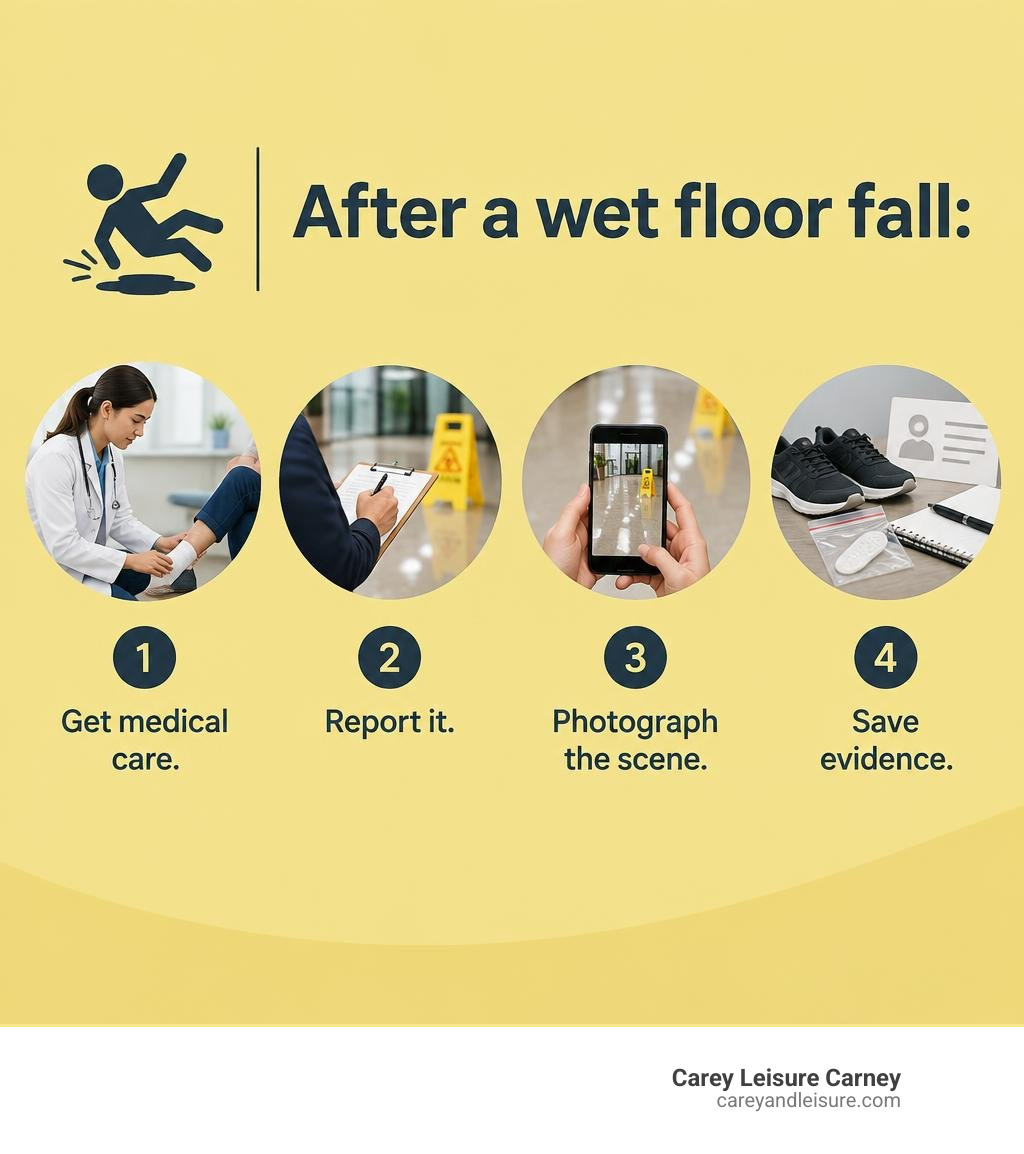
A missing caution sign does not automatically make a business liable. After a wet floor slip and fall accident, the key questions are whether the business created the hazard or knew, or should have known, about it, and whether it took reasonable steps to clean it up or warn visitors. If you fall, get medical care, report the incident, photograph the floor and any signs, and save your shoes and witness contact details.
A spill, tracked-in rain, or a freshly mopped floor can cause serious injuries, especially for older Clearwater residents. The evidence may disappear quickly once someone cleans the floor.
I’m Thomas W. Carey, founding partner of Carey Leisure Carney and a board-certified civil trial lawyer. Decades of personal injury work in Florida shape how I assess wet floor slip and fall accidents, starting with what the evidence can show.
Wet floor slip and fall accidents terms to learn:
- best attorney for slip and falls
- best slip and fall attorneys near me
- lawyers for slip and fall accidents
How Property Owners Breach Duty in Wet Floor Slip and Fall Accidents
Under Florida premises liability law, business owners and commercial landlords owe their customers, patrons, and guests a basic duty of reasonable care. When you walk into a grocery store in Clearwater, a healthcare clinic in St Petersburg, or a restaurant in Wesley Chapel, you have every right to expect that the floors are reasonably safe to walk on.
When property owners or their employees fail to inspect walkways, ignore recurring leaks, or mop an area without putting down warning markers, they breach that duty. Legal responsibility centers heavily on notice. A plaintiff must demonstrate either:
- Actual Notice: The business created the condition (e.g., an employee spilled liquid or mopped the floor) or staff actually knew the spill was there before you walked by.
- Constructive Notice: The hazardous condition existed for such a length of time that the business should have discovered and corrected it through ordinary inspection routines, or the condition occurred with such regularity that it was foreseeable.
Courts examine whether circumstantial evidence proves the defendant’s constructive notice or creation of the hazard. Circumstantial evidence—such as streaks of water and the timing of custodial equipment use—can permit a jury to infer that a facility created a hazardous condition and failed to provide timely warnings.
Establishing how a duty of care was violated is foundational to any personal injury claim. To understand how these legal responsibilities operate under the broader umbrella of personal injury law, explore a guide to torts law and premises liability.
Common Hazards That Trigger Wet Floor Slip and Fall Accidents
Slippery walking surfaces appear in commercial environments for various everyday reasons. Common triggers include:
- Commercial Refrigeration Leaks: Condensation pans overflowing or display freezers dripping onto polished supermarket aisles.
- Tracked-In Rainwater: Florida’s frequent afternoon downpours lead to wet entryways when businesses fail to lay down adequate absorbent runners.
- Freshly Mopped or Waxed Floors: Custodial crews cleaning tile or terrazzo without placing clear, highly visible warning markers.
- Liquid Spills and Beverage Drops: Unattended soda, juice, or cooking oil spills in dining areas and food markets.
- Improperly Maintained Floor Coverings: Wet, buckling, or sliding mats near entrances. Businesses can prevent many entrance falls by securing loose commercial floor mats before foot traffic causes them to shift.
Warning Signs vs. Absent Cones: Evaluating Owner Negligence
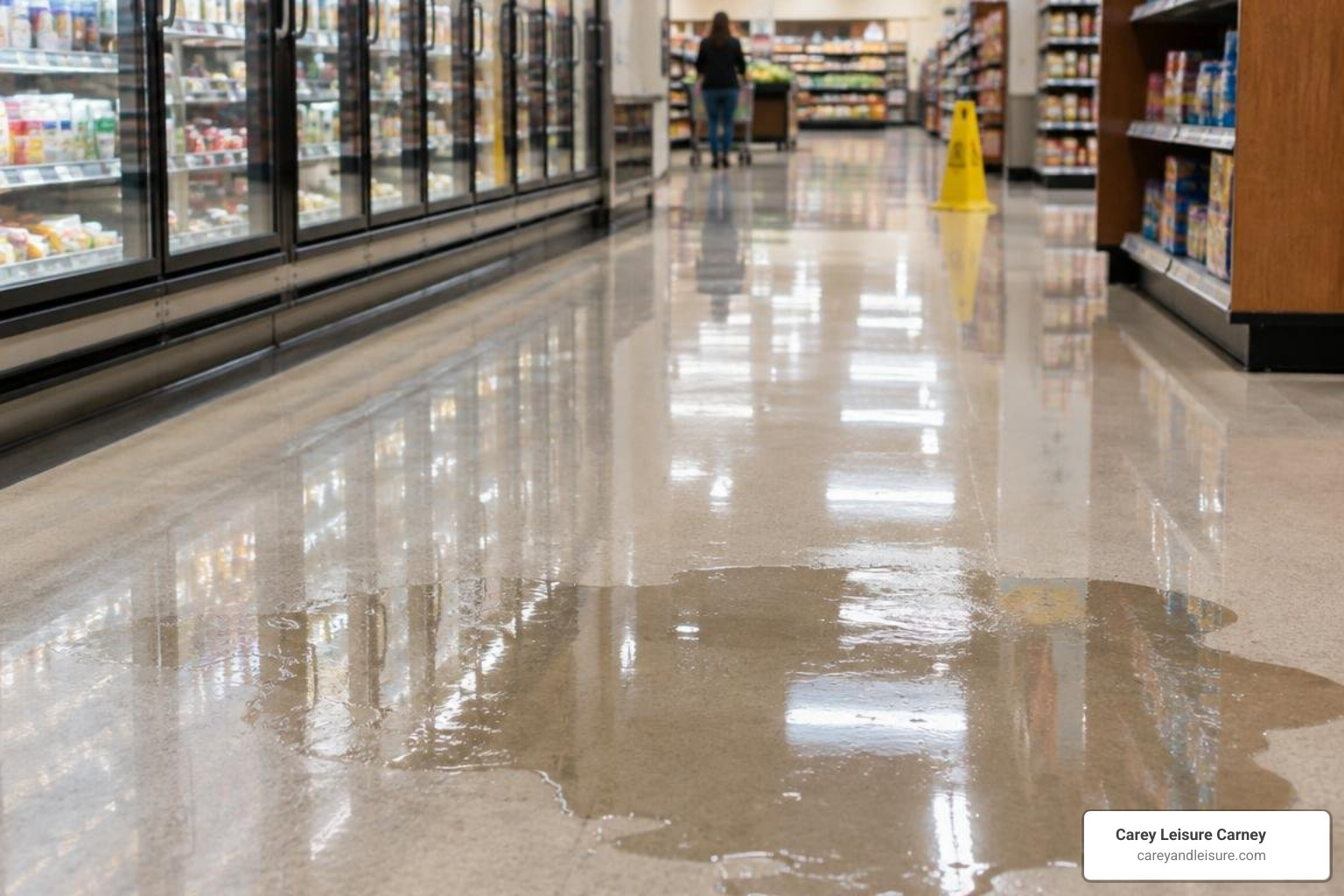
A common misconception is that placing a yellow caution cone anywhere on the premises protects a business from liability. A warning cone sitting 40 feet away behind a structural pillar does not warn a patron turning into a wet aisle.
Courts look closely at the relationship between simple negligence and property duty, as detailed in our guide on premises liability vs negligence and what it means for your claim. The presence or absence of a warning sign changes the legal analysis:
| Scenario | Absent Warning Signs | Inadequately Placed Warning Signs | Properly Placed Warning Signs |
|---|---|---|---|
| Hazard Awareness | Owner knew or should have known of the hazard, but provided zero warning to visitors. | Owner recognized the hazard, but placed the sign too far away, around a corner, or obscured from sight. | Owner clearly marked the immediate perimeter of the wet area with high-visibility cones. |
| Legal Implication | Strong evidence of breach of duty if notice (actual or constructive) is established. | Demonstrates awareness of the danger, but shows failure to execute a reasonable warning standard. | May reduce owner liability, though comparative negligence and prompt cleanup duties still apply. |
| Defense Strategy | Owner typically claims lack of notice or argues the hazard was “open and obvious.” | Owner claims adequate warning was given; plaintiff shows the sign failed to provide timely notice. | Owner argues the patron ignored open warnings and assumed the risk of walking through. |
Even if a sign was present, if an employee mopped an entire main entrance during peak operating hours without leaving a dry path of travel, the business may still bear significant responsibility. You can review how similar scenarios unfolded in these 8 eye-opening premises liability case examples and what they cost negligent owners.
Severe Injuries and Recoverable Damages After a Slip and Fall
Slip and fall incidents are often dismissed as minor embarrassments, but the physical forces involved can cause severe trauma. When your feet lose traction on a slick floor, your body snaps backward or twists violently, striking concrete, tile, or shelving units.
According to national research from the Centers for Disease Control and Prevention, falls are one of the leading causes of injuries across the country:
- One in every three people over 65 years of age experiences a fall annually, and half become repeat fallers.
- Falls are the second-leading cause of injury-related death for individuals aged 65 to 84, and the leading cause for those 85 and older.
- Sixty percent of fall-associated deaths involve people 75 years of age or older.
- Falls account for 87 percent of all fractures among individuals over 65 and represent the second-leading cause of spinal cord and brain trauma.
- Falls represent the sixth-leading cause of death among people aged 70 and older, and they cause 40 percent of all nursing home admissions.
Victims of wet floor falls frequently sustain severe, life-altering injuries:
- Traumatic Brain Injuries (TBIs): Concussions, subdural hematomas, and skull fractures from head impact on hard surfaces.
- Spinal Cord and Vertebral Injuries: Herniated discs, fractured vertebrae, and nerve impingement requiring surgical fusion.
- Fractures: Broken hips, fractured wrists from bracing for impact, shattered patellas, and broken ankles.
- Soft Tissue and Joint Tears: Torn rotator cuffs, torn ACL/MCL ligaments, and severe muscle tears.
Recoverable Damages Under Florida Law
Injured victims can seek compensation for both direct financial costs and intangible physical and emotional suffering:
Economic Damages:
- Emergency room treatment, hospital stays, and surgery fees
- Physical therapy, chiropractic care, and rehabilitation
- Past and future lost wages due to missing work
- Diminished future earning capacity
- Out-of-pocket medical devices, prescriptions, and home health care
Non-Economic Damages:
- Physical pain and ongoing discomfort
- Emotional distress and trauma
- Loss of capacity to enjoy hobbies and daily life
- Permanent disability, scarring, or disfigurement
Step-by-Step Guide: What to Do After Slipping on an Unmarked Wet Floor
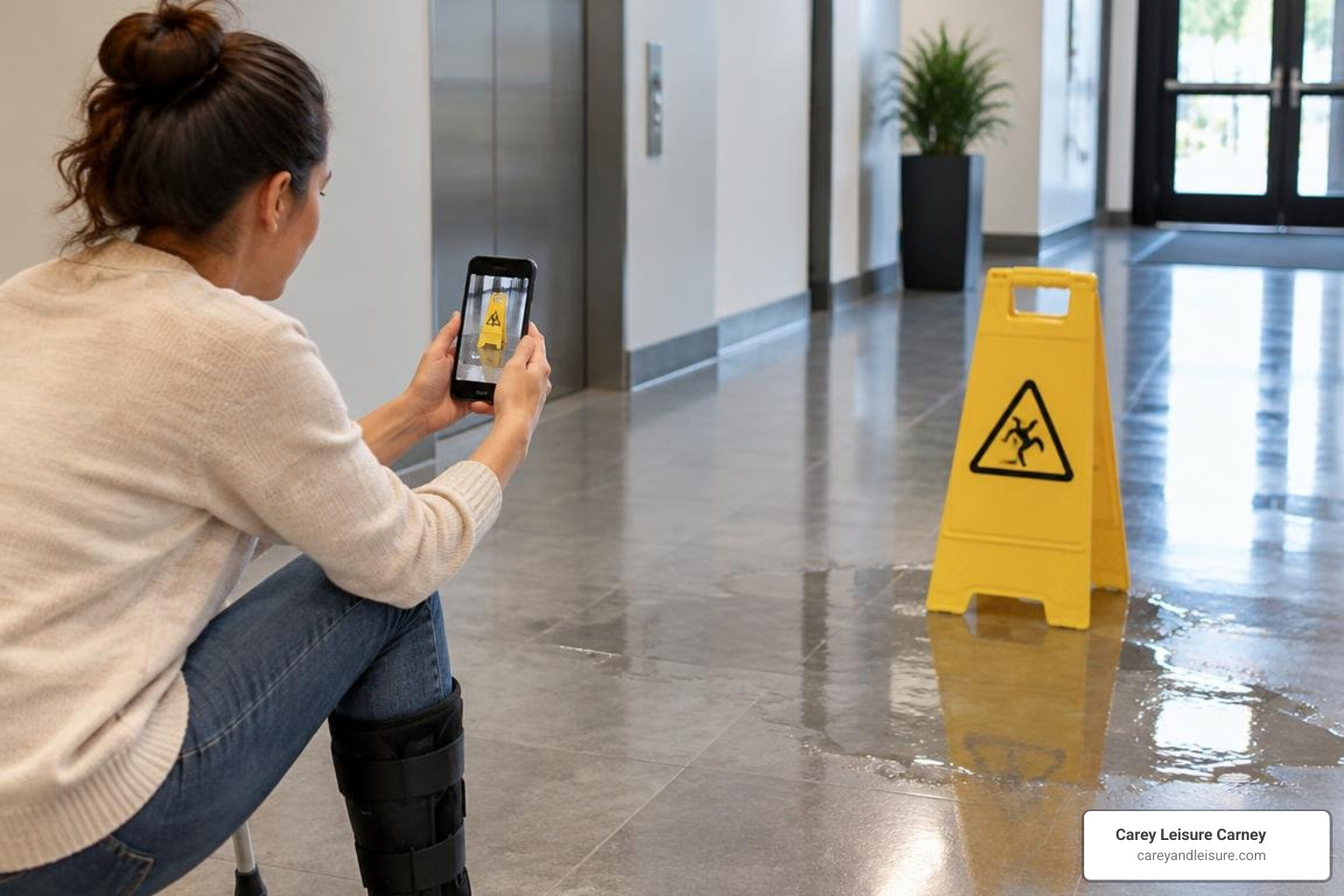
The actions you take immediately following a slip and fall directly influence your physical recovery and your legal standing. For an in-depth breakdown, read our resource on what to do after a slip and fall accident.
Follow this step-by-step process after an incident:
- Prioritize Immediate Medical Care: Check yourself for severe pain, numbness, or head trauma. If you cannot stand safely, ask a bystander or employee to call 911 immediately.
- Report the Incident to Management: Alert the store manager or property supervisor immediately. Ensure an official written incident report is created before you leave the premises. Request a copy or the incident report number.
- Document the Wet Floor Immediately: Use your smartphone camera to capture wide-angle shots and close-ups of the wet area, showing the absence of warning signs, the size of the spill, cleaning equipment nearby, and your clothing.
- Gather Eyewitness Contact Information: Collect names, phone numbers, and addresses of any patrons or employees who saw you fall or saw the unmarked wet surface.
- Preserve Your Physical Evidence: Place the shoes and clothes you were wearing into a clean bag. Do not wash or wear them again until your legal claim is resolved, as traction wear and liquid stains serve as physical evidence.
- Avoid Giving Recorded Statements: Do not provide recorded statements or discuss fault with the property owner’s insurance adjuster before consulting an attorney.
Preserving Key Evidence in Wet Floor Slip and Fall Accidents
Commercial properties often overwrite security footage on 7- to 30-day loops. If you wait to take action, crucial video showing how long a puddle sat on the floor or how an employee mopped without placing a sign can be permanently lost.
Working with an attorney allows a formal spoliation letter to be sent immediately. This letter puts the property owner on legal notice to preserve all surveillance videos, electronic maintenance logs, employee shift rosters, and cleaning records. Understanding why injured Floridians need a slip and fall attorney immediately helps you protect critical evidence before it disappears.
Proving Liability and Navigating the Legal Claim Process

Proving liability in a Florida slip and fall case requires establishing four core elements: duty, breach, causation, and damages. Under Florida Statute § 768.0755, if an individual slips and falls on a transitory foreign substance in a business establishment, the injured person must prove that the business establishment had actual or constructive knowledge of the dangerous condition and should have taken action to remedy it.
Critical Evidence to Establish Property Owner Liability
- Surveillance camera footage showing the spill occurring and the duration it remained on the floor.
- Store maintenance and inspection sweep logs demonstrating missed cleaning cycles.
- Employee witness statements regarding cleaning schedules or prior complaints about the leak.
- Photographs showing tracked footprints or dirt through the liquid, proving it was present for an extended period.
- Weather records matching rainwater tracked into building vestibules.
Property owners and their insurance carriers often defend claims by alleging modified comparative negligence—arguing the victim was distracted, looking at their phone, or wearing improper footwear. Under Florida’s modified comparative fault system, an injured party can recover damages as long as they are not found to be more than 50% at fault, though their recovery is reduced by their percentage of fault.
Navigating insurance company tactics requires clear evidence and methodical negotiation. To understand what the legal process looks like from intake to trial, review our detailed guide on when to hire a slip and fall attorney and what to expect.
Frequently Asked Questions About Wet Floor Slip and Fall Claims
Can I still file a claim if a wet floor sign was posted nearby?
Yes. The presence of a caution sign does not provide blanket immunity to a business. If the sign was placed around a corner, hidden behind merchandise, placed too far away from the actual spill, or if the floor was left dangerously flooded without an alternative dry walking path, the business may still be held legally responsible for failing to provide an adequate warning.
Who can be held legally liable for my wet floor slip and fall?
Depending on where your fall happened, liability may extend across several entities:
- Commercial Property Owners: Landlords who fail to maintain building roofs, plumbing, or common entryways.
- Business Tenants and Retailers: Grocery stores, restaurants, or retail outlets operating the specific space where the spill occurred.
- Third-Party Janitorial Companies: Independent cleaning contractors hired to wax, clean, or buff floors who fail to place adequate warning markers.
- Property Management Companies: Entities managing day-to-day operations and walkway maintenance.
For a broader breakdown of how these property duties work across different facilities, read our comprehensive overview explaining what is premises liability.
What is the deadline to file a wet floor injury lawsuit in Florida?
In Florida, the statute of limitations for personal injury claims based on negligence—including slip and fall accidents—is two years from the date the accident occurred. Failing to file your claim within this statutory window can permanently bar you from recovering compensation for your medical expenses and losses.
Conclusion: Protecting Your Rights with Experienced Legal Counsel
A wet floor slip and fall accident can derail your physical health, your independence, and your financial security in an instant. When businesses cut corners on safety protocols, ignore inspection routines, or fail to put up caution signs, they must be held accountable for the harm they cause.
At Carey Leisure Carney, our board-certified trial attorneys bring more than 100 years of combined experience fighting for injured individuals across Clearwater, Largo, New Port Richey, Spring Hill, St Petersburg, Trinity, and Wesley Chapel. We provide direct attorney access and personalized representation, ensuring your case receives the thorough investigation and dedicated advocacy it deserves.
If you or a loved one was injured because of an unmarked wet floor, contact a skilled slip and fall attorney at Carey Leisure Carney today for a free, confidential case evaluation.