
From Crash to Cash with the Complete Personal Injury Process
What the Personal Injury Process Actually Looks Like — and What to Do First
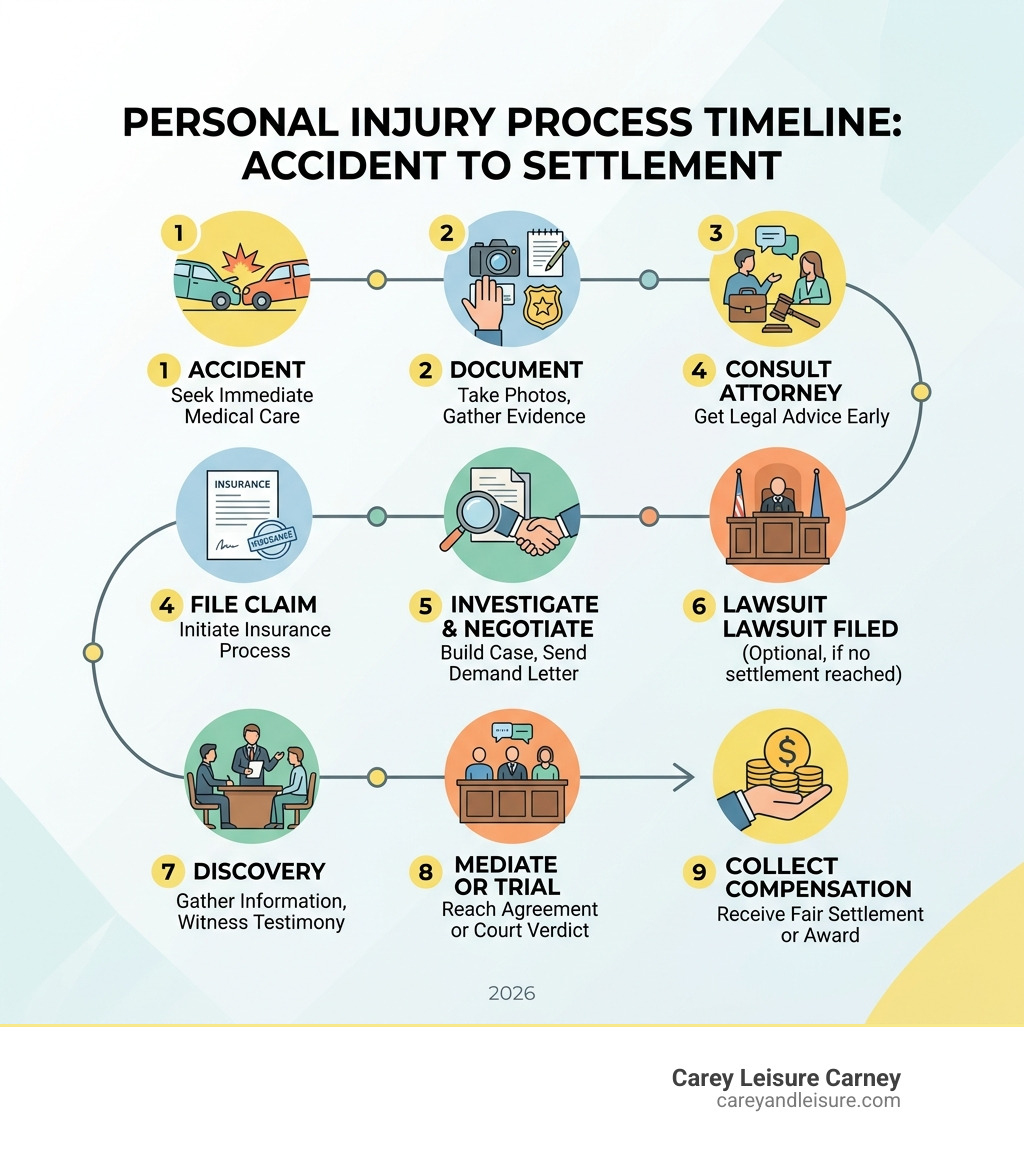
The personal injury process is the step-by-step legal journey that takes you from the moment you’re injured to receiving fair compensation. Here’s a quick overview:
- Seek medical care immediately after the accident
- Document everything — photos, police reports, witness contacts
- Consult a personal injury attorney as early as possible
- File an insurance claim and let your attorney handle communications
- Investigate and gather evidence to build your case
- Send a settlement demand letter to the at-fault party’s insurer
- Negotiate a settlement — most cases resolve here
- File a lawsuit if negotiations fail
- Go through discovery — depositions, interrogatories, expert witnesses
- Mediate or go to trial if no agreement is reached
- Collect your compensation after settlement or verdict
Most people never expect to need this process — and then a crash, a fall, or someone else’s careless moment changes everything. Suddenly you’re dealing with medical bills, missed work, and a legal system that feels overwhelming.
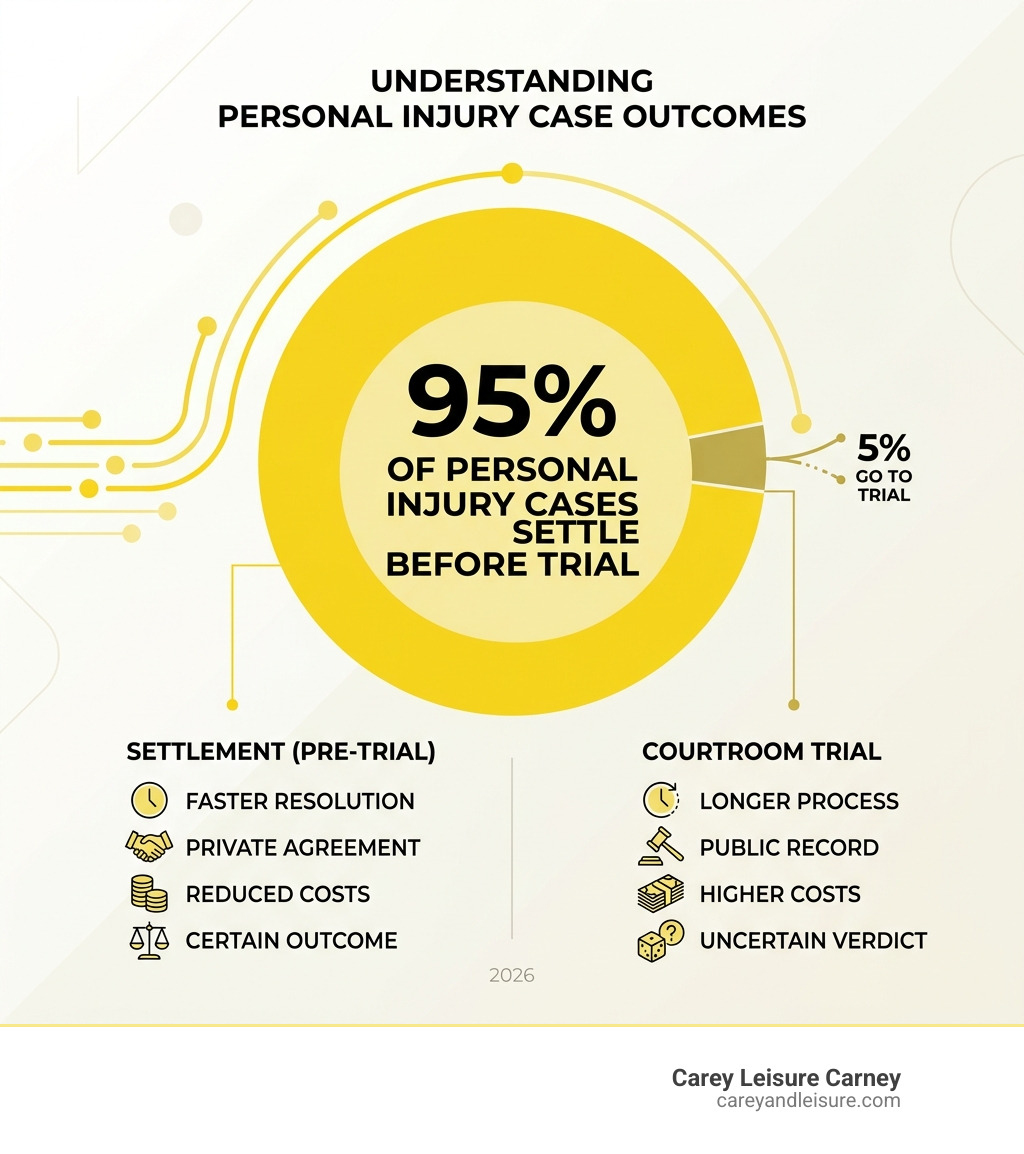
Here’s the honest truth: roughly 95% to 97% of personal injury cases settle before ever reaching a courtroom. But getting to a fair settlement still requires knowing the right steps — and avoiding the mistakes that can quietly sink your claim.
I’m Thomas W. Carey, founding partner of Carey Leisure Carney and a board-certified civil trial lawyer with over 35 years guiding clients through the personal injury process across Florida. In that time, I’ve seen how the right approach — taken early — makes all the difference between a lowball offer and the full compensation you deserve.
Personal injury process terms to know:
Immediate Steps in the Florida Personal Injury Process
When you are involved in a vehicle collision in Clearwater or Largo, the minutes and hours following the incident are the most critical for your future claim. In the eyes of the law, we must establish negligence, which means proving the other party had a duty of care (a legal obligation to act reasonably), breached that duty, and caused you actual compensatory damages.

The first thing you must do is document evidence in personal injury claims. If you are physically able, take clear photos of the scene, the vehicle damage, and any visible injuries. Collect witness contact information and ensure a police report is filed. These contemporaneous records are the foundation of your case.
Crucially, Florida has a specific 14-day PIP rule. Under our state’s no-fault insurance system, you must seek medical treatment within 14 days of the accident to access your Personal Injury Protection (PIP) benefits. If you wait until day 15, you could lose out on $10,000 of coverage meant to pay for your initial medical bills and lost wages. Even if you feel “fine” due to adrenaline, many injuries like whiplash or internal bruising don’t show symptoms immediately. Following a personal injury case timeline starts with this two-week window.
Why Prompt Medical Care is Crucial for Your Personal Injury Process
Beyond the 14-day rule, consistent medical care is the only way to prove causation. Insurance adjusters look for “gaps in treatment” to argue that your injuries weren’t caused by the accident or aren’t as severe as you claim.
When we ask, “what is my personal injury case worth,” the answer depends heavily on your medical records. We look for you to reach Maximum Medical Improvement (MMI). This is the point where your condition has stabilized, and further treatment isn’t expected to result in significant improvement. Settling before you reach MMI is a massive risk; you might sign away your rights before realizing you need a $50,000 surgery next year.
Furthermore, you have a legal duty regarding the mitigation of damages. This means you must take reasonable steps to ensure your injuries don’t get worse. If a doctor prescribes physical therapy and you skip it, the defense will argue they shouldn’t have to pay for the resulting chronic pain.
Hiring a Board-Certified Attorney in Clearwater
You might wonder if you can handle the personal injury process on your own. While minor “fender benders” with no injuries might not require a lawyer, any case involving medical treatment deserves professional review. When hiring a law firm, what you need to know is that not all attorneys are created equal.
In Florida, only about 2% of attorneys are Board-Certified in Civil Trial Law. At Carey Leisure Carney, our partners hold this distinction, signifying we are experts in our field. We offer direct attorney access, meaning you aren’t just shuffled off to a paralegal; you speak with the lawyer handling your case.
We also operate on a contingency fee basis. Paying your accident lawyer the contingency fee explained simply means you pay us nothing upfront. We only get paid if we win your case. This levels the playing field, allowing you to go up against massive insurance companies without financial risk. Effective working with your lawyer involves being 100% honest about your medical history and the facts of the crash so we can protect you from defense traps.
Building Your Case: Investigation and Negotiation
Once we are on board, the “pre-litigation” phase begins. We dive deep into how attorneys use investigations for your personal injury claim. This isn’t just about reading the police report. We may visit the scene in Trinity or Spring Hill, pull surveillance footage from nearby businesses, and download “black box” data from the vehicles involved.
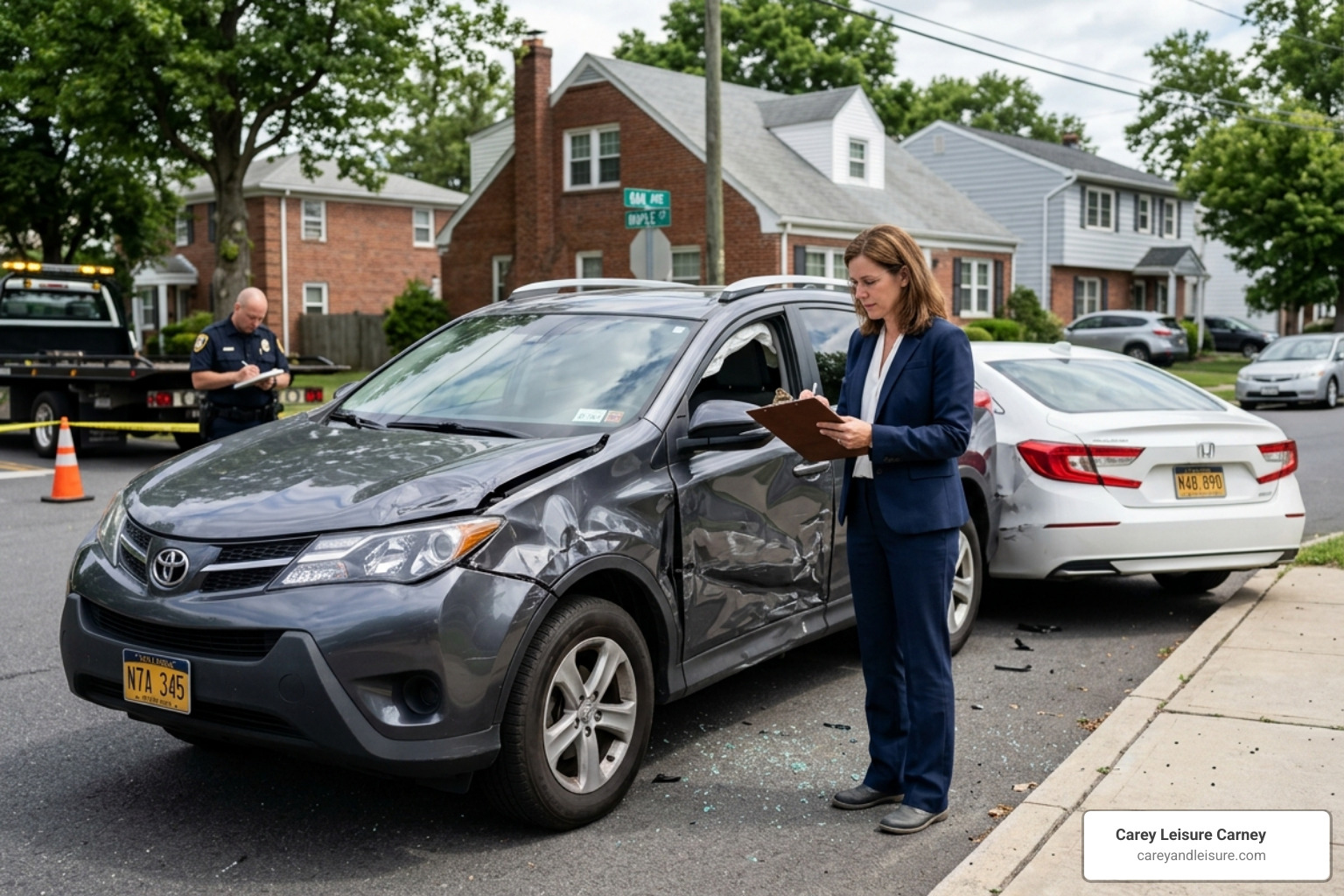
Often, we require the use of expert witnesses. This might include accident reconstructionists to prove how the crash happened or medical experts to explain the long-term impact of a spinal injury. As noted in the personal injury claim process in the U.S.: step by step, gathering this evidence early is what forces insurance companies to take your claim seriously.
The Role of the Settlement Demand Letter
After you have reached MMI or we have a clear prognosis of your future needs, we prepare a settlement demand letter. This is a formal document sent to the insurance adjuster that outlines:
- A summary of the accident and why their insured is liable.
- A detailed list of your injuries and the medical treatment you’ve endured.
- A calculation of your economic damages (medical bills, lost wages).
- An assessment of your non-economic damages (pain and suffering, loss of enjoyment of life).
This is a critical part of the ins and outs of pre-litigation from an expert. The insurance company will then respond by accepting, rejecting, or—most commonly—making a lowball counter-offer.
Calculating Damages and Florida Legal Standards
Calculating the true value of a claim is an art backed by data. For catastrophic injuries, we often develop what are life care plans in personal injury cases. These plans project every single dollar you will need for the rest of your life—from future surgeries to home modifications.
Florida follows modified comparative negligence rules. This means if you are found to be 20% at fault for the accident (perhaps you were speeding slightly), your total compensation is reduced by 20%. However, under the new 2023 Florida statutes, if you are more than 50% at fault, you are barred from recovering any damages at all.
While rare, we also look for grounds for punitive damages, which are intended to punish the defendant for intentional misconduct or gross negligence (like drunk driving). Looking at personal injury settlement examples can give you an idea of how these factors play out in real Florida cases.
Navigating Litigation and the Discovery Phase
If the insurance company refuses to offer a fair settlement, we move into the litigation process. This begins by filing a Summons and Complaint in the appropriate Florida court (such as Pinellas or Pasco County). The defendant then has 20 days to file an “Answer.”
This triggers the discovery phase, which is often the longest part of the personal injury process. Here, both sides exchange information. You can learn more about this in lawsuit basics. Discovery includes:
- Interrogatories: Written questions that must be answered under oath.
- Requests for Production: Demands for documents like medical records, tax returns, or vehicle maintenance logs.
- Depositions: Out-of-court testimony where attorneys ask questions of witnesses and parties under oath. The litigation process: depositions can be stressful, but we prepare you thoroughly so you feel confident.
- Examination Under Oath: Sometimes required by insurance policies to verify the facts of a claim. Examination under oath is a tool adjusters use to look for inconsistencies.
Mediation and the Personal Injury Process Settlement
Before a case is allowed to go to trial, Florida courts almost always require mediation. This is an informal meeting where a neutral third party (the mediator) tries to help both sides reach an agreement.
Mediation is entirely confidential. It’s a chance to see the “cards” the other side is holding without the risk of a jury verdict. We often use a what is a proposal for settlement during this time—a strategic legal move that can penalize the other side if they reject a fair offer and you later win a better verdict at trial.
| Feature | Mediation | Trial |
|---|---|---|
| Decision Maker | You and the Defendant | Jury or Judge |
| Confidentiality | Private and Confidential | Public Record |
| Duration | Usually 1 Day | Days or Weeks |
| Finality | Only if both sides agree | Binding Verdict |
During this phase, the defense may also request a Compulsory Medical Examination (CME). Despite the name, these doctors are hired by the insurance company to find reasons to downplay your injuries. We often send a videographer or a nurse observer to these exams to ensure they are conducted fairly.
Trial Proceedings and Final Verdicts
If mediation fails, we head to the courtroom. Your trial: part 1 involves jury selection (voir dire), where we work to ensure the people deciding your fate are fair and unbiased.
The burden of proof in a civil case is a “preponderance of the evidence,” meaning it is more likely than not that the defendant was negligent. We present our evidence, call our experts, and cross-examine the defense’s witnesses.
In the trial part 2: closing arguments and judgments, we make our final plea to the jury. If the verdict is in your favor, the court enters a judgment. However, the personal injury process doesn’t end the moment the jury speaks. We must then collect the judgment, which may involve dealing with insurance policy limits or, in some cases, post-trial motions and appeals.
Frequently Asked Questions about the Personal Injury Process
What is the statute of limitations for a personal injury lawsuit in Florida?
As of 2026, it is vital to remember that Florida recently shortened its statute of limitations for most negligence-based personal injury lawsuits. You generally have two years from the date of the accident to file a lawsuit. If you miss this deadline, your legal right to recover compensation expires forever. There are very few exceptions to this rule, which is why consulting an attorney immediately is the only way to ensure your rights are protected.
How long does the typical personal injury process take from start to finish?
There is no “average” timeline because every case is unique. A straightforward claim with clear liability might settle in 4 to 6 months. However, if the case involves catastrophic injuries and goes through full litigation, it can take 18 to 24 months. According to industry statistics, if a case goes to trial, the average time from filing to verdict is about 25.6 months. We always prioritize the best outcome over the fastest one, as rushing a settlement often means leaving money on the table.
What happens if I am partially at fault for my accident?
Florida uses a modified comparative negligence system. If you are 25% at fault for a crash in St. Petersburg, your $100,000 award would be reduced to $75,000. However, the “modified” part is crucial: if you are found to be 51% or more at fault, you receive zero compensation from the other party. This makes the investigation phase even more important, as we must fight to keep your fault percentage as low as possible.
Conclusion
Navigating the personal injury process in Florida is a marathon, not a sprint. From the initial 14-day PIP window to the complexities of the discovery phase and the high stakes of a jury trial, every step requires precision and experience.
At Carey Leisure Carney, we’ve spent over a century (combined!) fighting for the residents of Clearwater, Largo, New Port Richey, and beyond. We believe in direct attorney access and a personalized approach that treats you like a person, not a case number.
If you or a loved one has been injured, don’t face the insurance companies alone. Reach out to a personal injury attorney who is board-certified and ready to take your case from crash to cash.
Contact our auto accident attorney team today for a free consultation. Whether you are in Trinity, Spring Hill, or Wesley Chapel, we are here to guide you through every step of the process.