Preventing Tragedy: Insights into Head-On Fatal Crashes
Why a Head-On Fatal Crash Is So Dangerous
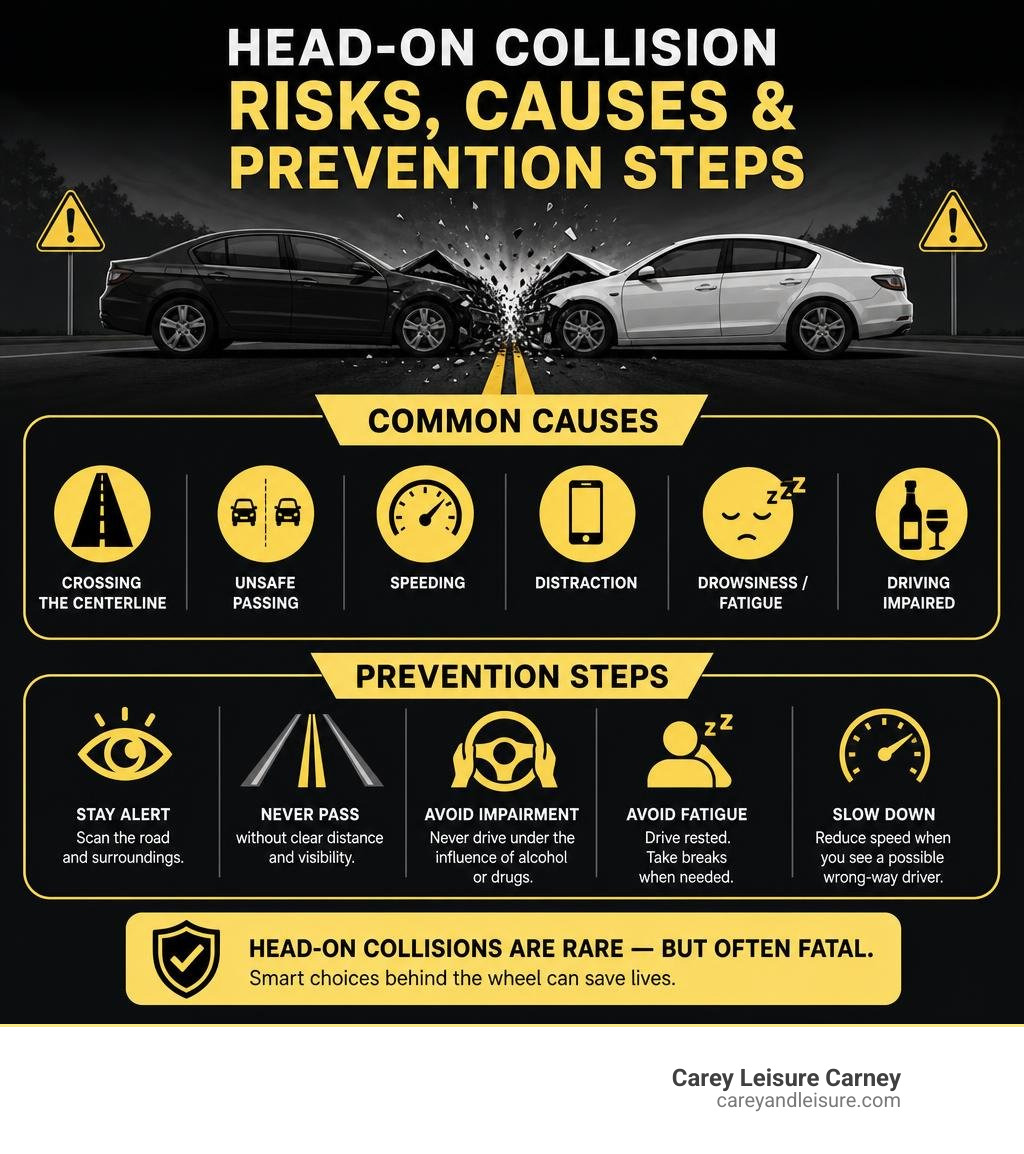
A head-on fatal crash happens when vehicles traveling in opposite directions collide front to front. These crashes are uncommon but highly deadly because the impact forces are severe, especially on high-speed, undivided roads. Drivers can reduce the risk by staying alert, never passing without clear distance and visibility, avoiding impairment and fatigue, and slowing down when they see a possible wrong-way driver.
Head-on collisions made up about 2% of all U.S. crashes in 2005 but accounted for roughly 10% of fatal crashes. Common causes include crossing the centerline, unsafe passing, speeding, distraction, drowsiness, and driving while impaired.
I am Thomas W. Carey, a board-certified civil trial lawyer who has handled and overseen thousands of injury and wrongful-death matters, including claims arising from a head on fatal crash. This guide explains how these collisions happen, the harm they cause, and the steps families may need to take afterward.
Simple head on fatal crash word guide:
The Anatomy and Dynamics of a Head On Fatal Crash
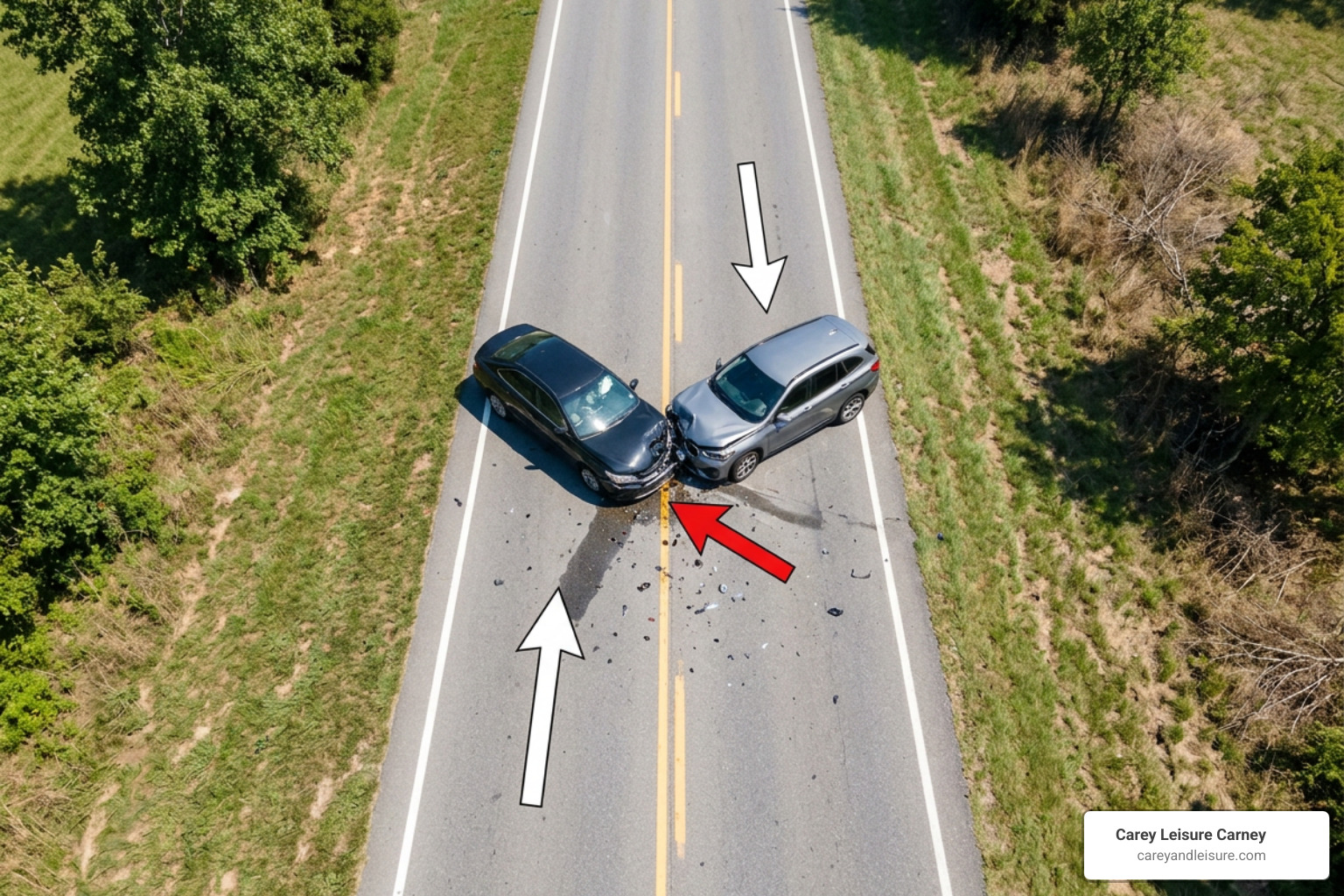
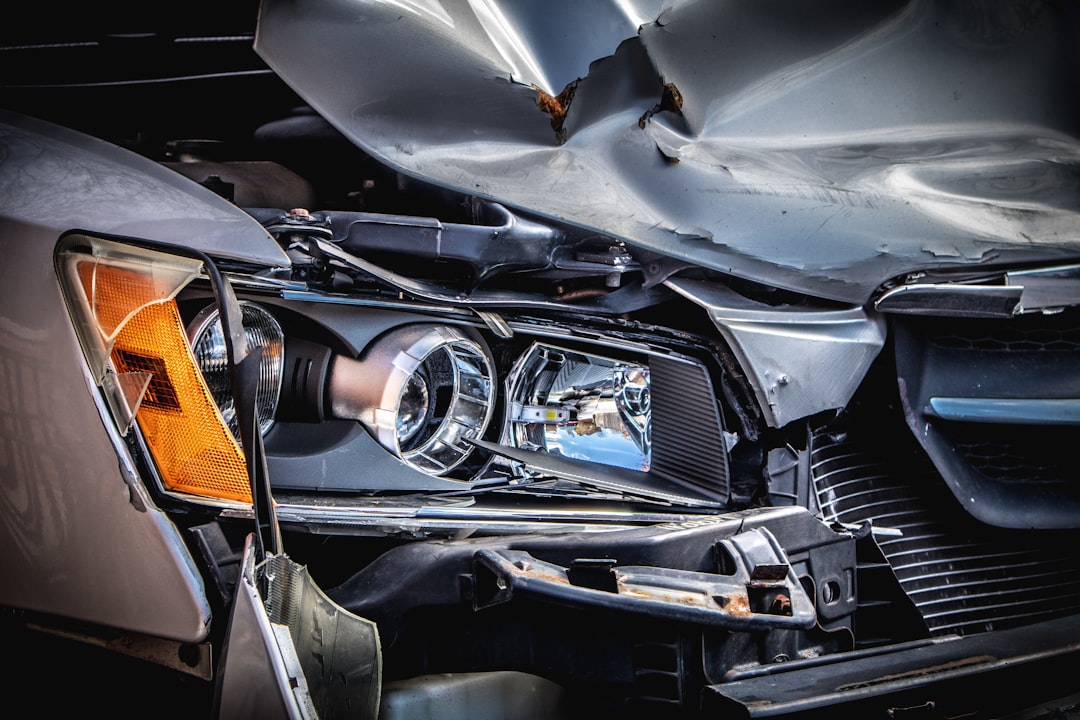
When two vehicles moving in opposite directions collide front to front, the physics are unforgiving. A common myth suggests that two identical cars hitting each other at 50 mph equals hitting a brick wall at 100 mph. In reality, Newtonian physics dictates that each vehicle absorbs its own kinetic energy, making the deceleration force equivalent to striking a stationary barrier at 50 mph. However, because both vehicles are traveling at high rates of speed, the sudden change in momentum occurs in a fraction of a second.
This instantaneous deceleration places immense strain on the vehicle’s crumple zones and restraint systems. When structural integrity fails, severe cabin intrusion occurs, crushing passenger compartments and trapping occupants. This high-energy impact helps explain why frontal collisions represent a critical portion of the silent epidemic: unpacking fatal traffic accidents.
| Crash Environment | Average Speed Profile | Median Physical Separation | Fatality Frequency |
|---|---|---|---|
| Rural Corridors | High (55–70+ mph) | Often None (Two-lane undivided) | Substantially Higher |
| Urban Roadways | Moderate (30–45 mph) | Medians, Turn Lanes, or Curbs | Lower Relative Fatality |
Rural vs. Urban Highway Disparities
The setting of a roadway dramatically alters the outcome of a lane-departure event. In urban centers like Clearwater, St. Petersburg, and Largo, roadways often feature lower posted speed limits, physical medians, turn pockets, and continuous lighting that help prevent vehicles from crossing into opposing lanes.
In contrast, rural or semi-rural connectors—such as portions of Pasco and Hernando counties near Spring Hill, Trinity, Wesley Chapel, and New Port Richey—frequently consist of high-speed, undivided two-lane roads. A momentary distraction on an undivided highway leaves zero room for error. The Florida Highway Patrol’s live traffic crash and road logs frequently demonstrate how quickly a lane departure in these open corridors can become catastrophic.
Common Catastrophic Injuries and Collision Outcomes
The tremendous kinetic force generated in frontal impacts causes severe, life-altering trauma. Even with modern airbag deployment and three-point seatbelts, occupants absorb intense deceleration forces. Common catastrophic injuries include:
- Traumatic Brain Injuries (TBIs): Caused by rapid acceleration-deceleration forces shaking the brain within the skull or direct blunt impact against the dashboard or steering column.
- Severe Spinal Trauma: Whiplash forces, crushed vertebrae, and complete spinal cord transections that lead to permanent paraplegia or quadriplegia.
- Crush and Internal Organ Injuries: Ruptured spleens, punctured lungs, and severe aortic tears caused by the collapse of the footwell and steering column.
- Post-Crash Fires: Frontal engine block destruction can sever fuel lines and short high-voltage electrical lines, igniting intense fires before victims can escape.
When surviving victims or families face long roads to recovery, consulting a car accident attorney is often a necessary step toward holding responsible parties accountable.
Common Causes and Risk Factors Leading to Frontal Collisions

Understanding what leads a driver to enter oncoming traffic is central to preventing fatal collisions. Incidents such as a severe 3 killed, 5 seriously hurt in head-on crash in Volusia County highlight how quickly cross-median events can devastate multiple families.
Primary Driver Behaviors Behind a Head On Fatal Crash
The vast majority of frontal collisions stem from preventable human behaviors:
- Intoxication: Alcohol and drugs severely compromise visual processing, spatial judgment, and reaction times. Impaired drivers frequently enter exit ramps traveling the wrong way or drift across undivided centerlines without realizing their error. Learn more about drunk drivers, head-on collisions, and wrongful death: your legal options.
- Improper Passing: On two-lane undivided roads, drivers misjudge the speed and distance of oncoming traffic, attempting to pass slower vehicles without sufficient clearance.
- In-Cabin Distraction and Drowsiness: Looking down at a phone, adjusting navigation, reaching for items, or falling asleep at the wheel causes unintended roadway departure within seconds.
- Excessive Speed: Speeding shortens reaction time, compromises tire traction on curves, and prevents drivers from regaining control once their tires leave the pavement.
Infrastructure Flaws and Environmental Contributors
While driver choices remain the leading factor, roadway conditions also play a notable role. Inadequate or confusing signage at highway entrance ramps can lead disoriented motorists onto high-speed lanes traveling the wrong direction. Poorly illuminated roadways, faded centerline paint, lack of reflective lane markers, and absent rumble strips increase the likelihood of accidental lane drift during heavy rain or fog.
Prevention Strategies and Defensive Actions Against Wrong-Way Drivers
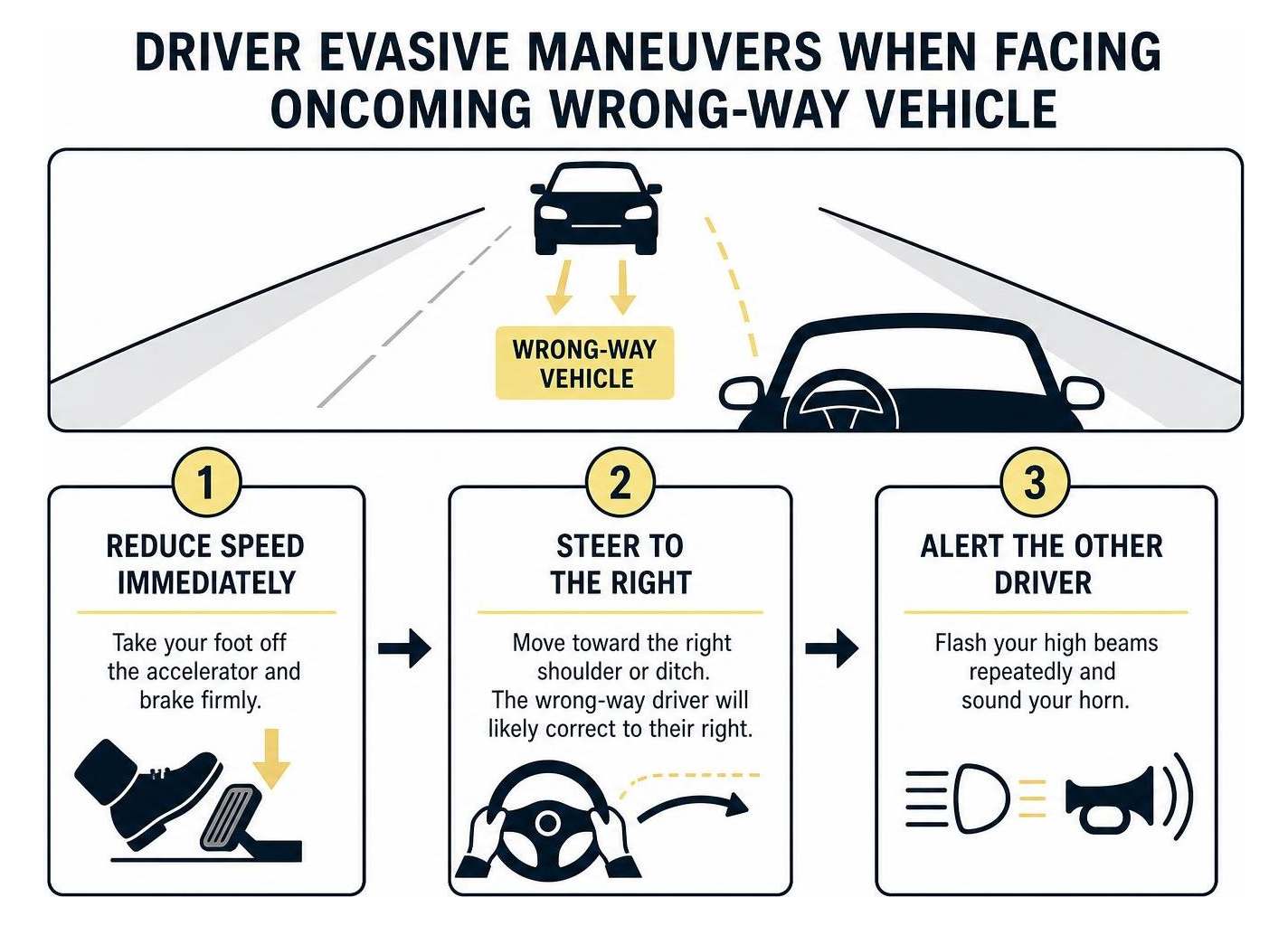
Defensive driving can save lives when another vehicle veers out of its lane. If you spot a vehicle heading toward you in your lane:
- Reduce Speed Immediately: Take your foot off the accelerator and brake firmly. Reducing speed decreases kinetic energy exponentially upon impact.
- Steer to the Right: Always steer toward the right shoulder or ditch rather than to the left. The oncoming driver will instinctively attempt to correct back to their own right lane; steering left increases your chance of a direct collision.
- Alert the Other Driver: Flash your high beams repeatedly and sound your horn to capture their attention.
- Do Not Freeze: Look for an escape route, such as an open shoulder, grass median, or clear roadside ditch, rather than focusing directly on the approaching vehicle.
Roadway Engineering Countermeasures
Transportation planners utilize specific road design tools to prevent crossover crashes:
- Central Cable and Concrete Barriers: Installing physical barriers along median strips eliminates cross-median head-on crashes on divided highways.
- Rumble Strips: Edge-line and centerline rumble strips provide tactile and audible alerts to inattentive or drowsy motorists drifting from their lanes.
- Wrong-Way Detection Systems: Thermal and radar sensors placed at off-ramps detect wrong-way entry, immediately flashing illuminated LED signs and alerting highway patrol.
- 2+1 Road Configurations: Alternating passing lanes protected by continuous center barriers allow safe passing without entering oncoming traffic lanes.
Legal Recourse for Families After a Head On Fatal Crash
The aftermath of a deadly collision leaves surviving family members grieving while facing complex insurance and investigative procedures. In Florida, surviving families have clear legal rights when a loved one is taken due to driver negligence.
Securing physical evidence from the scene—including Electronic Control Module (black box) data, dashcam footage, toxicological reports, and roadway witness statements—must happen promptly. Consulting an experienced fatal accident attorney ensures that dynamic evidence is preserved before vehicles are scrapped or scene markings wash away. For a comprehensive overview of statutory rules and filing requirements, review a complete guide to florida wrongful death claims and the wrongful death attorney florida complete guide.
Frequently Asked Questions About Fatal Head-On Collisions
Why are head-on collisions more lethal than other crash types?
Head-on collisions involve direct frontal impacts where the combined closing speed of both moving vehicles concentrates extreme kinetic forces directly on the passenger compartment. This rapid deceleration causes severe structural intrusion and catastrophic trauma to vehicle occupants.
What immediate steps should a driver take when spotting a wrong-way vehicle?
Slow down immediately, steer toward the right shoulder or roadside, flash your high-beam headlights, and hold down your horn. Never steer left into the oncoming lane. Once safely stopped, call 911 immediately to report the vehicle’s direction and location.
What damages are recoverable after a fatal car accident in Florida?
Under Florida’s Wrongful Death Act, surviving statutory beneficiaries may recover compensation for lost financial support, lost household services, funeral and burial expenses, medical bills incurred prior to death, and the loss of parental or spousal companionship and protection. Understanding the steps for fatality car accident resulting in death claims helps families protect their financial stability.
Conclusion
A head-on crash changes lives in a matter of seconds. When preventable driver negligence, intoxication, or severe distraction causes a fatal collision, surviving families deserve thorough answers and dedicated legal advocacy.
At Carey Leisure Carney, our board-certified trial attorneys bring over 100 years of combined experience representing injured individuals and grieving families across Clearwater, St. Petersburg, Largo, Spring Hill, Trinity, Wesley Chapel, and New Port Richey. We offer direct access to experienced lawyers who take the time to handle your case personally and fight for the justice your loved one deserves. If your family has experienced a catastrophic loss on Florida roads, reach out for a confidential wrongful death attorney consultation to understand your legal rights and path forward.